

Maddy summaryHB 2019 amends Pennsylvania's child protective services laws under Title 23 to clarify which actions are excluded from the definition of "child abuse." It directly affects child protective services agencies and families involved in abuse investigations by changing what specific actions are not considered abuse under the law. The bill's key provision updates the statutory exclusions list, ensuring certain caregiver actions (like reasonable discipline) are explicitly excluded from child abuse determinations during investigations. This change aims to provide clearer guidance for social workers and courts handling child welfare cases.
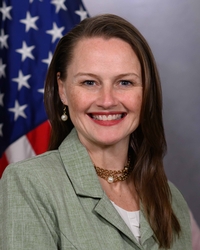
Rep. Nikki Rivera
Sponsored bills
Maddy summaryHB 1057 updates fee schedules for pilots guiding vessels on the Delaware River, directly affecting shipping companies and vessels using ports from Philadelphia to the Delair Railroad Bridge. It establishes annual rate increases for pilotage services (e.g., $18.86 per unit effective January 2028), sets minimum/maximum unit charges, and specifies fees for services like river transit ($275-$300) and canal crossings ($1,000-$1,750). The bill modifies existing fee structures without changing pilot regulations or requirements. It applies to all vessels navigating the Delaware River and Chesapeake & Delaware Canal, with fees effective from 2022 through 2028.
Maddy summaryHB 749 updates Pennsylvania's public welfare laws to streamline assistance programs and improve service access. It requires copayments for subsidized child care, changes reporting for SNAP benefits, and mandates reports on transitioning to chip-enabled access cards for benefits. The bill removes regulatory barriers for outpatient behavioral health services provided within clinic facilities, allowing services to be billed as part of the clinic visit. It also requires additional reports to the General Assembly regarding medical assistance eligibility and nonemergency medical transportation services.
Maddy summaryHB 2022 amends the Insurance Company Law of 1921 to require casualty insurance policies to cover scalp cooling systems. The bill directly affects insurance companies and policyholders by mandating coverage for this specific medical technology. However, the provided context does not specify the exact mechanisms for implementation, affected insurance types, or patient eligibility details. The bill was referred to the Insurance committee on November 12, 2025, but no further provisions or impacts are described in the available information. The context lacks sufficient detail to describe key mechanisms or concrete policy changes beyond the title.
Maddy summaryHB 2025 amends Pennsylvania's Public School Code to address financial strain on school districts during budget disputes with the state. It requires the Commonwealth to reimburse school districts for costs incurred when borrowing money to cover operating expenses during a budget impasse. The bill establishes a new "School District Impasse Recovery Fund" to manage these reimbursements. This directly affects school districts facing funding delays and the state budget office responsible for disbursing funds. The provision creates a concrete mechanism for financial relief during budget standoffs, without altering existing funding formulas.
Maddy summaryHB 123 amends Pennsylvania's Election Code to authorize municipalities to adopt ranked choice voting (RCV) for local elections. It directly affects cities and towns that choose to implement this voting method, allowing voters to rank candidates in order of preference instead of selecting just one. The bill primarily adds RCV as an option for municipal elections while updating other election procedures like ballot design, electronic voting systems, and vote-counting processes. This change would shift how some local elections are conducted if a municipality passes a local ordinance adopting RCV.
Maddy summaryHB 2007 mandates a specific $62 million transfer from Pennsylvania's Budget Stabilization Reserve Fund by November 1, 2025, to address the loss of federal SNAP benefits. The funds are allocated as follows: $50 million to the Department of Agriculture for food bank grants under existing state food programs, $10 million to the Department of Human Services for senior meal assistance, and $2 million for administration and outreach. This bill directly affects food banks, senior assistance organizations, and state agencies managing these programs. It requires the transfer to occur regardless of the usual emergency funding process outlined in Section 1703-A(b), which typically requires a two-thirds legislative vote for reserve fund appropriations. The bill takes effect immediately upon enactment.
Maddy summaryHB 1063 amends Pennsylvania's Unfair Trade Practices and Consumer Protection Law to prohibit the use of automated software for purchasing event tickets with intent to resell, bypassing sales limits, or disabling security systems. It directly affects ticket sellers (including venues, event organizers, and rights holders) and individuals or companies using bots to acquire tickets for resale. The bill makes these activities illegal, allows affected parties to sue for $1,000 per ticket sold in violation plus attorney fees, and includes exceptions for security research and enforcement activities. The law takes effect 60 days after enactment.
Maddy summaryHB 1882 updates Pennsylvania's rules for mortgage lenders and strengthens consumer protections in the mortgage industry. It revises licensing requirements for mortgage loan originators, clarifies exemptions from needing a license, and adds specific safeguards for borrowers. The bill directly affects mortgage lenders operating in Pennsylvania and consumers applying for mortgage loans by changing how lenders must be licensed and what protections must be provided. These changes aim to streamline licensing while ensuring borrowers receive clearer information and fairer treatment during the mortgage process.
Maddy summaryHB 1828 requires health insurance plans in Pennsylvania to cover all recommended vaccines without requiring patients to pay out-of-pocket costs like copays or deductibles. It directly affects insurance companies by mandating this coverage and patients who rely on insurance for routine immunizations (e.g., childhood vaccines, flu shots). The bill adds penalties for insurers that fail to comply with the coverage requirement. This policy change ensures broader access to vaccines by removing financial barriers under insurance plans.