

Maddy summaryHB 2060 requires Pennsylvania's Medicaid program and private commercial insurers to provide equal coverage for non-opioid and opioid medications used to treat pain. It prohibits insurers from designating non-opioid pain drugs as "non-preferred" when opioids are preferred, imposing stricter prior authorization requirements on non-opioids, or placing non-opioids in higher-cost tiers than opioids. The law applies immediately to any FDA-approved pain medication, affecting Medicaid beneficiaries and private insurance customers across Pennsylvania. This policy change ensures that patients have equal access to both non-opioid and opioid treatment options without discriminatory coverage barriers.
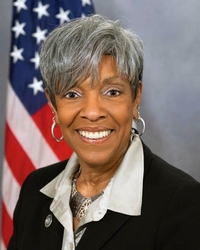
Rep. Carol Hill-Evans
Sponsored bills
Maddy summaryHB 2063 establishes emissions standards for transportation and heating fuels in Pennsylvania, requiring fuel suppliers to reduce the carbon intensity of fuels sold in the state. It creates the Clean Fuels Standards Board to set annual emissions targets and administers the Fair Market Credit Trading Program, where entities that exceed standards can sell credits to those that fall short. The law directly affects fuel producers, refiners, and distributors by mandating lower emissions per unit of fuel energy, measured using life-cycle greenhouse gas analysis. Key provisions include technology-neutral standards (not favoring specific fuels), exemptions for agricultural co-products, and a credit system to incentivize clean fuel production without specifying outcome predictions.
Maddy summaryHB 2067 amends Pennsylvania's Public School Code to clarify emergency powers for school boards during unforeseen crises. It allows boards to temporarily adjust school schedules (reducing daily hours or total days), shift to virtual learning, or furlough nonessential staff - subject to approval by the Secretary of Education and a maximum 4-year duration. The bill specifically enables districts to declare emergencies if the state budget isn't enacted within 60 days of a new fiscal year. This directly affects all Pennsylvania public school districts facing unexpected disruptions to normal operations.
Maddy summaryHB 2069 creates new rules for Pennsylvania municipalities to use automated systems that enforce vehicle noise limits using stationary cameras and decibel meters. It requires cities, towns, or counties to get state approval before installing these systems, including submitting details about proposed locations and justifications. The bill establishes procedures for application review, defines key terms like "automated vehicle noise enforcement system," and specifies penalties for violations of existing noise limits (67 Pa. Code § 157.11). Municipalities must designate a system administrator to manage the equipment and ensure compliance with the new framework.
Maddy summaryHB 1713 amends the 1995 Economic Development Agency, Fiduciary and Lender Environmental Liability Protection Act by clarifying specific definitions within the law. It directly affects economic development agencies, fiduciaries, and lenders operating under this environmental liability protection framework. The bill's key mechanism is updating terminology to improve clarity and consistency in how environmental liability protections apply. This procedural amendment focuses on refining the legal language rather than changing substantive protections. The bill passed final passage on November 19, 2025, and was referred to the Urban Affairs & Housing committee.
Maddy summaryHB 439 amends Pennsylvania's Human Relations Act to explicitly define "race" as including hair texture and protective hairstyles (such as locs, braids, or afros), and "religious creed" as including head coverings or hairstyles tied to religious practice. Employers cannot prohibit these features unless they prove the rule is necessary for health/safety, non-discriminatory, job-specific, and applied equally. The law does not prevent employers from enforcing general safety rules or anti-harassment policies that apply fairly across all employees. This directly affects employers and employees in Pennsylvania workplaces by clarifying protections against discrimination related to appearance.
Maddy summaryHB 1980 amends the MCare Act to update administrative rules related to continuing medical education (CME) requirements for licensed healthcare professionals. It directly affects doctors, nurses, and other medical practitioners who must complete CME to maintain their licenses. The bill changes how these education requirements are administered, though specific procedural details aren't provided in the context. This amendment focuses on streamlining or clarifying the CME process within the existing MCare framework.
Maddy summaryHB 1811 sets a $400 per acre maximum limit for the Pennsylvania Game Commission when purchasing land for game conservation in counties classified as sixth, seventh, or eighth class. This directly affects the Game Commission’s land acquisition costs for wildlife management in smaller counties. The bill clarifies that this price limit applies exclusively to these specific county classifications, ensuring purchases align with local market values while controlling expenses.
Maddy summaryHB 1233 requires battery manufacturers and retailers in Pennsylvania to create and implement plans for managing used portable batteries (like those in electronics and tools). It directs the Department of Environmental Protection to review these plans and enforce compliance, imposing fines for violations. The bill directly affects businesses that sell or produce portable batteries by mandating their responsible collection and recycling. If passed, it would establish new statewide requirements for handling battery waste, aiming to reduce environmental harm from improper disposal. The bill is currently pending in the Environmental Resources & Energy committee.
Maddy summaryHB 1894 amends Pennsylvania's Human Services Code to update the LIFE Program, which supports aging residents. The bill specifically addresses provisions related to the "aged" (seniors) and includes a repeal provision, though the exact nature of the repeal is not detailed in the provided context. It directly affects seniors enrolled in or eligible for the LIFE Program under Pennsylvania's human services system. The bill passed final passage on November 17, 2025, and was referred to the Aging & Youth committee for further consideration. (Note: Specific mechanisms or policy changes beyond the title's reference to "further providing for LIFE Program" are not described in the provided context.)