

Maddy summaryThis bill amends Pennsylvania's Alternative Energy Portfolio Standards Act to update definitions and clarify rules for customer-owned renewable energy systems. It specifically expands the definition of "customer-generator" to include larger systems up to 3,000 kilowatts and establishes new requirements for large systems between 50 and 3,000 kilowatts, such as needing independent electric load and limiting system size to 200% of annual consumption. The legislation also adds precise definitions for terms like "avoided cost," "brownfield," and "commercial rooftop" to improve clarity within the existing energy framework. These changes directly affect electric utilities, renewable energy installers, and customers who generate their own power by standardizing how these systems connect to the grid and are compensated.
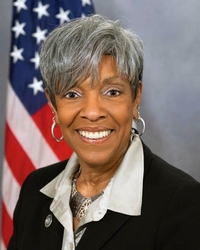
Rep. Carol Hill-Evans
Sponsored bills
Maddy summaryThis bill is a House Resolution that formally recognizes May 2026 as "Sex Ed for All Month" in Pennsylvania. It does not change any laws or require new actions from schools or officials. The resolution highlights the importance of comprehensive, medically accurate sexuality education for young people. It aims to raise awareness about the benefits of such education, including improved health outcomes and reduced risks of unintended pregnancies and infections.
Maddy summaryHB 1800 would repeal the current legal provisions in Pennsylvania that recognize marriage between people of the same sex by removing specific sections from the domestic relations code. The bill directly affects same-sex couples currently married in Pennsylvania, as it would eliminate the statutory basis for their marriages. Key provisions include amending definitions in the preliminary sections of the code and striking down existing language that addresses same-sex marriage. The bill is currently referred to the Judiciary committee and has not been enacted.
Maddy summaryThis bill would create a state-funded paid family and medical leave program for eligible workers needing time off for health issues, childbirth, or family care. It establishes a dedicated state fund to cover leave costs, creates an advisory board to guide implementation, and assigns oversight to the Department of Labor. The program would directly affect employees in the state who qualify for these leave types, requiring employers to provide the benefits. The bill also specifies penalties for businesses failing to comply with the new requirements.
Maddy summaryThis bill expands the legal definition of aggravated assault in Pennsylvania to include school staff members and crossing guards. Specifically, it adds teaching employees, school board members, licensed private school workers, parochial school employees, and school crossing guards to the list of individuals protected by aggravated assault laws. The change applies when these individuals are acting within the scope of their employment or due to their relationship with the school. If passed, the new provisions would take effect 60 days after the bill is enacted.
Maddy summaryHB 1834 requires commercial data centers in Pennsylvania to pay fees to the state. These fees fund a new Data Center LIHEAP Enhancement Fund, which boosts assistance for low-income households struggling with energy costs. The bill also mandates that data centers meet specific renewable energy targets and allows them to recover certain operational costs through regulated rates. The Pennsylvania Public Utility Commission (PUC) and Department of Human Services are tasked with implementing these requirements and managing the fund.
Maddy summaryThis bill creates a tax credit for Pennsylvania educators who purchase instructional materials or supplies for classroom use. Professional employees in public, charter, cyber, and nonpublic schools can claim a credit equal to the amount they spent on qualifying expenses, up to a maximum of $500 per year. The Department of Revenue will establish rules to determine which expenses qualify and must publish guidelines online while submitting annual reports on program usage. The credit applies to tax years beginning on or after January 1, 2025, and cannot be carried forward, carried back, sold, or assigned.
Maddy summaryThis bill is a House Resolution that designates May 8, 2026, as Child Care Provider Appreciation Day in Pennsylvania to honor the work of child care providers. The resolution does not create new laws or change any policies; it is a symbolic gesture to recognize and thank caregivers, teachers, nannies, and daycare workers who support children and families. The bill is sponsored by multiple representatives and referred to the Committee on Children and Youth for consideration. It aligns with a national tradition of celebrating child care workers annually in May.
Maddy summaryThis Pennsylvania bill requires the Department of Labor and Industry to investigate warehouse distribution centers that report an annual employee injury rate 30% or higher than the state average. The law defines warehouse distribution centers using specific industry classification codes and gives the department authority to enter facilities, review records, interview workers, and consolidate complaints during investigations. Employers found with injury rates at or above the threshold face escalating civil penalties, starting at $6,250 for the first violation and increasing to $25,000 for subsequent violations. The bill also mandates that employers notify their employees when an investigation is underway and allows the Attorney General's office to pursue civil or criminal actions for violations.
Maddy summaryThis Pennsylvania bill, known as the Warehouse Worker Protection Act, requires warehouses with 100 or more employees to provide written and verbal notice of employment quotas to workers upon hiring or within 30 days. The law defines quotas as specific production standards tied to time periods where failure to meet them could lead to disciplinary action, and mandates that employers explain these quotas, potential consequences, and any associated bonuses in a language the employee understands. Additionally, the bill prohibits employers from taking adverse employment actions against workers if they fail to provide adequate notice of quotas as required, while also requiring employers to notify employees of any quota changes at least five business days before enforcement. The Department of Labor and Industry gains authority to enforce these requirements and impose penalties on non-compliant employers.