

Maddy summaryThis bill authorizes Pennsylvania to join the Respiratory Care Interstate Compact, a legal agreement designed to allow licensed respiratory therapists to practice in other member states without needing separate licenses for each location. The legislation establishes a framework where a therapist's home state retains primary regulatory authority while granting temporary practice privileges in other states to improve patient access and support military families. Key provisions include creating a central data system to track licenses, defining strict rules for handling disciplinary actions across state lines, and setting requirements for criminal background checks and jurisprudence exams. By adopting this compact, the state aims to streamline administrative processes and address workforce shortages while maintaining public safety standards.
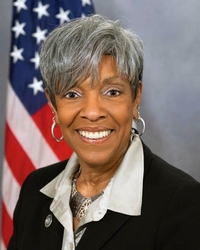
Rep. Carol Hill-Evans
Sponsored bills
Maddy summaryThis Pennsylvania House resolution designates the week of April 13 through 17, 2026, as "Local Government Week" and April 22, 2026, as "Local Government Day" within the state. The measure aims to highlight the work of the Commonwealth's thousands of local officials and employees who provide essential services such as road maintenance, public safety, and utilities. By formally recognizing these contributions, the bill seeks to bring attention to the importance of local governance in daily community life.
Maddy summaryThis bill creates a new State Board of Opticianry in Pennsylvania to oversee the registration and regulation of opticians. To practice, individuals must register with the board by passing a certification exam and holding current national certifications, while exempting experienced professionals and students from immediate requirements. The board will consist of opticians, eye care doctors, and a public member, and it will maintain a public registry of licensed professionals. Opticians must also complete specific continuing education credits every three years to keep their registration active.
Maddy summaryThis bill amends Pennsylvania's Price Gouging Act to specifically target price increases for petroleum products like gasoline, diesel, and heating oil during market emergencies. It defines a market emergency as disruptions caused by severe weather, supply shortages, strikes, or other extraordinary events and gives the governor authority to declare such emergencies for up to 30 days, with possible extensions. Under the new rules, businesses selling petroleum products cannot change prices more than once every 24 hours, and during a declared emergency, they are prohibited from charging prices that are grossly higher than those offered seven days prior. These measures apply to producers, wholesalers, distributors, and retailers of fuel and take effect 60 days after the bill is passed.
Maddy summaryThis bill amends Pennsylvania's Unfair Trade Practices and Consumer Protection Law to explicitly define "dynamic pricing" as a potential unfair practice. It specifically targets the use of artificial intelligence to vary prices for essential goods or services within a 24-hour period based on demand. The legislation includes detailed definitions for artificial intelligence, generative AI, and bona fide pricing to clarify what constitutes deceptive behavior versus legitimate pricing strategies. By adding these specific terms to the law, the bill aims to provide clearer guidance for regulators and businesses regarding AI-driven price fluctuations.
Maddy summaryThis bill designates April 2026 as "Donate Life Month" and April 10, 2026, as "Blue and Green Day" in Pennsylvania to raise awareness about organ and tissue donation. The resolution does not change laws or create new programs but serves as a symbolic gesture to encourage public support for donation efforts. It highlights Pennsylvania's existing donation statistics and the work of state health agencies and organ procurement organizations in promoting donor registration. The measure is intended to increase visibility for organ donation awareness campaigns during the designated month and day.
Maddy summaryHR 390 is a ceremonial resolution recognizing March 2026 as "Women's History Month" in Pennsylvania. It does not create new laws or policies but formally acknowledges women's historical contributions to Pennsylvania and the nation through symbolic recognition. The resolution invites all Pennsylvanians to reflect on women's economic, cultural, and social roles, as detailed in the preamble's historical context. This is a non-binding gesture with no direct impact on specific groups or funding.
Maddy summaryThis resolution symbolically recognizes May 5, 2026, as "World Asthma Day" in Pennsylvania. It does not create new laws or policies but encourages all Pennsylvanians to support asthma management efforts, referencing that approximately 1.3 million residents (1 million adults, 300,000 children) live with asthma in the state. The resolution aligns with global observances focused on raising awareness and improving daily asthma care through education and community engagement.
Maddy summaryThis resolution designates April 2026 as "Limb Loss Awareness Month" in Pennsylvania. It encourages Pennsylvanians to recognize the challenges faced by individuals with limb loss, celebrate their achievements, acknowledge caregivers, and honor combat amputees. The resolution does not create new laws, funding, or direct obligations - it is a symbolic recognition of an awareness issue.
Maddy summaryThis resolution designates April 2026 as "Pennsylvania 8-1-1 Safe Digging Month" to raise awareness about the state's utility notification system. It directly encourages excavators and homeowners to call 8-1-1 (or 1-800-242-1776) before digging to locate underground utility lines, preventing damage, injuries, and service interruptions. The resolution emphasizes the existing legal requirement for three business days' notice before excavation and promotes the Pennsylvania One Call System, which handles over 1 million annual requests to protect infrastructure and the environment. As a ceremonial resolution, it does not create new laws but aims to reinforce public safety practices through recognition.