

Maddy summaryThis Pennsylvania House Resolution designates May 2026 as Preeclampsia Awareness Month to highlight a serious pregnancy complication involving high blood pressure. The bill aims to increase public knowledge about the condition, which can lead to seizures, strokes, and organ failure if not managed properly. By recognizing this month, the House intends to encourage pregnant individuals to learn about warning signs and seek timely medical care. The resolution does not change laws or allocate funding but serves as a formal statement of support for maternal health awareness.
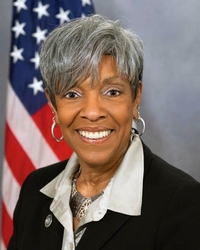
Rep. Carol Hill-Evans
Sponsored bills
Maddy summaryThis bill designates June 1, 2026, as "Links Day" in Pennsylvania to honor The Links, Incorporated, a volunteer service organization founded by African American women in 1946. The resolution recognizes the group's significant contributions to community service, economic advancement, and cultural growth through its various chapters across the state. Additionally, the bill formally acknowledges specific Pennsylvania chapters for their outstanding work and directs that a copy of the resolution be sent to the organization as a token of appreciation.
Maddy summaryHR 56 is a resolution directing Pennsylvania's Joint State Government Commission to study voting wait times and resource distribution. The study will examine poll worker staffing, polling locations, voting compartments, and machines across counties to identify ways to reduce voting time and prevent disparities based on race, income, geography, or other factors. The commission must report findings within one year, including wait time data broken down by demographic factors and recommendations for improving in-person voting efficiency. This is a procedural resolution requiring analysis, not a policy change.
Maddy summaryHB 1826 amends Pennsylvania's Human Relations Act by updating key definitions to clarify anti-discrimination protections in employment. It lowers the minimum employee threshold for businesses to be considered "employers" from four to two workers, expanding coverage to more small businesses. The bill also explicitly includes religious, charitable, and similar organizations as employers for discrimination based on race, color, age, sex, national origin, or disability - previously excluded for these categories. Additionally, it revises the definition of "employee" to focus on employer control over work while maintaining exclusions for casual domestic workers and family employees (e.g., parents, spouses, or children).
Maddy summaryHouse Bill 993 creates an official logotype for veteran-owned businesses in Pennsylvania. The Department of Military and Veterans Affairs will develop this logotype and establish an application process and eligibility guidelines for businesses to use it. A veteran-owned business is defined as one where at least 51% of the ownership is held by a veteran. The bill also establishes a penalty for fraudulently claiming veteran status to use the logotype and creates a Veteran-Owned Business Coordinator to assist veteran entrepreneurs.
Maddy summaryHB 627 creates a two-year pilot program allowing public safety agencies in select Pennsylvania communities to implement a new communication system connecting residents with emergency services. The bill amends the Pennsylvania Commission on Crime and Delinquency Law to establish this program, directly affecting participating local police departments and fire agencies, as well as residents in designated pilot areas. Key provisions require the Commission to develop guidelines for the system, track participation rates, and report findings to the legislature by 2027. This is a limited-scope pilot, not a permanent statewide requirement, with no funding specified in the bill text.
Maddy summaryThis bill allows the Pennsylvania Secretary of Education to temporarily waive a rule requiring career and technical education programs to end by the twelfth grade. Under the new provision, the secretary can approve programs that continue beyond high school graduation, though existing programs may still choose to end at grade 12. The authority to grant these waivers will last for three years or until final regulations are issued, whichever happens first. This change directly affects vocational and technical education programs within the state's public school system.
Maddy summaryThis Pennsylvania House Resolution officially designates December 29, 2026, as the 175th Anniversary of the Young Men's Christian Association (YMCA) in the state. The bill recognizes the YMCA's long history of providing community services, including youth programs, fitness activities, and child care, noting that Pennsylvania hosts more YMCA locations than any other state. It expresses appreciation for the organization's staff and volunteers while encouraging continued support for their efforts to foster community connection and well-being.
Maddy summaryThis bill updates Pennsylvania's Human Services Code to improve how the state handles pending applications for long-term care medical assistance. It requires county offices to establish a standardized process that includes sending specific pending letters within ten days, communicating weekly with providers, and reviewing new documents within ten days of receipt. Additionally, the legislation mandates an annual public report on application statistics and allows nursing facilities to request payment for uncompensated care if an application has been pending for at least sixty days. These changes directly affect county assistance offices, long-term care providers, and residents waiting for eligibility decisions.
Maddy summaryThis bill creates a new tax credit for individuals employed as direct support professionals who assist people with developmental or intellectual disabilities. To qualify, workers must have an adjusted gross income of less than $100,000 and can claim a credit of up to $1,000 against their state taxes, with any unused portion refunded as cash. The program is limited to a total of $2 million per fiscal year and will be available from 2026 through 2030.