

Maddy summaryHB 31 proposes a constitutional amendment to replace Pennsylvania's current Legislative Reapportionment Commission - which includes legislative leaders - with an Independent Redistricting Commission. The new commission would draw state legislative and congressional district boundaries after each federal census, following specific redistricting criteria outlined in the amendment. This change aims to reduce partisan influence by removing direct legislative control over redistricting. The bill does not detail the exact criteria but requires the commission to adhere to them when creating district maps.
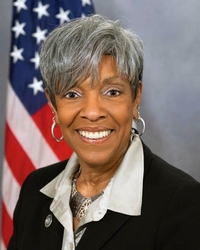
Rep. Carol Hill-Evans
Sponsored bills
Maddy summaryHB 156 requires child care centers and family child care homes in Pennsylvania that use fossil-fuel heaters, fireplaces, or have attached garages to install operational carbon monoxide alarms. Specifically, alarms must be placed within 15 feet of these hazards and on every level of the facility, with full compliance needed within 18 months of the law's effective date. The Department of Human Services must notify all affected facilities within 12 months of the law taking effect. This bill amends the Human Services Code to add these safety standards, referencing existing carbon monoxide alarm definitions from the 2013 Carbon Monoxide Alarm Standards Act. It does not change the Department of Labor and Industry's authority under the Pennsylvania Construction Code Act.
Maddy summaryHB 819 amends Pennsylvania's teacher certification rules to require expanded professional development options, including manufacturing workplace visits and coaching for advanced courses. It establishes a grant program to help schools that lack access to rigorous courses - such as AP, IB, dual enrollment, or career-focused programs - by funding educator training and course offerings. The law mandates school entities to provide these courses and sets benchmarks for eligibility, with the Department of Education overseeing implementation. This directly affects teachers (through updated certification requirements) and schools struggling to offer college-level coursework.
Maddy summaryHB 411 adds a new supplemental annuity for eligible Pennsylvania state retirees, starting July 2025. It applies to retirees who retired before July 2, 2001, have specific service credit (excluding certain classifications), and are receiving monthly payments on July 1, 2025. The amount equals a percentage (ranging from 15% to 24.5%) of their July 2025 monthly annuity, based on their retirement date. The benefit is paid automatically unless retirees opt out, and the cost will be funded over 10 years starting July 2026. This bill does not apply to survivors or retirees with certain service types.
Maddy summaryHB 764 establishes the Pennsylvania Fresh Food Financing Initiative, a program that provides grants to support the construction, renovation, or expansion of grocery stores, farmers' markets, and retail food businesses in underserved low-income and moderate-income communities across Pennsylvania. The initiative prioritizes projects located in, owned by, or primarily serving Black, Indigenous, and people of color (BIPOC) communities, as defined by population data from the Center for Rural Pennsylvania. The Pennsylvania Department of Agriculture will administer the program, develop eligibility guidelines, and ensure grants promote local food systems, job creation, and the use of Pennsylvania agricultural products. The bill also creates a dedicated "Fresh Food Financing Initiative Restricted Account" to hold program funds.
Maddy summaryHB 472 amends Pennsylvania's vehicle code to support minors experiencing homelessness (defined as individuals under 18 meeting federal homelessness criteria under 42 U.S.C. § 11434A). It allows these minors to use temporary addresses (like schools or shelters) for license applications, substitute school/social worker signatures for parental/guardian signatures, and waive initial license/ID fees. The bill directly affects homeless youth under 18 seeking driver's licenses or learner's permits in Pennsylvania. Key provisions include updated definitions in Section 102, revised application requirements in Sections 1505(g), 1506(c), and 1507(a), and fee waivers in Sections 1510(k) and 1951(e).
Maddy summaryPennsylvania's HB 1188 bans state-owned electronic devices and networks from using artificial intelligence applications controlled by "foreign adversaries" as defined by federal law (10 U.S.C. § 4872(d)(2)). It directly affects Pennsylvania government agencies, local municipalities, and schools (via "local education agencies") by prohibiting the installation of such AI apps on state devices or access through state networks. Exceptions include law enforcement, security research, and risk mitigation activities. Violations require referral to the State Ethics Commission for investigation under existing ethics laws. The bill takes effect 60 days after enactment.
Maddy summaryHB 1177 amends Pennsylvania's Tax Reform Code of 1971 to clarify that specific government service income is excluded from the definition of "compensation" for personal income tax purposes. The bill explicitly removes from taxable compensation income earned from active duty with the U.S. armed forces outside Pennsylvania, the U.S. Public Health Service, NOAA, or Pennsylvania emergency duty (including under state emergency management laws). This change directly affects Pennsylvania residents who receive these government service payments, ensuring they are not classified as taxable compensation under current law. The bill does not alter tax rates or brackets but refines the tax code's definition of taxable income to align with federal and state service structures.
Maddy summaryHB 1175 amends Pennsylvania's Religious Freedom Protection Act to clarify that municipalities cannot restrict land use for religious organizations' charitable activities within existing facilities. It defines "charitable use" to include relief of poverty, education, advancement of religion, and disease prevention/treatment. The bill prohibits local governments from regulating these charitable uses related to religious practice unless the regulation is necessary to protect community health/safety/welfare and no less restrictive alternative exists. This directly affects religious organizations operating in Pennsylvania and local municipalities managing land use rules. The law takes effect 60 days after enactment.
Maddy summaryThis Pennsylvania House Resolution (HR 62) symbolically recognizes April 5-11, 2025, as "Week of the Young Child" in Pennsylvania. It acknowledges the National Association for the Education of Young Children's (NAEYC) annual observance, which highlights early childhood education, development, and the importance of quality early learning opportunities for children birth through age eight. The resolution does not create new laws or allocate funding; it solely encourages public awareness and community support for early childhood programs. It aligns with NAEYC's longstanding tradition (since 1971) of focusing attention on young children's needs and their families.