

Maddy summaryThis bill requires employers in Pennsylvania to inform the state labor department if any mass layoffs are caused by the use of artificial intelligence or other technological changes. When an employer submits a standard notice about a plant closing or mass layoff, they must also specify whether automation was the reason for the job losses. The law applies to most businesses but excludes seasonal and temporary workers, and it sets daily fines ranging from $500 to $5,000 depending on company size for failing to provide this information.
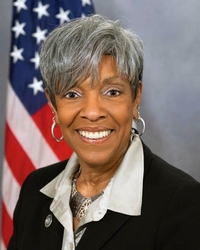
Rep. Carol Hill-Evans
Sponsored bills
Maddy summaryThis bill is a ceremonial resolution that designates the week of September 12 through 18, 2026, as "Neonatal Nurses Week" in Pennsylvania. It aims to honor the work of neonatal nurses who provide specialized care to newborn infants, particularly those in intensive care units with complex health needs. The measure does not change any laws or policies but serves to publicly acknowledge the skills and dedication of these healthcare professionals.
Maddy summaryThis resolution formally recognizes August 2026 as "National Breastfeeding Month" within the state of Pennsylvania. It serves as a symbolic gesture to raise awareness about the health benefits of breastfeeding for infants and mothers, citing recommendations from major medical organizations. The text does not alter any laws or create new programs, but rather acknowledges existing state protections and insurance coverage related to lactation support.
Maddy summaryThis bill amends Pennsylvania's Human Services Code to give the state department authority to require child care centers to maintain financial reserves or insurance covering at least thirty days of operations. It also mandates that any child care facility planning to close must provide written notice to the department, staff, and parents at least thirty days in advance, including a plan for record preservation. Facilities that fail to give proper notice may face liability for parents' lost wages or care costs during the violation period, except in cases of declared disaster emergencies. These changes directly affect licensed child care centers and family child care homes by establishing new financial and notification requirements.
Maddy summaryHB 2527 amends Pennsylvania's Public School Code to update the definition of an 'eligible student' for early learning programs. Under the new provisions, a child qualifies if they are at least three years old, younger than the kindergarten entry age in their district, and live in a household earning no more than 400% of the federal poverty level. This legislative change directly affects eligibility criteria for early childhood education funding and services in the state.
Maddy summaryThis bill designates the week of September 21 through 27, 2026, as "Rail Safety Week" throughout Pennsylvania. The measure aims to raise public awareness about the dangers of train collisions and trespassing on railroad tracks. It does not create new laws or funding but serves as a symbolic resolution to encourage safety education during the specified period. Copies of the resolution will be sent to the Governor, the U.S. Department of Transportation, and the nonprofit organization Operation Lifesaver.
Maddy summaryThis bill creates a new fee in Pennsylvania courts to help fund support services for children who are victims of specific sexual offenses and crimes against minors. When a person is convicted, pleads guilty, or enters a diversion program for these crimes, they must pay a fee ranging from $250 to $1,000 depending on the severity of the offense. The collected money goes into a state fund that the Pennsylvania Commission on Crime and Delinquency uses to provide grants to children's advocacy centers. Courts are required to allow defendants who cannot afford the fee to pay it in installments, and the bill ensures that any restitution owed to victims is paid before this fee is collected.
Maddy summaryThis Pennsylvania House Resolution urges the U.S. Congress to pause efforts to pass federal laws that would block states from regulating artificial intelligence. The bill highlights both the economic benefits and potential risks of AI, noting that Pennsylvania has already enacted state-level protections for issues like deepfakes and AI-generated harmful content. It asserts the state's authority to create its own AI regulations and asks federal officials to stop threatening legal action against state AI laws or withholding funding from states that pass such regulations. The resolution directs Pennsylvania's congressional delegation to advocate for a regulatory approach that respects state authority while protecting public welfare.
Maddy summaryThis bill requires Pennsylvania electric distribution companies to create and implement virtual power plant programs by July 1, 2027, which allow customers with eligible energy technologies like solar panels or batteries to participate in grid services. The Pennsylvania Public Utility Commission will review and approve these proposals within 180 days, requiring companies to set enrollment targets and include mechanisms for existing demand response programs. Participants can receive compensation for providing services such as peak load reduction, voltage support, and emergency grid services, with special provisions for low-income customers and disadvantaged communities to receive enhanced upfront payments. The program will establish operational rules for when and how often grid events can occur, including limits on event duration and advance notice requirements, while allowing customers to disenroll without penalties for nonperformance.
Maddy summaryHB 2226 amends Pennsylvania's Unfair Trade Practices and Consumer Protection Law to explicitly prohibit pyramid schemes and similar deceptive promotional plans. The bill adds a new definition clarifying that schemes where participants pay to join and earn compensation primarily by recruiting others (rather than through product sales) are illegal, including "chain-letter plans," "pyramid clubs," and "pyramid promotional schemes." This change directly affects businesses operating such schemes and protects consumers from being misled by these fraudulent programs. The amendment specifically bans practices like requiring participants to pay for "opportunities" to recruit others, while excluding minimal initial payments of $25 or less.