

Maddy summaryHB 67 allows residents in Pennsylvania condominiums, cooperatives, and planned communities to hang clothes outside to dry using sunlight, removing restrictions that previously prohibited this practice. The bill amends property management rules under Title 68 to explicitly permit "outdoor solar access for drying clothes" as a resident right. This change directly affects homeowners and renters in these housing types by giving them a new option for laundry without needing special permission from management. The policy focuses solely on enabling this specific practice through updated statutes, with no other provisions or financial impacts described.
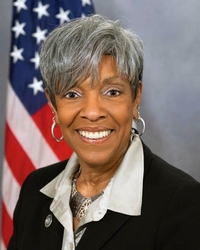
Rep. Carol Hill-Evans
Sponsored bills
Maddy summaryHB 937 amends Pennsylvania's county statutes to establish specific fee amounts that coroners may charge for death investigation reports. It directly affects county coroners and individuals or entities requiring these official reports, such as families or legal representatives. The bill sets new, fixed fee schedules for coroner reports under Title 16 of the Pennsylvania Consolidated Statutes, replacing prior unspecified or variable fee structures. This change provides clarity on billing for a routine administrative service within county government operations.
Maddy summaryHB 359 amends Pennsylvania's Tax Increment Financing (TIF) Act to update definitions, clarify authority powers, and streamline the process for creating tax increment districts and approving project plans. It directly affects local development authorities and project developers seeking TIF funding for community redevelopment projects. Key changes include modifying how districts are established, requiring specific project plan approvals, and detailing how project costs are financed using future tax revenue growth within the district. The bill aims to modernize the TIF framework to support economic development initiatives.
Maddy summaryHB 504, the Community Energy Act, establishes a framework for third-party-owned community energy projects (like solar gardens) in Pennsylvania. It requires electric distribution companies to connect these facilities, provides bill credits to subscribers (homeowners, renters, and businesses) for energy generated, and ensures guaranteed savings by linking subscription payments to bill reductions. Key provisions include setting size limits (max 5,000 kW for most facilities), mandating that at least 50% of subscriptions come from small users or farms, and requiring fair wages for construction workers. The bill directly affects electric companies (with new connection duties), community energy organizations (as owners/operators), and subscribers (who gain access to shared renewable energy).
Maddy summaryHB 818 creates a program allowing first-time homebuyers in the Commonwealth to open state-backed savings accounts for down payments and closing costs. It establishes a dedicated First-time Homebuyer Savings Account Fund and requires the Treasury Department to manage the program and allocate funds. The bill directly affects eligible first-time homebuyers by providing a new savings mechanism for housing costs. Key provisions include the fund's creation, Treasury's administrative duties, and the structure for account access.
Maddy summaryHB 500 repeals existing tax credit provisions for local resource manufacturing (petrochemicals/fertilizers) and Pennsylvania milk processing, while creating new tax credits for clean energy and advanced manufacturing sectors. It establishes tax credits for reliable energy investments, regional clean hydrogen hubs, semiconductor manufacturing, biomedical research, geothermal energy, and sustainable aviation fuel. Eligible businesses must meet specific criteria for capital investment, job creation, and project location to apply for these credits through the Department of Revenue. The bill also updates definitions and application processes for these new credits, with annual funding limits and rules for credit usage.
Maddy summaryHB 433 requires health insurance plans to cover mammograms and breast imaging services without cost-sharing (like copays or deductibles) for policyholders. It directly affects women needing preventive breast cancer screenings and the insurance companies providing health coverage. The bill amends Pennsylvania’s 1921 Insurance Company Law to mandate this coverage for mammographic examinations and breast imaging under casualty insurance policies. This policy change ensures these essential preventive services are fully covered at no additional cost to patients.
Maddy summaryHB 1486 would change bail rules for defendants charged with illegal firearm offenses in Pennsylvania's largest cities (like Philadelphia and Pittsburgh). It requires defendants to pay only 10% of the full bail amount for a first offense, 50% for a second offense, and 100% for third or subsequent offenses to be released while awaiting trial. The bill applies specifically to charges under Pennsylvania's firearm laws (18 Pa.C.S. § 61) in cities of the first class. It does not alter the underlying firearm laws but modifies the bail payment structure for these cases. The bill is currently pending in committee and has not yet become law.
Maddy summaryHB 1493 requires Pennsylvania's Administrative Office of Pennsylvania Courts to collect and publicly publish data on the race and ethnicity of defendants in criminal cases. This data must be posted in an accessible online format and reported annually to the Pennsylvania Commission on Crime and Delinquency. The bill directly affects all individuals involved in criminal cases across Pennsylvania's court system by mandating standardized demographic data collection. It establishes a concrete mechanism for tracking racial and ethnic disparities in criminal proceedings without altering sentencing or legal procedures. The law takes effect 60 days after enactment.
Maddy summaryHB 1490 creates a pilot program allowing eligible Certified Registered Nurse Practitioners (CRNPs) to practice independently in Pennsylvania's health professional shortage areas. To qualify, CRNPs must hold a current license, have no disciplinary actions in the past five years, and complete 3,600 hours of collaborative practice with a physician in primary care (family, internal medicine, gynecology, or pediatrics) within the last five years. Under the program, participating CRNPs can prescribe medications and practice without a collaborative agreement in shortage areas, but must disclose their non-physician status to patients and notify the board if they change practice settings. The program requires biennial renewal with 10 hours of additional patient safety continuing education and limits practice to primary care within designated shortage areas.