

Maddy summaryThis bill creates the Rural Population Revitalization Commission to study and address population decline in Pennsylvania's rural areas, which are defined as counties with fewer than 291 people per square mile. The commission will gather input from various stakeholders, hold public hearings, and produce biennial reports offering recommendations on issues such as healthcare access, affordable housing, education, and job opportunities. Its membership includes representatives from government agencies, higher education, business, and community organizations, all serving without pay for two-year terms. Additionally, the legislation establishes a Rural Population Revitalization Fund to support the commission's operations and initiatives aimed at attracting and retaining residents in rural communities.
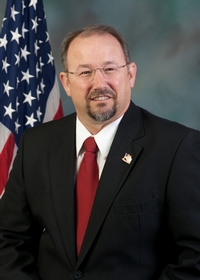
Rep. Dan Moul
Sponsored bills
Maddy summaryThis bill designates a specific bridge in Bigler Township, Clearfield County, as the Sergeant John Harold Branic Memorial Bridge to honor a local Marine who died in World War II. It requires the Department of Transportation to install and maintain signs displaying the new name for traffic in both directions. The legislation recognizes Sergeant Branic, the first Madera resident killed in the war, whose remains were identified decades after he was declared missing in action. The act takes effect 60 days after being passed.
Maddy summaryThis bill directs $1 million from the state's education budget to cover capital-related costs and deferred maintenance at Pennsylvania's four chartered schools for the deaf and the blind. The funds are to be split equally between each of the four schools, with the change applying retroactively to July 1, 2022. By adding this specific provision to the Public School Code, the legislation also repeals an older section of the Fiscal Code that is no longer needed.
Maddy summaryThis bill amends Pennsylvania's legal rules to clarify how courts should determine the intent behind state laws when the wording is unclear. It specifically instructs judges to consider official interpretations provided by the General Assembly and administrative agencies as evidence of legislative intent. By codifying this approach, the legislation aims to ensure that the original purpose of statutes is respected during legal disputes. The changes apply immediately to all future cases involving statutory interpretation in the state.
Maddy summaryThis bill modifies Pennsylvania law to allow stormwater management authorities to set reasonable and uniform rates based on property characteristics. These rates can include fees for installing and maintaining best management practices that are approved and inspected by the authority. Additionally, the bill permits agricultural operations to use best management practices approved by the USDA Natural Resources Conservation Service or the State Conservation Commission when calculating these fees. The changes apply specifically to municipal authorities responsible for stormwater planning, management, and implementation. The legislation will take effect 60 days after it is passed.
Maddy summaryThis bill allows Pennsylvania second-class townships to charge fees to fund the construction, maintenance, and operation of storm water management systems. The fees can be based on the properties that benefit from these facilities but must not exceed the minimum amounts required by federal and state environmental laws. Townships are required to offer exemptions or credits to property owners who install and maintain approved storm water facilities, including those following best management practices for normal agricultural operations. The legislation takes effect 60 days after being signed into law.
Maddy summaryThis bill designates a specific bridge carrying Pennsylvania Route 351 over the Beaver River in Beaver County as the Sgt. Skip Haswell Memorial Bridge. The legislation honors Lloyd "Skip" Haswell, a local veteran and former police chief who passed away in 2024, by officially changing the bridge's name to reflect his service and community contributions. To implement this change, the bill requires the Department of Transportation to install and maintain signs displaying the new name for traffic traveling in both directions. The act is set to take effect 60 days after being passed.