

Maddy summaryHR 195 is a symbolic resolution designating April 2025 as "Child Abuse Prevention Month" in Pennsylvania. It does not create new laws or policies but formally recognizes the month for raising awareness about child abuse prevention efforts across the state. The resolution directly affects Pennsylvania residents and organizations focused on child welfare by encouraging community observances and educational activities during April 2025. As a procedural resolution, it has no binding effect and serves solely as a formal acknowledgment.
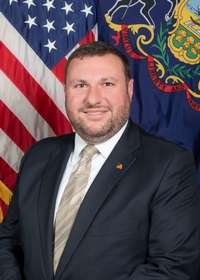
Rep. Chad Reichard
Sponsored bills
Maddy summaryThis bill modifies Pennsylvania's Liquor Code to allow hotel, restaurant, and airport liquor licensees to sell alcohol on Sundays. Hotel and restaurant owners would be permitted to sell between 7 a.m. and 2 a.m. on Monday, while airport restaurant owners could sell between 5 a.m. and 2 a.m. on Monday. To operate under these new hours, licensees must purchase a special permit from the Pennsylvania Liquor Control Board and pay an annual fee. The changes take effect 60 days after the bill is enacted.
Maddy summaryThis bill updates Pennsylvania's Child Labor Act to clarify how minors can participate in student-learner and apprenticeship programs, allowing them to work in these roles as long as it complies with existing federal laws. It also permits high school graduates who have finished such programs to continue working in those occupations without additional restrictions beyond federal standards. To ensure consistency, the legislation cancels specific outdated regulations and requires the Department of Labor and Industry to develop new rules within a year or have the old rules expire in three years.
Maddy summaryThis bill amends Pennsylvania's Liquor Code to allow specific licensees, such as hotels and restaurants, to sell alcohol earlier on weekends and to establish a new system for event permits. Under the new rules, eligible businesses can apply for a permit to sell alcohol starting at 6 a.m. on the day of an event, with specific time restrictions depending on whether the event occurs on a weekend or weekday. To obtain these permits, licensees must apply at least 60 days in advance, pay a $500 annual fee, and adhere to limits of ten permits per year with a six-day gap between events.
Maddy summaryThis bill modifies Pennsylvania's sales tax code to temporarily exempt the purchase of firearm safety devices from sales tax. The exemption applies to items such as gun safes, vaults, lockers, and various types of locks, but only during a six-month window starting when the law takes effect. To qualify for the tax break, an individual must place their order and pay for the device within that six-month period, regardless of when the item is actually delivered. The Department of Revenue is required to publish online guidance to help consumers understand how to use this exclusion. The changes are scheduled to become effective on July 1, 2026, or immediately if enacted sooner.
Maddy summaryHB 2442 amends Pennsylvania's Safe Drinking Water Act to allow the Department of Agriculture to issue temporary operating licenses to applicants seeking retail food facility permits. To qualify, applicants must prove they have submitted a complete public water system permit application and provide certified lab tests showing their water system meets federal standards. The temporary license remains valid only while the permit application is pending and automatically expires if the permit is issued, denied, or if the applicant fails to submit required compliance tests every six months.
Maddy summaryThis bill requires school districts in Pennsylvania to follow specific guidelines when hiring vendors to create detailed maps of their campuses for emergency response purposes. The new rules mandate that these maps be accurate, include labeled floor plans and utility locations, and be compatible with existing public safety software without extra costs. Additionally, the data must be stored securely within the United States, and districts must obtain approval from local law enforcement before entering into such contracts.
Maddy summaryThis bill amends Pennsylvania's Public Official Compensation Law to establish health insurance benefits for members of the House of Representatives. The legislation defines these benefits to include medical, dental, vision, prescription drug, and long-term care coverage, which the state will pay for on behalf of the representative and their eligible dependents. Coverage is limited to the time a member serves in office and includes a specific period between legislative sessions if the representative is reelected. The changes apply only to House members elected after the law takes effect, which is set for 60 days from its passage.
Maddy summaryThis bill, known as the Temporary Budget Continuity Act, allows Pennsylvania state agencies to continue operating if the legislature fails to pass a new budget by the start of the fiscal year. It authorizes the State Treasurer to spend up to 85% of the funding levels from the previous year for existing programs and services. Any money spent under this temporary authority will be subtracted from the final budget amounts when the new appropriation act is eventually passed. The law ensures that government functions can continue without interruption while maintaining strict limits on spending to prevent budget overruns.
Maddy summaryThis bill amends Pennsylvania's Professional Nursing Law to update the legal definitions and scope of practice for certified registered nurse anesthetists (CRNAs). It allows CRNAs to perform anesthesia services under the overall direction of a physician, podiatrist, or dentist who is present and available onsite during the procedure. The legislation grants CRNAs expanded authority to prescribe and administer certain medications, order and interpret diagnostic tests, and manage patient care throughout the anesthesia process, including preoperative preparation, induction, maintenance, and post-anesthesia care. These changes formalize the professional responsibilities of CRNAs within the state's nursing regulatory framework without altering the requirement for collaborative oversight by licensed medical professionals.