

Maddy summaryThis bill amends an existing law to expand eligibility for grants that help pay off student loans for healthcare workers serving in rural areas or medically underserved communities. The primary change broadens the definition of eligible recipients from just physicians and nurses to include all types of medical practitioners, such as midwives, and adds rural health clinics as qualifying employers. Additionally, the bill adjusts the grant award structure to allow payments in increments of up to $10,000 and extends the repayment period for recipients from 60 to 90 months. These modifications aim to increase the pool of eligible professionals and improve the financial terms of the loan repayment assistance program.
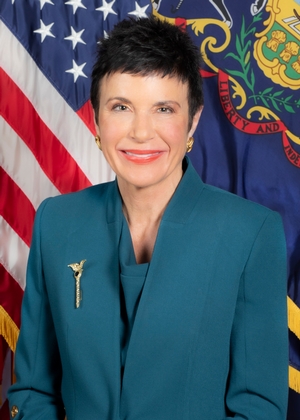
Rep. Marla Brown
Sponsored bills
Maddy summaryThis bill amends Pennsylvania's emergency medical services laws to update definitions for qualified applicants and establish new committees for regional oversight. It allows regional councils to request waivers from standard staffing rules for ambulances if they can prove their quality control systems are sufficient. Upon approval, local councils would manage compliance on behalf of the state, enabling agencies to operate with slightly different crew requirements while maintaining safety standards. The changes take effect 60 days after the bill is passed.
Maddy summaryThis Pennsylvania House resolution urges the U.S. Congress to pass federal legislation that would raise the asset limits for Supplemental Security Income eligibility. Currently, individuals can only hold $2,000 in resources and couples can hold $3,000 without losing benefits, a limit that has not been adjusted for inflation since 1989. The proposed federal bill seeks to increase these limits to $10,000 for individuals and $20,000 for couples to help recipients save money and maintain financial stability. The resolution specifically calls for Congress to enact this change, noting that the current strict limits often force people to spend down their assets or face benefit termination.
Maddy summaryThis bill, known as the Social Media Anti-Censorship Act, requires large social media platforms with over 50 million U.S. users to create clear rules for content moderation and provide users with ways to challenge content removals. It mandates that platforms publish their acceptable use policies in accessible locations and immediately notify users when their posts are taken down, along with offering an appeal process that must be resolved within 14 days. Additionally, the law requires these platforms to release biannual transparency reports detailing how many times they removed or restricted content, who reported the violations, and how many appeals were successful. The act specifically protects journalists and public officials by requiring platforms to track and report instances where their content was targeted for removal.
Maddy summaryThis Pennsylvania House resolution establishes a select committee to investigate the security failures at the July 13, 2024, rally in Butler where a gunman targeted former President Trump. The committee will examine how federal, state, and local law enforcement agencies coordinated their response and will propose best practices for protecting public figures at future events. Authorized to subpoena witnesses and documents, the six-member panel must submit its findings and recommendations to the House by November 30, 2024.
Maddy summaryThis resolution directs the Joint State Government Commission to conduct a study on improving Home and Community-Based Services waivers for individuals with disabilities in Pennsylvania. The investigation will examine how these programs, managed by the Office of Long-Term Living and the Office of Developmental Programs, can better meet medical needs, reduce barriers to community living, and enhance employment opportunities. Specifically, the study will compare service menus and pay rates between the two offices, analyze administrative processes, and review how other states have addressed similar challenges. Ultimately, the commission is tasked with issuing a report containing recommendations to improve eligibility, access to care, and support services for this population.
Maddy summaryThis Pennsylvania bill creates a new Alzheimer's, Dementia and Related Disorders Office within the Department of Aging to coordinate state efforts for people affected by these conditions. The office will oversee existing programs, identify service gaps, manage grants, and update the state's strategic plan every five years based on expert advice. To support this work, the law also establishes a large advisory committee made up of government officials, healthcare providers, researchers, and individuals with personal experience caring for those with dementia. This committee will guide the office's activities, review progress, and ensure that the state's approach remains current and effective.
Maddy summaryThis bill designates October 17, 2024, as "Chuck Tanner Day" in Pennsylvania to honor the legacy of Charles William "Chuck" Tanner. The resolution recognizes Tanner, a former professional baseball player and manager who led the Pittsburgh Pirates to a World Series championship on that specific date in 1979. It also highlights his contributions to the sport, including his induction into the Baseball Hall of Fame and the establishment of awards named in his honor. The measure urges Pennsylvanians to celebrate his life and achievements in baseball.
Maddy summaryPennsylvania House Bill 1684 updates state laws regarding child custody by establishing clearer definitions for terms like "equal parenting time" and "supervised physical custody." The bill introduces a rebuttable presumption that shared physical custody and equal parenting time are in a child's best interest during temporary custody orders, requiring courts to maximize time with each parent unless specific factors suggest otherwise. It also outlines new procedures for obtaining temporary custody orders based on affidavits and agreements, while expanding the list of factors judges must consider, including any criminal convictions of the parents. These changes aim to standardize how courts evaluate custody arrangements and ensure that parenting plans are explicitly detailed in legal orders.
Maddy summaryThis bill updates Pennsylvania's Human Services Code to establish payment rules for nontransport emergency medical services provided to eligible individuals who do not require or refuse transport. Starting July 1, 2024, licensed emergency medical services agencies will be reimbursed for these specific services at rates equal to the higher of the 2023 Medicare ambulance fee schedule or current Medicaid ambulance fees. The change directly affects how public assistance programs compensate providers for emergency care rendered without actual transportation.