

Maddy summaryThis bill updates the membership rules for Pennsylvania's State Veterans' Commission to ensure broader representation of different veteran groups. It mandates that the commission include representatives from sixteen specific national veterans' organizations, such as the American Legion and VFW, along with four members appointed by the Governor who must be female or Vietnam-era veterans. The legislation also clarifies the roles of state-level leaders from the American Legion, Disabled American Veterans, and Veterans of Foreign Wars as nonvoting members. These changes aim to modernize the commission's composition while maintaining its existing structure under Pennsylvania law.
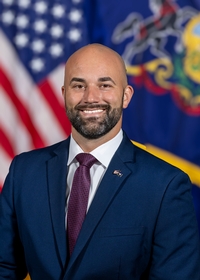
Rep. David Rowe
Sponsored bills
Maddy summaryThis bill establishes a policy allowing Pennsylvania educational institutions to award academic credit for military training and service. It directly affects students enrolled in community colleges, public universities, and state-related institutions who have completed military duties. The legislation requires the Department of Education to create guidelines for granting credit based on the skills and experience gained during service. Additionally, the bill ensures that professionals holding state licenses do not lose their credentials or miss continuing education requirements while serving in the military.
Maddy summaryThis bill amends the Cancer Drug Repository Program Act to clarify definitions and expand the program's scope. It adds specific legal definitions for manufacturers and wholesale distributors and allows approved pharmacies to accept unused prescription drugs from state medical assistance programs for dispensing to patients. The legislation also updates the list of eligible entities that can return or donate drugs to the repository and requires the creation of a list of participating pharmacies. Additionally, the bill includes provisions for program fees, storage regulations, and immunity for participants.
Maddy summaryThis bill amends an existing law to expand eligibility for grants that help pay off student loans for healthcare workers serving in rural areas or medically underserved communities. The primary change broadens the definition of eligible recipients from just physicians and nurses to include all types of medical practitioners, such as midwives, and adds rural health clinics as qualifying employers. Additionally, the bill adjusts the grant award structure to allow payments in increments of up to $10,000 and extends the repayment period for recipients from 60 to 90 months. These modifications aim to increase the pool of eligible professionals and improve the financial terms of the loan repayment assistance program.
Maddy summaryThis bill amends Pennsylvania's Municipalities Planning Code to update the required contents of local subdivision and land development ordinances. Specifically, it allows municipalities to permit new residential homes that replace demolished one- or two-family dwellings to follow the setback rules of the original structure if the new building is substantially similar in use and design. The change applies to cities, boroughs, towns, and townships across the state and requires local governments to provide these specific setback standards to building permit applicants. The legislation becomes effective 60 days after its passage.
Maddy summaryThis bill creates a new program allowing Pennsylvania drivers to voluntarily add emergency contacts and specific medical conditions to their official records. Participants can list up to two emergency contacts and report conditions such as deafness, autism spectrum disorder, or other communication impediments certified by a healthcare provider. The information is intended to assist law enforcement during official encounters, and the program is free of charge with no fees for enrollment. While the data is protected from public inspection under state law, the department must notify police agencies about the program's existence.
Maddy summaryThis bill amends Pennsylvania's Tax Reform Code to exclude certain pet adoption fees from sales and use tax. It directly affects nonprofit corporations that act as releasing agencies for dogs under the state's Dog Law. To qualify for this tax exemption, the adoption fees charged by these organizations must not exceed the actual expenses incurred for caring for the animal. The change is set to take effect 60 days after the bill is enacted.
Maddy summaryThis bill amends Pennsylvania's Regulatory Review Act to require agencies to submit a specific analysis alongside any proposed regulations related to fuel, energy, or electricity. The new provision mandates that these agencies explain how their rules might increase electricity costs and discuss the potential negative impacts on low-income residents. By adding this requirement, the legislation ensures that the Independent Regulatory Review Commission and relevant legislative committees receive more detailed information during the review process. The changes take effect 60 days after the bill is enacted.
Maddy summaryThis bill amends Pennsylvania's Tax Reform Code to align the state's personal income tax rules with a specific section of the federal Internal Revenue Code regarding how certain income is classified. By adding a new subsection to the state tax law, it ensures that the definitions for these income classes match federal standards for tax years starting after December 31, 2024. The change directly affects Pennsylvania taxpayers and the Department of Revenue, which will use the updated definitions to calculate and collect taxes.
Maddy summaryThis bill proposes adding a new crime in Pennsylvania that makes it illegal to use social media platforms to commit, encourage, or help others commit a felony. It defines social media sites as online spaces where users primarily post their own content, while excluding traditional news websites and email services. If someone is convicted of using these platforms to facilitate a felony, they could face a fine of up to $15,000, imprisonment for up to seven years, or both. The law treats each separate instance of using social media for this purpose as a distinct crime.