

Maddy summaryThis bill amends Pennsylvania vehicle laws to allow state and local officials to issue permits for parades and special events on public highways without requiring sponsors to provide financial protection for elected officials. Under the new provision, a permit cannot be denied solely because a sponsor refuses to indemnify participating politicians, provided all other event requirements are met. The change directly affects event organizers and local government bodies by removing a specific administrative hurdle in the permitting process. The legislation will become effective 60 days after it is signed into law.
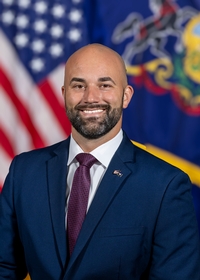
Rep. David Rowe
Sponsored bills
Maddy summaryThis bill amends Pennsylvania vehicle laws to provide temporary fuel price relief by reducing specific taxes on gasoline and fees for electric vehicle road users. For the first six months after it takes effect, the state will eliminate certain fuel taxes, and for the following six months, it will cut those fees by half. To ensure consumers benefit directly, the law requires fuel dealers to pass these savings on by lowering sale prices and prohibits them from keeping the tax reduction as extra profit. The Department of Revenue must estimate the resulting loss in state revenue, and the State Treasurer is then required to transfer that amount from a budget reserve fund to maintain highway maintenance financing.
Maddy summaryHB 1929 designates an annual "Charlie Kirk Day" in Pennsylvania for commemoration. The bill requires the governor to issue a yearly proclamation recognizing Charlie Kirk, though the bill does not specify his role or contributions. This is a procedural, symbolic measure with no policy changes, funding, or direct impact on residents or programs. It remains pending in the Tourism, Recreation & Economic Development committee.
Maddy summaryHB 2102 amends Pennsylvania's Amber Alert law to create a new "Pennsylvania Purple Alert System" for missing individuals with specific conditions, including autism, Alzheimer's (under age 60), dementia (under age 60), traumatic brain injury, or similar impairments. The Pennsylvania State Police will establish and maintain this system to provide public alerts and coordinate with law enforcement for faster recovery of these vulnerable individuals. The bill updates the law's title to include the Purple Alert System and expands existing immunity protections for good Samaritans who assist in Amber Alert, MEPAS, or Purple Alert cases. This change adds a targeted alert system without altering the existing Amber Alert procedures.
Maddy summaryHB 2371 modifies Pennsylvania's tax code to temporarily exempt mobile telecommunications services from sales and gross receipts taxes for six months starting in 2026. The bill requires providers to report these services separately and mandates that the tax savings be passed directly to consumers through lower bills, with penalties for non-compliance. Additionally, the legislation ensures that a specific transfer of funds from the Alternative Fuels Incentive Act remains consistent with the previous fiscal year.
Maddy summaryThis bill modifies Pennsylvania's gross receipts tax rules for electric, waterpower, and hydro-electric utilities. It establishes a six-month tax holiday where these companies pay no gross receipts tax, starting in July 2026. The legislation requires utilities to pass the savings from this holiday directly to consumers as a reduction in their bills, with penalties for non-compliance. Additionally, the bill mandates that money transferred from the Alternative Fuels Incentive Act for the 2026-2027 fiscal year must match or exceed the amount transferred in the previous year.
Maddy summaryThis bill amends Pennsylvania's personal income tax law to establish a temporary lower tax rate of 2.99% for six months starting in 2026, before reverting to the standard rate of 3.07%. It applies this reduced rate to income earned by residents and nonresidents from sources within the state. Additionally, the legislation requires employers to withhold taxes from employee paychecks in a way that accounts for this temporary rate change. The changes are set to take effect on July 1, 2026, or later if the law is not signed into effect sooner.
Maddy summaryThis bill designates a specific section of Pennsylvania Route 18 in Beaver Falls as the Sgt. Allan R. Bevington Memorial Highway. The designation honors Sergeant Allan R. Bevington, a local veteran who served in the Army and died while disarming an explosive device in Iraq in 2006. The Department of Transportation is required to install and maintain signs displaying the new name for traffic traveling in both directions on that road segment.
Maddy summaryHB 2360 creates the Chesapeake Bay Grant-Only Compliance Program to help Pennsylvania municipalities meet environmental rules for stormwater and the Chesapeake Bay without charging property owners fees. The bill prohibits local governments from levying charges to comply with these requirements and preempts any existing rules that allow such fees, while directing the Department of Environmental Protection to offer grants funded by federal, state, or other sources to cover compliance costs. Additionally, the state cannot enforce these environmental requirements against a local government unless there is enough grant money available to pay for 100% of the compliance expenses.
Maddy summaryThis bill amends Pennsylvania's Professional Nursing Law to update the legal definitions and scope of practice for certified registered nurse anesthetists (CRNAs). It allows CRNAs to perform anesthesia services under the overall direction of a physician, podiatrist, or dentist who is present and available onsite during the procedure. The legislation grants CRNAs expanded authority to prescribe and administer certain medications, order and interpret diagnostic tests, and manage patient care throughout the anesthesia process, including preoperative preparation, induction, maintenance, and post-anesthesia care. These changes formalize the professional responsibilities of CRNAs within the state's nursing regulatory framework without altering the requirement for collaborative oversight by licensed medical professionals.