

Maddy summaryHB 2063 establishes emissions standards for transportation and heating fuels in Pennsylvania, requiring fuel suppliers to reduce the carbon intensity of fuels sold in the state. It creates the Clean Fuels Standards Board to set annual emissions targets and administers the Fair Market Credit Trading Program, where entities that exceed standards can sell credits to those that fall short. The law directly affects fuel producers, refiners, and distributors by mandating lower emissions per unit of fuel energy, measured using life-cycle greenhouse gas analysis. Key provisions include technology-neutral standards (not favoring specific fuels), exemptions for agricultural co-products, and a credit system to incentivize clean fuel production without specifying outcome predictions.
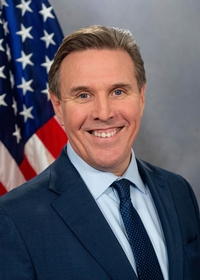
Rep. Paul Takac
Sponsored bills
Maddy summaryThis resolution condemns any threats of political violence against elected officials, specifically referencing recent public statements interpreted as threatening lawmakers who uphold constitutional duties. It reaffirms that military personnel must refuse unlawful orders under the Uniform Code of Military Justice (UCMJ), citing Articles 90-92 and the Nuremberg Principles. The resolution has no legal effect but symbolically urges compliance with the UCMJ and rejects intimidation tactics targeting representatives. It directs copies to the President, Defense Secretary, and Pennsylvania's congressional delegation. As a symbolic statement, it does not alter laws or directly affect any group beyond expressing legislative concern.
Maddy summaryHB 1980 amends the MCare Act to update administrative rules related to continuing medical education (CME) requirements for licensed healthcare professionals. It directly affects doctors, nurses, and other medical practitioners who must complete CME to maintain their licenses. The bill changes how these education requirements are administered, though specific procedural details aren't provided in the context. This amendment focuses on streamlining or clarifying the CME process within the existing MCare framework.
Maddy summaryHB 1540 creates a "Buy America, Buy Union" grant program and fund under Pennsylvania's Department of Community and Economic Development. It requires state-funded projects to prioritize American-made materials and union labor by offering grants to qualifying contractors. The bill establishes a dedicated fund to finance these grants, directly affecting state agencies and contractors working on public projects. Key provisions mandate that projects receiving grants must meet specific union labor and domestic sourcing standards, altering how state procurement contracts are awarded. This policy change shifts procurement incentives toward union workers and U.S. manufactured goods for eligible state projects.
Maddy summaryHB 2007 mandates a specific $62 million transfer from Pennsylvania's Budget Stabilization Reserve Fund by November 1, 2025, to address the loss of federal SNAP benefits. The funds are allocated as follows: $50 million to the Department of Agriculture for food bank grants under existing state food programs, $10 million to the Department of Human Services for senior meal assistance, and $2 million for administration and outreach. This bill directly affects food banks, senior assistance organizations, and state agencies managing these programs. It requires the transfer to occur regardless of the usual emergency funding process outlined in Section 1703-A(b), which typically requires a two-thirds legislative vote for reserve fund appropriations. The bill takes effect immediately upon enactment.
Maddy summaryHB 2004 creates a special account to hold emergency funds for SNAP benefits, which provide food assistance to low-income residents. The bill requires the Department of Human Services, the Secretary of the Budget, and the State Treasurer to transfer these funds to pay SNAP recipients. This establishes a dedicated funding mechanism specifically for emergency SNAP benefit payments. The bill directly affects SNAP recipients by ensuring a streamlined process for receiving benefits during emergencies.
Maddy summaryHB 1971 amends Pennsylvania's public utilities law to restructure the electric utility industry and establish a legal framework for portable solar generation systems. The bill would directly affect electric utility companies and consumers who use or wish to install portable solar systems, including residential and small commercial users. Key provisions involve updating definitions within the public utilities code and creating new regulatory pathways for portable solar systems, though specific implementation details are not provided in the context. Without the full bill text, the exact mechanisms of the restructuring or solar system regulations cannot be detailed.
Maddy summaryHB 1405 amends Pennsylvania's Public School Code to create new pathways for veterans to become career and technical teachers in public schools. It allows veterans who served at least 8,000 hours (four years full-time) in an occupation they will teach to qualify for a Career and Technical Intern Certificate or Career and Technical Instructional I Certificate, bypassing some standard certification requirements. The bill specifically defines "veteran" as someone discharged under honorable conditions from U.S. Armed Forces, including National Guard or reserves. This directly affects veterans seeking teaching roles in career and technical education programs across Pennsylvania's public schools.
Maddy summaryHB 145 amends Pennsylvania's unemployment compensation law to clarify when workers lose eligibility for benefits. It directly affects claimants who voluntarily leave jobs, adding specific protections: workers cannot be disqualified for leaving due to disability if suitable work is available, for joining or staying in a union, or to accompany a military spouse relocating due to active duty orders. The bill defines "suitable employment" as work requiring similar skills and paying at least 80% of a worker's previous average weekly wage. These changes aim to prevent unfair disqualifications while maintaining the law's core purpose of providing benefits to eligible unemployed workers.
Maddy summaryHB 589 creates a state-run insurance program and dedicated fund to cover property damage from landslides and sinkholes. It directly affects property owners in high-risk areas by providing a new insurance option when private coverage is unavailable or unaffordable. The bill establishes a Landslide and Sinkhole Insurance Board to manage the fund and program, while requiring the Auditor General to oversee financial accountability. It also includes a penalty provision for non-compliance and specifies fund transfers to support the program's operations. The bill passed final passage on September 29, 2025, and is now under review by the Community, Economic & Recreational Development committee.