

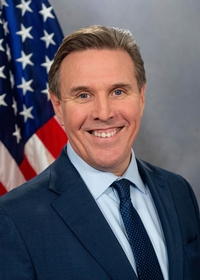
Photo of Paul Takac
D Pennsylvania House · District 82 On the 2026 ballot

Rep. Paul Takac

Compare
Total votes
3,470
all sessions
Attendance
100%
of floor votes
Near the chamber average
With party
99%
of cast votes
Higher than 79% of chamber peers
Bipartisan score
0%
crosses aisle rarely
Lower than 80% of chamber peers
Sponsored
391
bills & resolutions
Near the chamber average
Committees
6
assignments
391 bills and resolutions

Sponsored bills

Total
391
Primary
23
Co-sponsor
368
This page
391
matching current filters
Co-sponsor HR 561
Passed · Pennsylvania House · Co-sponsor
A Resolution honoring the life and extending deepest condolences to the family of Pennsylvania State Police Corporal Timothy J. O'Connor, Jr.

Maddy summaryThis House Resolution honors the life of Pennsylvania State Police Corporal Timothy J. O'Connor, Jr., who died in the line of duty in March 2026, and extends condolences to his family. The document details his 15-year career, numerous awards, and community service, while formally recognizing his sacrifice as the 105th state police officer to die in service. It directs that a copy of the resolution be presented to his wife, Casey O'Connor, as a gesture of respect and support.

Passed Jun 15, 2026 1 co-sponsor
Co-sponsor HB 1905
In committee · Pennsylvania House · Co-sponsor
An Act amending Titles 18 (Crimes and Offenses) and 42 (Judiciary and Judicial Procedure) of the Pennsylvania Consolidated Statutes, in assault, further providing for the offense of ethnic intimidation; and, in particular rights and immunities, further prohibiting civil rights violations.

Maddy summaryHB 1905 amends Pennsylvania law to expand the offense of assault to explicitly include "ethnic intimidation" under Title 18, making bias-motivated harassment a specific criminal charge. It also strengthens protections under Title 42 by prohibiting civil rights violations related to discriminatory conduct. The bill directly affects victims of bias-based crimes and law enforcement handling such cases, requiring specific legal procedures for these offenses. Key provisions clarify that assault charges can now be filed when harassment targets a person's ethnicity, religion, or other protected characteristics. The bill remains pending before the Judiciary committee after its referral on September 30, 2025.

In committee Jun 15, 2026 1 co-sponsor
Co-sponsor HB 1902
In committee · Pennsylvania House · Co-sponsor
An Act amending Titles 18 (Crimes and Offenses), 42 (Judiciary and Judicial Procedure) and 53 (Municipalities Generally) of the Pennsylvania Consolidated Statutes, in assault, further providing for the offense of ethnic intimidation; in particular rights and immunities, further providing for civil rights violations; and, in employees, further providing for definitions and providing for annual officer training on hate-based intimidation.

Maddy summaryHB 1902 updates Pennsylvania law to specifically address hate-based harassment by adding "ethnic intimidation" as a distinct criminal offense under assault laws. It expands civil rights protections for victims of hate crimes by clarifying violations related to bias against race, ethnicity, or national origin. The bill requires municipal employees to complete annual training on recognizing and responding to hate-based intimidation. These changes directly affect law enforcement, municipal staff, and individuals experiencing bias-motivated violence or discrimination in Pennsylvania.

In committee Jun 15, 2026 1 co-sponsor
Co-sponsor HB 2446
Passed · Pennsylvania House · Co-sponsor
An Act amending Title 35 (Health and Safety) of the Pennsylvania Consolidated Statutes, in Commonwealth services, establishing the Fire Company Transformational Grant Program.

Maddy summaryThis bill establishes the Fire Company Transformational Grant Program in Pennsylvania to provide financial support to municipal, volunteer, and combination fire companies. The program will be funded with up to $30 million annually from the Property Tax Relief Reserve Fund and allows grants ranging from $100,000 to $1 million, with a higher limit for consolidated agencies. Eligible fire companies can use the funds to purchase equipment, build or renovate facilities, recruit and retain staff, and support regionalization efforts. To qualify, applicants must meet specific administrative requirements, such as maintaining current contact information and being registered with a public safety answering point. The administering office will set detailed guidelines for the application process, evaluate requests based on established criteria, and require annual reports on how the grants are used.

Passed Jun 11, 2026 1 co-sponsor
Co-sponsor HB 2602
In committee · Pennsylvania House · Co-sponsor
An Act amending the act of March 10, 1949 (P.L.30, No.14), known as the Public School Code of 1949, in pupils and attendance, further providing for attendance policy at charter, regional charter and cyber charter schools; in charter schools, further providing for cyber charter school requirements and prohibitions and for enrollee wellness checks and providing for child protection and support plan; and imposing penalties.

Maddy summaryThis bill updates Pennsylvania's Public School Code to establish stricter attendance and safety rules specifically for cyber charter schools. It requires these schools to define clear policies for counting student presence during live online classes and completing weekly assignments for independent study, with penalties including funding withholding or charter revocation for non-compliance. Additionally, the legislation mandates that cyber charter schools implement wellness checks and create child protection plans to ensure student safety. The state education department will also develop standardized forms to help schools submit and approve these new attendance policies by a set deadline.

In committee Jun 10, 2026 1 co-sponsor
Co-sponsor HB 2189
Passed · Pennsylvania House · Co-sponsor
An Act amending the act of January 17, 1968 (P.L.11, No.5), known as The Minimum Wage Act of 1968, further providing for definitions, for minimum wages and for exemptions.

Maddy summaryHB 2189 amends Pennsylvania's Minimum Wage Act of 1968 to increase the state's minimum wage to $11 per hour starting January 1, 2027, $13 per hour on January 1, 2028, and $15 per hour on January 1, 2029. After 2029, the minimum wage will automatically adjust annually based on inflation data from the Consumer Price Index for the Pennsylvania-New Jersey- Delaware-Maryland area. This bill directly affects all Pennsylvania employers and workers covered under the Minimum Wage Act, including tipped employees who retain their tips. The changes apply to all non-exempt workers in the state, with no new exemptions or special rules added beyond the wage schedule and adjustment mechanism.

Passed Jun 10, 2026 1 co-sponsor
Co-sponsor HB 1600
Passed · Pennsylvania House · Co-sponsor
An Act amending the act of June 13, 1967 (P.L.31, No.21), known as the Human Services Code, in departmental powers and duties as to supervision, providing for Keystone STARS Program; and, in departmental powers and duties as to licensing, further providing for fees, providing for Keystone STARS Program and further providing for definition.

Maddy summaryHB 1600 amends Pennsylvania's Human Services Code to establish specific requirements for the Keystone STARS Program, a quality rating system for child-care facilities. The bill requires participating child-care centers and family child-care homes to display their STAR-level rating on their public website and provide it to parents at enrollment. It also mandates that the state department issue visible placards with facilities' ratings and develop a rubric outlining how providers can improve their rating through staff training, program quality, family partnerships, and leadership. This directly affects licensed child-care providers and parents seeking early childhood education services.

Passed Jun 9, 2026 1 co-sponsor
Co-sponsor HB 2468
In committee · Pennsylvania House · Co-sponsor
An Act amending the act of April 9, 1929 (P.L.343, No.176), known as The Fiscal Code, in Agriculture Innovation Grant Program, further providing for funding.

Maddy summaryThis bill directs the Pennsylvania Department of Agriculture to receive a minimum of $19 million in state funding for the 2026-2027 fiscal year. The money is designated for the Agriculture Innovation Grant Program, which supports projects aimed at advancing agricultural practices and technologies. By amending the state's Fiscal Code, the legislation ensures this specific funding source is established and available to the department.

In committee Jun 8, 2026 1 co-sponsor
Co-sponsor HB 2120
Passed · Pennsylvania House · Co-sponsor
An Act amending Title 7 (Banks and Banking) of the Pennsylvania Consolidated Statutes, providing for licensing and regulation of shared equity providers and shared equity agreements and for duties of Department of Banking and Securities; and imposing penalties.

Maddy summaryHB 2120 amends Pennsylvania's Loan Interest and Protection Law by adding two definitions: "residential mortgage" and "shared appreciation agreement." It defines a residential mortgage as a loan secured by a lien on property with two or fewer residential units (or for construction) with an original principal amount at or below a specific base figure. A shared appreciation agreement is defined as a transaction where an individual receives money in exchange for an interest in residential property secured by a lien, excluding government-backed home loans. This bill directly affects lenders, borrowers, and legal interpretations of mortgage agreements by clarifying the law's scope without changing existing interest rate rules or protections.

Passed Jun 5, 2026 1 co-sponsor
Co-sponsor HB 1106
Passed · Pennsylvania House · Co-sponsor
An Act amending the act of December 16, 1986 (P.L.1646, No.188), known as the Chiropractic Practice Act, in preliminary provisions, further providing for definitions; in licensure and regulation, further providing for refusal, suspension or revocation of license and for reporting of multiple licensure; providing for certified chiropractic assistants; in supportive personnel, further providing for supportive personnel; in penalty provisions, further providing for violation of other provisions and for civil penalty; and making an editorial change.

Maddy summaryHB 1106 establishes a certification program for chiropractic assistants in Pennsylvania. To become certified, individuals must be at least 18, have a high school diploma, complete an approved training program, pass an exam, and meet background requirements. Certified assistants can only perform tasks delegated by a licensed chiropractor under direct on-premises supervision and must complete 16 hours of continuing education (including 8 in-person hours) every two years to maintain certification. The bill also makes minor editorial changes to the existing Chiropractic Practice Act.

Passed Jun 5, 2026 1 co-sponsor
Showing 21 to 30 of 391 bills
Previous 1 … 2 3 4 … 40 Next