

Maddy summaryHB 1961 authorizes Pennsylvania to join the PA Licensure Compact, a mutual recognition agreement with other states. This would allow licensed professionals (like nurses, teachers, and contractors) in participating states to practice across state lines without obtaining separate licenses in each state. The bill establishes the legal framework for Pennsylvania’s participation and outlines responsibilities for the Governor and Secretary of the Commonwealth. The bill passed the House on November 17, 2025, and is now under review by the Consumer Protection & Professional Licensure committee.
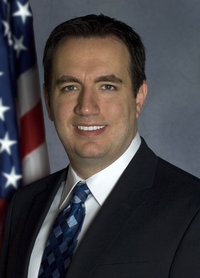
Rep. Frank Burns
Sponsored bills
Maddy summaryThis bill amends Pennsylvania's vehicle tax laws to update how the "average wholesale price" of liquid fuels is defined for tax calculation purposes. It establishes specific pricing tiers, setting the price at $1.87 per gallon for certain future periods while also allowing the Department of Revenue to determine a price based on the previous 12 months, provided it does not fall below $2.99 per gallon. The changes directly affect the state's liquid fuels tax structure and apply to all fuels sold or distributed within Pennsylvania starting 60 days after the bill becomes effective.
Maddy summaryThis bill amends Pennsylvania's Municipalities Planning Code to allow local governments to temporarily halt the submission of new data center development applications. Under the new provision, a municipality can adopt a resolution at a public meeting to pause these submissions for up to 180 days, a period that begins retroactively from the date of public notice. During this pause, local authorities may update their zoning laws regarding data centers, and any applications received while the pause is in effect will be evaluated under the new rules. The legislation defines a data center as a facility primarily used for housing servers or data storage systems with specific backup power and cooling infrastructure.
Maddy summaryHB 2554 establishes formal executive leadership roles for both the Pennsylvania Fish and Boat Commission and the Pennsylvania Game Commission by creating positions for an executive director and a director, respectively. The bill mandates that these leaders be appointed with the Senate's approval and requires a competitive national search process, including a detailed job description and public notice, whenever a vacancy occurs. Additionally, the legislation sets specific qualifications for these roles, such as executive experience and knowledge in areas like budgeting and conservation, while also defining procedures for temporary acting appointments.
Maddy summaryHB 1106 establishes a certification program for chiropractic assistants in Pennsylvania. To become certified, individuals must be at least 18, have a high school diploma, complete an approved training program, pass an exam, and meet background requirements. Certified assistants can only perform tasks delegated by a licensed chiropractor under direct on-premises supervision and must complete 16 hours of continuing education (including 8 in-person hours) every two years to maintain certification. The bill also makes minor editorial changes to the existing Chiropractic Practice Act.
Maddy summaryHB 2163 updates Pennsylvania's Dental Law by clarifying definitions and licensing rules. It specifically revises the definition of "restricted faculty license" to allow licensed dental school faculty to teach in non-profit clinical facilities or accredited advanced education programs, while explicitly excluding profit-driven operations. The bill also amends licensing provisions to require a 10-year waiting period for applicants convicted under drug laws (like the Controlled Substance Act), unless they demonstrate rehabilitation and pose no risk to public safety. These changes directly affect dental schools, faculty members, and applicants with prior drug-related convictions seeking licensure. The bill focuses on modernizing scope-of-practice definitions and refining the review process for certain applicants, without altering general licensing requirements.
Maddy summaryHB 2003 amends Pennsylvania's procurement laws to require state agencies to purchase flags made in America when acquiring flags for official use. This bill directly affects Pennsylvania state departments and agencies that purchase flags for government buildings, events, or displays. The key provision mandates that all flags purchased with state funds must be manufactured within the United States. The bill is currently in the referral stage to the State Government committee.
Maddy summaryThis bill expands the enforcement powers of Pennsylvania's Pharmacy Audit Integrity and Transparency Act to address how Pharmacy Benefit Managers handle Medicaid prescriptions. It directly affects PBMs, pharmacies, and pharmacists by requiring PBMs to accept and process prescriptions from any pharmacy or pharmacist that is in good standing with state regulators. The law prohibits PBMs from limiting patient access to specific pharmacies based on the PBM's own private contracting choices. These changes are designed to ensure that Medicaid patients can use any qualified pharmacy without facing artificial restrictions imposed by their benefit manager.
Maddy summaryThis bill requires emergency medical services providers in Pennsylvania, including paramedics and nurses, to complete specific training on caring for individuals with dementia. The Department of Health must create a program covering how to communicate effectively with these patients, manage behavioral symptoms, and identify signs of abuse. New providers will need three hours of initial training, while all providers must complete one hour of continuing education annually. Those who already finished similar training within the last 18 months will be exempt from the initial requirement but must still take the annual course.