

Maddy summaryHR 180 is a ceremonial resolution recognizing April 13-19, 2025, as "Public Safety Telecommunicators Week" in Pennsylvania. It honors telecommunicators who handle 911 calls, process approximately 14.5 million emergency requests annually, and provide critical support during crises. The resolution does not create new laws or funding but formally acknowledges their service through a designated week of recognition. This applies directly to Pennsylvania’s public safety telecommunicators, who serve as first responders during emergencies.
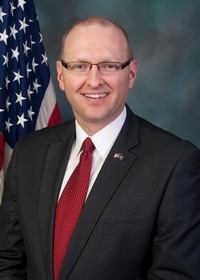
Rep. Marty Causer
Sponsored bills
Maddy summaryHB 1178 establishes a Rural Library Grant Program to provide funding for essential maintenance and infrastructure upgrades at eligible libraries in Pennsylvania. The program targets libraries serving populations of fewer than 10,000 people, offering annual grants between $20,000 and $100,000 for specific repairs like roof replacements, boiler systems, plumbing, energy efficiency projects, health and safety improvements, and internet connectivity (excluding educational technology hardware or software). The Department of Education must create application guidelines within 60 days, review applications to ensure statewide geographic distribution, and publicly report all funded projects on its website.
Maddy summaryHB 1085 amends Pennsylvania's Motor License Fund allocation rules for the Pennsylvania State Police. It sets a 2025-2026 funding cap at 68% of the 2016-2017 level ($125 million) and eliminates all future appropriations for this purpose starting in fiscal year 2026-2027. The bill directly affects the State Police budget and the Motor License Fund, which is funded by vehicle registration fees. This is a procedural budget adjustment with no new policy changes, solely modifying existing funding levels.
Maddy summaryHB 1164 authorizes Pennsylvania's Department of Environmental Protection (DEP) to propose a carbon dioxide emissions tax or fee after following a strict public process. It requires the DEP to hold 180 days of public comment, conduct four public hearings across the state, and submit detailed reports to lawmakers on economic impacts, facility-level emissions, and electricity price effects before any such tax can be considered. The bill directly affects electric generation facilities (like power plants) and electricity consumers by mandating transparency and analysis of how a carbon tax would impact costs and operations. Crucially, it does not impose a tax itself but creates the procedural framework for future legislative action on carbon emissions regulation.
Maddy summaryHB 1128 establishes Pennsylvania's Medicaid Care Transition Program to address delays in moving Medicaid patients from emergency departments to appropriate follow-up care. It directly affects Medicaid patients stuck in emergency settings, hospitals, and "responsible entities" (like county Medicaid managed care plans) that must create dedicated care transition units. Key provisions require responsible entities to: contact hospitals within 24 hours for placement, seek out-of-network options if in-network care isn't available quickly, and notify the Department of Human Services after 48 hours if placement fails. The Department then intervenes to resolve barriers like clinical issues, payment problems, or coordination with other agencies. The law aims to reduce emergency department overcrowding and ensure timely access to necessary postacute care for Medicaid enrollees.
Maddy summaryHB 1152 requires insurance companies to directly reimburse non-network emergency medical services (EMS) agencies for 911 emergency calls within 45 days at 350% of the Medicare ambulance rate for the same service in the same area. EMS agencies must register with the state annually to qualify for direct payments, and insurers cannot demand contracts to facilitate this reimbursement. The insurer's payment covers the full service cost (excluding the patient's copay, coinsurance, or deductible), so EMS agencies cannot bill patients for the remaining amount. This law applies only to non-network EMS providers offering 911 emergency medical services, unless preempted by federal law.
Maddy summaryHB 1044 allows authorized entities like schools, childcare centers, or sports organizations to stock and use epinephrine delivery systems (e.g., auto-injectors) without requiring individual prescriptions for each person. It permits these entities to acquire devices under a single prescription from a healthcare provider, store them accessibly per FDA guidelines, and train designated staff to recognize anaphylaxis and administer the devices. Staff who complete approved training can use the devices in good faith for anyone showing signs of a severe allergic reaction, regardless of prior diagnosis or prescription. The bill also includes protections for individuals acting in good faith during emergencies.
Maddy summaryHB 1035 amends Pennsylvania's Solid Waste Management Act by adding specific definitions for "advanced recycling" and related terms. It clarifies that plastic waste and waste tires processed through advanced recycling (using methods like pyrolysis) are no longer classified as "municipal waste" or "residual waste" under the law. This change directly affects facilities using advanced recycling technology, reducing their regulatory burden under existing waste management rules. The bill takes effect 60 days after enactment.
Maddy summaryHB 962 allows eligible organizations, such as charities and non-profits, to conduct virtual raffles and drawings using electronic payments like credit cards or mobile apps. The bill requires organizations to verify that participants are physically in Pennsylvania, are at least 18 years old, and provide accurate identity information through methods like government ID checks. It also restricts how winners are announced - only simple internet-based conferencing (e.g., Zoom) without animations, images, or slot machine technology can be used. These rules aim to modernize virtual game operations while ensuring compliance with state and federal gambling laws.
Maddy summaryThis resolution designates March 19, 2025, as "The Pennsylvania State University IFC/Panhellenic Dance Marathon (THON) Day" in Pennsylvania. It honors THON for raising over $17 million during its 2025 event to support the Four Diamonds Fund at Penn State Hershey Children's Hospital, which provides financial and emotional aid for pediatric cancer patients and funds cancer research. The resolution recognizes THON's role as the world's largest student-run philanthropy event, which has raised over $200 million since 1977 for childhood cancer care.