

Maddy summaryHB 68, the State-Owned Vehicle Assignment Limitation Act, prohibits Pennsylvania state officials (members of the General Assembly) from being assigned or leasing state-owned vehicles for official use, effective 60 days after enactment. The bill directly affects legislators who previously received state vehicles, banning new assignments while allowing current users to retain their vehicles until they leave office or return the vehicle. Exceptions apply for emergency response duties requiring vehicle use. The law aims to restrict the use of public funds for personal vehicle assignments by lawmakers, with no new leases or assignments permitted after the effective date.
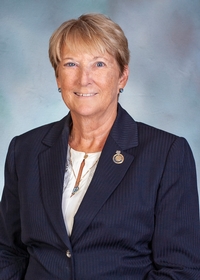
Rep. Kathy Rapp
Sponsored bills
Maddy summaryThis bill authorizes the creation of a Gold Star Families Memorial Monument on Pennsylvania State Capitol grounds to honor military members who died in service and their families. The monument, designed by Woody Williams and Kenton Blackwood, will consist of four black granite slabs featuring inscriptions and scenes representing homeland, patriotism, family, and sacrifice. The MI Charitable Foundation is designated to fund and manage the construction and ongoing maintenance of the site, while the Department of General Services will assist in preparing the location and facilitating the project. The specific location is defined as the area south of the Forum Building, east of the Speaker K. Leroy Irvis Office Building, and north of Walnut Street.
Maddy summaryThis bill updates Pennsylvania laws to standardize the three-year registration and recertification requirements for emergency medical responders, emergency medical technicians, and emergency medical services vehicle operators. Under the new rules, these professionals must renew their credentials every three years by passing exams or completing continuing education credits, while those whose licenses have expired for six years or less can regain certification through testing or additional training. The legislation also clarifies that EMS vehicle operator certifications are permanent but require triennial registration, except for those working exclusively for a specific regional system, and establishes stricter criteria for maintaining operator status, including limits on recent driving violations.
Maddy summaryThis bill designates April 18, 2024, as "Lineworker Appreciation Day" to honor the electrical workers in Pennsylvania who maintain the state's power grid. The resolution acknowledges the dangerous and essential work these lineworkers perform to ensure electricity is delivered reliably to homes and businesses. It does not create new laws or change regulations but serves as a formal expression of gratitude from the House of Representatives.
Maddy summaryThis resolution designates the week of September 15 through 21, 2024, as "Surgical Technologist Week" throughout Pennsylvania. The measure aims to recognize and honor the contributions of surgical technologists, who assist surgeons and other medical staff in operating rooms and surgical centers. By officially naming this period, the bill seeks to highlight the importance of these healthcare professionals to the state's medical community.
Maddy summaryThis bill updates Pennsylvania's Medical Marijuana Act to establish a formal registration system for physicians who recommend medical cannabis. Under the new rules, the Department of Health can place conditions on a doctor's registration, such as probation, limits on how many patients they can certify, mandatory supervision by another doctor, or specific reporting requirements. To be eligible for registration, a physician must not have been convicted of a felony related to controlled substances in the five years prior to applying. The law takes effect 60 days after it is passed.
Maddy summaryThis Pennsylvania House Resolution designates September 2024 as "Childhood Cancer Awareness Month" to highlight the impact of the disease on young people and their families. The measure does not create new laws or alter funding but serves as a symbolic gesture to raise public awareness and honor those affected by childhood cancer. It encourages residents to support the cause and acknowledges the state's existing medical facilities and research contributions in the fight against the illness.
Maddy summaryThis bill amends Pennsylvania's drug laws to create a formal process for adding new opioid overdose reversal medications to state standing orders. It requires the Department of Health to review new drugs, accept public comments, and publish decisions within specific timeframes before updating the list of approved medications. The legislation also allows interested parties to petition for the reconsideration of previously rejected drugs if new information becomes available. By establishing these clear steps, the bill aims to streamline how emergency overdose treatments are authorized and made available for use.
Maddy summaryThis bill updates the membership rules for Pennsylvania's State Veterans' Commission to ensure broader representation of different veteran groups. It mandates that the commission include representatives from sixteen specific national veterans' organizations, such as the American Legion and VFW, along with four members appointed by the Governor who must be female or Vietnam-era veterans. The legislation also clarifies the roles of state-level leaders from the American Legion, Disabled American Veterans, and Veterans of Foreign Wars as nonvoting members. These changes aim to modernize the commission's composition while maintaining its existing structure under Pennsylvania law.
Maddy summaryThis bill amends an existing law to expand eligibility for grants that help pay off student loans for healthcare workers serving in rural areas or medically underserved communities. The primary change broadens the definition of eligible recipients from just physicians and nurses to include all types of medical practitioners, such as midwives, and adds rural health clinics as qualifying employers. Additionally, the bill adjusts the grant award structure to allow payments in increments of up to $10,000 and extends the repayment period for recipients from 60 to 90 months. These modifications aim to increase the pool of eligible professionals and improve the financial terms of the loan repayment assistance program.