

Maddy summaryThis symbolic resolution designates June 2025 as "Life Month" in Pennsylvania. It calls on churches, businesses, and communities to celebrate the third anniversary of the Dobbs v. Jackson Women's Health Organization decision (June 24, 2025), which overturned Roe v. Wade. The resolution does not create new laws or policies but serves as a ceremonial designation. It has no direct legal effect on individuals or funding.
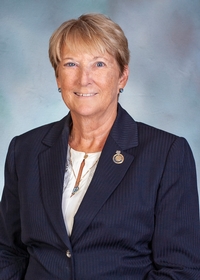
Rep. Kathy Rapp
Sponsored bills
Maddy summaryHB 1494 would amend Pennsylvania's Controlled Substance Act to allow ivermectin (for human use) to be sold over-the-counter without a prescription or consultation with a healthcare provider. This change directly affects consumers who can purchase ivermectin at pharmacies or stores without needing a doctor's visit, and pharmacies that would sell it. The bill specifies that ivermectin must be "suitable for human use" to qualify as an over-the-counter medication under state law. It takes effect 60 days after enactment, making this a concrete policy shift in how the medication is distributed in Pennsylvania.
Maddy summaryHB 1491 requires Pennsylvania's Department of Health commissioner to continually assess and revise emergency medical services (EMS) agency functions to improve service quality, adapt to community needs, and boost recruitment/retention of EMS providers. It establishes a State EMS Advisory Board to advise on system improvements and updates definitions for key EMS roles and entities. The bill directly affects EMS agencies, providers, and the Department of Health by mandating ongoing system reviews and creating a formal advisory structure. Key provisions include requiring the commissioner to address recruitment challenges and ensure EMS systems meet evolving community demands.
Maddy summaryHR 101 designates the week of May 11-17, 2025, as "National Hospital Week" in Pennsylvania through a symbolic resolution. It honors hospitals and health care workers for providing critical services (including 56 trauma centers and 120,000+ births annually), supporting over 273,000 direct jobs, and contributing $186.5 billion to Pennsylvania's economy. The resolution does not create new laws, funding, or obligations - only a formal recognition and call for public appreciation. It highlights hospitals' role in community health without specifying policy changes or outcomes.
Maddy summaryHB 1461 establishes the Career and Technical Education Investment Incentive Program within the Public School Code of 1949. This program allows business firms to make contributions - including cash, property, or services - to support career and technical education. These contributions can go to non-profit partnership organizations or directly to participating public and charter schools. Funds are intended to cover program-related costs or expand enrollment for eligible students in these programs, particularly those focused on high-priority occupations.
Maddy summaryThis resolution designates May 2025 as "Amyotrophic Lateral Sclerosis (ALS) Awareness Month" in Pennsylvania. It formally recognizes ALS (Lou Gehrig's disease) through a symbolic designation, highlighting the disease's impact - such as its fatal neurodegenerative nature, average 2-5 year survival after diagnosis, and lack of cure - without creating new laws or funding. The resolution aims to increase public awareness of ALS, acknowledge the challenges faced by patients and families, and honor ongoing research efforts. As a procedural resolution, it does not alter any existing policies or provide financial support.
Maddy summaryHB 1164 authorizes Pennsylvania's Department of Environmental Protection (DEP) to propose a carbon dioxide emissions tax or fee after following a strict public process. It requires the DEP to hold 180 days of public comment, conduct four public hearings across the state, and submit detailed reports to lawmakers on economic impacts, facility-level emissions, and electricity price effects before any such tax can be considered. The bill directly affects electric generation facilities (like power plants) and electricity consumers by mandating transparency and analysis of how a carbon tax would impact costs and operations. Crucially, it does not impose a tax itself but creates the procedural framework for future legislative action on carbon emissions regulation.
Maddy summaryHB 1069 modifies Pennsylvania's Public School Code to allow military-connected students to enroll in schools before establishing residency. Specifically, it requires school districts to permit children of active-duty military members (with official transfer orders) to enroll immediately upon providing military orders and proof of intent to move (e.g., lease, home purchase contract). The bill mandates that schools accept transferred credits with their original grades for GPA calculations and requires families to submit residency proof within 45 days of the military transfer date. This directly affects military families relocating within Pennsylvania, ensuring continuity in education during relocations.
Maddy summaryPennsylvania's House Resolution 131 is a non-binding statement urging the federal government to delay REAL ID enforcement until the program is eliminated. It argues that REAL ID requirements burden citizens' freedom of movement, disproportionately affect married women, and have been delayed for nearly two decades without security justification, causing public confusion. The resolution specifically asks the President to pause enforcement (with an upcoming May 2025 deadline) and urges Congress to abolish the program entirely. It does not create new laws or affect any individuals directly - it is solely a request sent to the President and federal lawmakers.
Maddy summaryThis resolution designates October 14, 2025, as "William Penn Day" in Pennsylvania to honor the legacy of William Penn, the founder of the Commonwealth. It does not create new laws or affect specific groups, but formally recognizes Penn's historical contributions through commemorative recognition. The resolution cites his role in establishing Pennsylvania's early governance, religious tolerance, and influence on American founding principles.