

Maddy summaryThis Pennsylvania House Resolution designates October 2024 as "Agent Orange Awareness Month" to honor Vietnam War veterans who were exposed to herbicides during their service. The measure highlights the health risks faced by these veterans, including those who served on ships in offshore waters, and acknowledges federal laws that presume certain diseases are linked to Agent Orange exposure. By officially recognizing this month, the resolution aims to raise awareness about the ongoing challenges these veterans face regarding cancer and other conditions caused by chemical exposure.
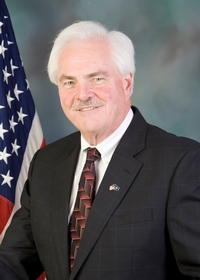
Rep. Lee James
Sponsored bills
Maddy summaryThis Pennsylvania House Resolution designates November 2024 as "Veterans and Military Families Month" to honor the state's large veteran population and their families. The measure serves as a symbolic gesture to acknowledge the sacrifices made by service members and to highlight the support provided by the Department of Military and Veterans Affairs. It does not create new laws or funding but directs a copy of the resolution to the relevant state department for record-keeping.
Maddy summaryThis bill updates Pennsylvania law to require the state commission overseeing disabled veterans' real estate tax exemptions to review applicants' financial situations at least once every ten years. The change aims to ensure that tax relief continues to be granted only to those who still demonstrate a financial need based on their current economic status. By adjusting the review frequency, the legislation seeks to maintain the integrity of the tax exemption program for eligible veterans. The law will become effective 60 days after it is signed into force.
Maddy summaryThis Pennsylvania resolution designates August 21, 2024, as "National Senior Citizens Day" to honor the state's 2.5 million residents aged 65 and older. The measure encourages all residents to personally check in with their elderly loved ones and express appreciation for their contributions. It does not create new laws or funding but serves as a symbolic gesture to raise awareness about the challenges seniors face, such as isolation and limited income.
Maddy summaryThis bill allows minors who are family members of active-duty military personnel to receive credit for driving experience gained in other states when applying for a Pennsylvania driver's license. Specifically, it permits these minors to count the time they held a learner's permit and the hours of practical driving completed elsewhere toward the state's requirements, provided they now live with the service member in Pennsylvania. The law applies to minors under 18 seeking a junior driver's license, including those wanting to operate a motorcycle. The changes take effect 60 days after the bill is passed.
Maddy summaryThis bill updates the membership rules for Pennsylvania's State Veterans' Commission to ensure broader representation of different veteran groups. It mandates that the commission include representatives from sixteen specific national veterans' organizations, such as the American Legion and VFW, along with four members appointed by the Governor who must be female or Vietnam-era veterans. The legislation also clarifies the roles of state-level leaders from the American Legion, Disabled American Veterans, and Veterans of Foreign Wars as nonvoting members. These changes aim to modernize the commission's composition while maintaining its existing structure under Pennsylvania law.
Maddy summaryThis bill establishes a policy allowing Pennsylvania educational institutions to award academic credit for military training and service. It directly affects students enrolled in community colleges, public universities, and state-related institutions who have completed military duties. The legislation requires the Department of Education to create guidelines for granting credit based on the skills and experience gained during service. Additionally, the bill ensures that professionals holding state licenses do not lose their credentials or miss continuing education requirements while serving in the military.
Maddy summaryThis bill expands the scope of practice for pharmacists in Pennsylvania by allowing them to administer injectable medications, biologicals, and immunizations to patients aged three and older. It establishes new requirements for training, parental consent for minors, and reporting procedures while also permitting pharmacists to delegate these tasks to specific healthcare professionals and qualified pharmacy technicians under strict supervision. Additionally, the legislation grants pharmacies with existing federal waivers the ability to perform certain laboratory tests for common illnesses like COVID-19 and the flu without adhering to some state clinical laboratory regulations.
Maddy summaryThis bill amends Pennsylvania law to prevent the chairperson of a borough vacancy board from voting to fill their own vacancy in an elective borough office. The change directly affects boroughs that use vacancy boards to fill empty seats and ensures that the board's chair cannot participate in deciding their own appointment. By removing the chairperson's vote in this specific situation, the legislation aims to reduce potential conflicts of interest during the selection process. The provision applies only to the chairperson's vote and does not alter other aspects of how vacancies are filled.
Maddy summaryHB 2353 establishes civil liability for entities that use artificial intelligence or other automated systems to create deceptive campaign advertisements featuring current or former candidates. The bill defines "covered persons" as firms, political committees, foreign governments, and individuals acting on their behalf, while also clarifying that generative AI and synthetic content like deepfakes fall under these regulations. To avoid liability, covered persons must provide clear and conspicuous disclosures stating that an advertisement contains manipulated or generated content, with specific formatting requirements for text, video, and audio formats. If a covered person fails to provide such a disclosure and is found liable, the law requires the immediate removal of the advertisement and imposes financial penalties based on the jurisdiction where the candidate filed with election officials.