

Maddy summaryHB 1005 would repeal Pennsylvania's Use and Storage Tax Act of 1953, which imposed a tax on the use and storage of physical goods (like furniture, electronics, or vehicles) within the state. This law required businesses selling such goods to register, collect the tax from customers, and remit it to the state, with the revenue funding public schools. The bill would eliminate this tax obligation for businesses and remove the administrative requirements for collecting and reporting the tax. The repeal directly affects businesses that previously collected this tax and the public school funding mechanism tied to it.
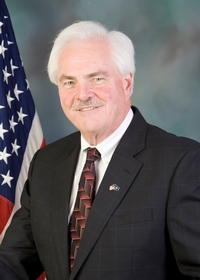
Rep. Lee James
Sponsored bills
Maddy summaryHB 1033 prohibits healthcare providers from performing gender transition procedures on minors under 18, including surgeries, cross-sex hormones, and puberty blockers. It also requires government health programs (like Medicaid) and health insurance policies to stop covering these procedures for minors. The bill defines "gender transition procedures" to include genital/nongenital surgeries, cross-sex hormones, and puberty blockers. Individuals aged 18 or older are not affected by the ban and may continue receiving such care.
Maddy summaryHB 159 amends Pennsylvania law to strengthen penalties for illegally transporting, selling, importing, or releasing nonnative fish and wildlife. It directly affects individuals, businesses, or organizations handling nonnative species, including pet trade sellers, anglers, and conservation groups. The bill increases misdemeanor penalties: violations involving non-native fish become third-degree misdemeanors for negligence or first-degree for intentional acts, while violations with endangered/threatened species escalate to second-degree (negligent/intentional) misdemeanors. It clarifies that each animal, egg, or fish involved in a violation counts as a separate offense, intensifying consequences for repeated or large-scale violations. The changes aim to better protect Pennsylvania's ecosystems and native species from invasive threats.
Maddy summaryHB 984 requires write-in candidates for state, county, or local office in Pennsylvania to file a financial disclosure statement within 30 days of the election board certifying them as the winner, unless they decline the nomination within that period. If a candidate fails to file within the 30-day window, they are barred from appearing on the ballot. The statement must be submitted to the appropriate authority: the state election commission for state offices or the local governing body for county and local offices. This amendment extends Pennsylvania’s existing financial disclosure requirements to cover write-in candidates, who were previously not subject to this timeline.
Maddy summaryThis bill designates Bridge Key 25406 on Pennsylvania Route 346 over Willow Creek in Corydon Township, McKean County, as the "Private First Class Bruce A. Cobb Memorial Bridge." It requires the Pennsylvania Department of Transportation to install and maintain signs naming the bridge, honoring Cobb's military service and burial location in the area. The bill directly affects the bridge's official identification and signage for public traffic. (Procedural bill; summary focuses on the concrete naming action and sign requirement.)
Maddy summaryThis bill designates Bridge Key 22726 on Pennsylvania Route 934 over Swatara Creek in East Hanover Township, Lebanon County, as the WO1 John Stephen Chrin Memorial Bridge. It honors Warrant Officer 1 John Stephen Chrin, a Vietnam War DUSTOFF helicopter pilot killed in action on October 13, 1971, after completing over 125 combat medical evacuation missions. The bill requires the Pennsylvania Department of Transportation to install and maintain signage identifying the bridge with this memorial name. The designation applies solely to this specific bridge structure and has no policy or funding implications.
Maddy summaryHB 952 requires public utilities in Pennsylvania to provide landlords with written notice at least seven days before terminating utility service to a property they own. Landlords must have previously notified the utility in writing about their ownership interest, and utilities must send the notice via mail, email, or text (with the landlord's prior consent for electronic contact). If the issue causing the termination isn't resolved, a final notice must be sent by mail on the termination date. This applies to landlords but excludes "landlord ratepayers." The bill aims to prevent abrupt service disruptions for property owners.
Maddy summaryHB 685 requires Pennsylvania schools to accept U.S. currency as payment for admission to school-sponsored activities, such as athletic events, assemblies, or field trips. It applies to all school entities, including public school districts, charter schools, and private schools participating in school activities. The bill mandates that cash must be accepted when fees are charged, while allowing schools to also accept other payment methods like credit cards. It defines "cash" as U.S. coins and paper money recognized as legal tender and clarifies that schools may refuse payments in large denominations that exceed the fee amount.
Maddy summaryThis Pennsylvania House resolution formally recognizes March 17, 2025, as "St. Patrick's Day" within the state. It acknowledges Irish Americans' military contributions during the Revolutionary War, citing historical records showing they comprised 40-50% of the Continental Army by 1778. The resolution has no legal effect or policy changes - it is purely ceremonial, celebrating cultural heritage. It directly affects Pennsylvanians of Irish descent (over 15% of the state's population) through this official recognition. The resolution does not alter any laws or provide funding.
Maddy summaryThis resolution designates October 14, 2025, as "William Penn Day" in Pennsylvania to honor the legacy of William Penn, the founder of the Commonwealth. It does not create new laws or affect specific groups, but formally recognizes Penn's historical contributions through commemorative recognition. The resolution cites his role in establishing Pennsylvania's early governance, religious tolerance, and influence on American founding principles.