

Maddy summaryHB 1172 defines "utility terrain vehicle" (UTV) as a four-wheel off-road vehicle with specific size and weight limits (max 64 inches wide or 1,700 pounds), excluding ATVs, snowmobiles, and other vehicle types. The bill clarifies that state, local, and county authorities can designate roads for UTVs, snowmobiles, and ATVs, including whether these roads may share space with regular traffic. It requires helmets for snowmobile and ATV operators and passengers on shared roads but exempts UTVs equipped with bucket seats, seat belts, and roll cages. The law also directs the Department of Transportation to specify approved helmet types through regulations.
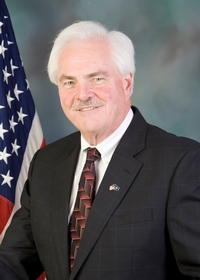
Rep. Lee James
Sponsored bills
Maddy summaryHB 1178 establishes a Rural Library Grant Program to provide funding for essential maintenance and infrastructure upgrades at eligible libraries in Pennsylvania. The program targets libraries serving populations of fewer than 10,000 people, offering annual grants between $20,000 and $100,000 for specific repairs like roof replacements, boiler systems, plumbing, energy efficiency projects, health and safety improvements, and internet connectivity (excluding educational technology hardware or software). The Department of Education must create application guidelines within 60 days, review applications to ensure statewide geographic distribution, and publicly report all funded projects on its website.
Maddy summaryHB 1181 amends Pennsylvania's Workers' Compensation Act to clarify how employers can recover costs from third parties when a work injury is caused by someone else. It specifies that attorney fees and expenses must be shared between employers and employees based on the portion of compensation the employer paid. The bill also allows employers to seek reimbursement for payments made for injuries initially deemed non-compensable, if agreed upon during settlement. This affects employers, employees, and third parties involved in workers' compensation claims where a third party is liable.
Maddy summaryHB 1046 establishes the Pennsylvania Poet Laureate position and a nomination committee to select the appointee. The Governor appoints the Poet Laureate from a shortlist of three nominees provided by the committee (which includes education, arts, and humanities representatives), with the Laureate serving a two-year term and performing ceremonial duties like reading poems at the Governor's inauguration and legislative sessions, all without pay but with travel expenses reimbursed. This bill directly affects Pennsylvania residents by creating a state position to promote poetry and literary arts through official events.
Maddy summaryHB 1156 amends Pennsylvania's Human Services Code to strengthen eligibility verification for medical assistance and food stamp programs. The bill requires the state department to regularly review data from other agencies, including monthly checks for gambling winnings over $3,000 (via the Gaming Control Board), death records (from the Department of Health), and residency changes (via out-of-state EBT), plus quarterly checks for employment and income changes (from Labor and Revenue). It also prohibits the department from accepting eligibility determinations from health insurance exchanges without verification and bans self-attestation for key factors like income, residency, or household composition without prior verification. These changes update the verification process to align with current data-sharing capabilities.
Maddy summaryHR 113 is a resolution recognizing April 26, 2025, as "Diabetic Eye Screening Day" in Pennsylvania. It highlights diabetic retinopathy - a diabetes complication causing vision loss - and encourages free eye screenings by ophthalmologists on that date to raise awareness. The resolution does not create new laws or funding but symbolically supports early detection efforts for Pennsylvanians with diabetes. It directly affects residents at risk of vision loss from untreated diabetic eye disease by promoting accessible screenings. The bill was adopted by the House on April 7, 2025.
Maddy summaryHB 1164 authorizes Pennsylvania's Department of Environmental Protection (DEP) to propose a carbon dioxide emissions tax or fee after following a strict public process. It requires the DEP to hold 180 days of public comment, conduct four public hearings across the state, and submit detailed reports to lawmakers on economic impacts, facility-level emissions, and electricity price effects before any such tax can be considered. The bill directly affects electric generation facilities (like power plants) and electricity consumers by mandating transparency and analysis of how a carbon tax would impact costs and operations. Crucially, it does not impose a tax itself but creates the procedural framework for future legislative action on carbon emissions regulation.
Maddy summaryHB 1152 requires insurance companies to directly reimburse non-network emergency medical services (EMS) agencies for 911 emergency calls within 45 days at 350% of the Medicare ambulance rate for the same service in the same area. EMS agencies must register with the state annually to qualify for direct payments, and insurers cannot demand contracts to facilitate this reimbursement. The insurer's payment covers the full service cost (excluding the patient's copay, coinsurance, or deductible), so EMS agencies cannot bill patients for the remaining amount. This law applies only to non-network EMS providers offering 911 emergency medical services, unless preempted by federal law.
Maddy summaryHB 1124 amends Pennsylvania's Taxpayer Relief Act to protect eligible seniors from losing property tax or rent rebates due to automatic Social Security cost-of-living adjustments (COLAs). It directly affects seniors currently receiving these rebates who exceed income limits solely because of COLAs. The bill modifies the definition of "income" to specifically state that seniors eligible as of December 31, 2024, remain eligible if their income limit is exceeded only due to Social Security COLAs. This exception applies until December 31, 2028. The change ensures these seniors maintain their rebate eligibility during temporary income spikes caused by federal COLAs.
Maddy summaryHB 1112 allows Pennsylvania electric utility customers to request traditional electromechanical analog meters instead of smart meters. Customers can elect this option by notifying their utility company, and if the utility has already installed smart meters, they may charge the customer for the switch - amortized over 12 months - but cannot impose additional fees. The bill directly affects residential and commercial electricity customers who prefer analog meters for privacy or cost reasons. It defines "electromechanical analog meters" as devices with no wireless capabilities, no power line transmission/reception, and specific safety features, while ensuring costs are recovered through approved utility rates.