

Maddy summaryHB 1536 modifies Pennsylvania's Public School Code to create new certification flexibility for career and technical education (CTE) administrators. It allows educators with a superintendent's letter of eligibility to become CTE directors if they have at least three years of relevant experience in CTE schools or districts and complete approved graduate-level training in CTE administration. The bill specifically prohibits the Department of Education from requiring a minimum time or percentage of duties dedicated to CTE supervision. This directly affects school districts seeking to hire CTE directors who may not hold traditional administrative certifications, streamlining their path to leadership roles in CTE programs.
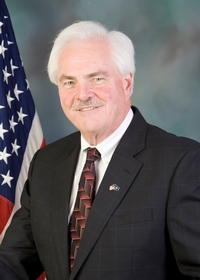
Rep. Lee James
Sponsored bills
Maddy summaryHB 1517 would amend Pennsylvania's vehicle registration laws to allow private vendors to design custom license plates for vehicle owners. This change directly affects drivers who wish to choose non-standard plate designs and vendors seeking to sell these customized options. The bill establishes a new process within the state's vehicle registration system for vendor-designed plates, replacing the current requirement for state-only designs. It does not alter vehicle registration fees or requirements beyond this plate design option.
Maddy summaryHB 1519 amends Pennsylvania's 1921 Insurance Company Law to require casualty insurance policies to cover mental illness treatments. This directly affects insurance companies writing casualty policies and policyholders seeking mental health services. The key provision mandates that insurers include mental health coverage in standard casualty policies, aligning it with other health coverage requirements. The bill focuses on expanding access to mental health care by ensuring it is covered under these specific insurance policies.
Maddy summaryHR 239 is a commemorative resolution designating May 9, 2025, as "Fire Police Day" in Pennsylvania. It honors fire police officers for their service in protecting residents' safety and well-being. This resolution does not create new laws or policies but formally recognizes the contributions of fire police officers statewide. The bill was referred to the Veterans Affairs & Emergency Preparedness committee for further consideration.
Maddy summaryThis bill increases monthly pension payments for two groups of Pennsylvania veterans: 1) Blind veterans (defined as those with 3/60 or 10/200 vision or worse from service-connected injuries) now receive $200/month (up from $150). 2) Amputee/paralyzed veterans (with two limbs at ≥40% disability rating per VA standards) now receive $200/month (up from $150). Eligibility requires Pennsylvania residency at enlistment or current residence, honorable military service, and VA-certified disability. The change takes effect 60 days after enactment.
Maddy summaryHB 1495 repeals Pennsylvania’s 1921 law imposing a tax on anthracite coal (P.L.479, No.225). This 104-year-old statute, which set declining tax rates (1.5% to 0.5%) and required annual reporting for coal mined or processed in the state, expired in 1931 and has not been enforced since. The bill formally removes this obsolete law from the state’s statutes, as it no longer affects any current tax obligations or regulations. No entities or individuals are directly impacted by this repeal, as the original tax was already inactive for over nine decades.
Maddy summaryHB 1490 creates a pilot program allowing eligible Certified Registered Nurse Practitioners (CRNPs) to practice independently in Pennsylvania's health professional shortage areas. To qualify, CRNPs must hold a current license, have no disciplinary actions in the past five years, and complete 3,600 hours of collaborative practice with a physician in primary care (family, internal medicine, gynecology, or pediatrics) within the last five years. Under the program, participating CRNPs can prescribe medications and practice without a collaborative agreement in shortage areas, but must disclose their non-physician status to patients and notify the board if they change practice settings. The program requires biennial renewal with 10 hours of additional patient safety continuing education and limits practice to primary care within designated shortage areas.
Maddy summaryHB 1491 requires Pennsylvania's Department of Health commissioner to continually assess and revise emergency medical services (EMS) agency functions to improve service quality, adapt to community needs, and boost recruitment/retention of EMS providers. It establishes a State EMS Advisory Board to advise on system improvements and updates definitions for key EMS roles and entities. The bill directly affects EMS agencies, providers, and the Department of Health by mandating ongoing system reviews and creating a formal advisory structure. Key provisions include requiring the commissioner to address recruitment challenges and ensure EMS systems meet evolving community demands.
Maddy summaryHB 1470 proposes to amend the Human Services Code to establish a subscription-like model for GLP-1 agonists used to treat obesity within public assistance programs. The bill directs the state department to seek a waiver from the Centers for Medicare and Medicaid Services (CMS) to allow the Commonwealth to enter into value-based arrangements with drug manufacturers. These arrangements are defined as "supplemental rebate agreements," where the Commonwealth pays an agreed amount per treatment up to a cap, after which additional treatments are provided at no cost. If federal approval is granted, the department would then develop regulations to implement this new payment system.
Maddy summaryThis bill is a symbolic resolution designating May 20, 2025, as "Jimmy Stewart Day" in Pennsylvania. It honors the late actor Jimmy Stewart, who was born in Indiana, Pennsylvania, and had a significant film career including roles in *It's a Wonderful Life* and *Mr. Smith Goes to Washington*. The resolution highlights his birthplace, career achievements, and honorary awards like the Presidential Medal of Freedom. As a commemorative resolution, it has no legal effect or policy impact - it simply recognizes Stewart's legacy through a designated day.