

Maddy summaryHB 1566 creates two new pilot programs within Pennsylvania's Career and Technical Centers: one for cosmetology training and another for barber training. The bill directly affects students seeking these specific vocational qualifications by allowing them to enroll in these programs at designated Career and Technical Centers. Key provisions establish the framework for these pilot programs under the existing Public School Code, including requirements for program implementation and oversight. The bill aims to expand access to licensed cosmetology and barber training through existing career education infrastructure.
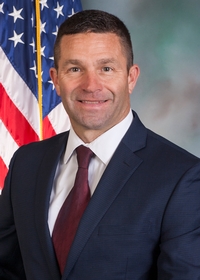
Rep. Jim Struzzi
Sponsored bills
Maddy summaryHR 174 is a non-binding resolution designating July 2025 as "Juvenile Arthritis Awareness Month" in Pennsylvania. It formally recognizes the need for increased public awareness about juvenile arthritis, a chronic condition affecting children and adolescents. This resolution does not create new laws or allocate funding; it serves solely as a symbolic acknowledgment by the Pennsylvania House of Representatives. The bill was referred to the Health Committee, reported as committed, and ultimately laid on the table on June 4, 2025.
Maddy summaryThis bill is a symbolic resolution designating May 20, 2025, as "Jimmy Stewart Day" in Pennsylvania. It honors the late actor Jimmy Stewart, who was born in Indiana, Pennsylvania, and had a significant film career including roles in *It's a Wonderful Life* and *Mr. Smith Goes to Washington*. The resolution highlights his birthplace, career achievements, and honorary awards like the Presidential Medal of Freedom. As a commemorative resolution, it has no legal effect or policy impact - it simply recognizes Stewart's legacy through a designated day.
Maddy summaryHouse Bill 1462, also known as The Fair Play Broadcasting Act, amends the Public School Code to grant visiting school teams the same rights as home teams to broadcast interscholastic athletic competitions. This allows visiting school entities, including public and nonpublic schools, to provide radio broadcasting, video streaming, or telegraphic play-by-play accounts. These rights apply if the visiting team has an agreement with a media organization or if it has a curricular program for secondary students that typically broadcasts its home games. The provisions of this act will apply to competitions beginning in the 2025-2026 school year.
Maddy summaryHB 1172 defines "utility terrain vehicle" (UTV) as a four-wheel off-road vehicle with specific size and weight limits (max 64 inches wide or 1,700 pounds), excluding ATVs, snowmobiles, and other vehicle types. The bill clarifies that state, local, and county authorities can designate roads for UTVs, snowmobiles, and ATVs, including whether these roads may share space with regular traffic. It requires helmets for snowmobile and ATV operators and passengers on shared roads but exempts UTVs equipped with bucket seats, seat belts, and roll cages. The law also directs the Department of Transportation to specify approved helmet types through regulations.
Maddy summaryHR 180 is a ceremonial resolution recognizing April 13-19, 2025, as "Public Safety Telecommunicators Week" in Pennsylvania. It honors telecommunicators who handle 911 calls, process approximately 14.5 million emergency requests annually, and provide critical support during crises. The resolution does not create new laws or funding but formally acknowledges their service through a designated week of recognition. This applies directly to Pennsylvania’s public safety telecommunicators, who serve as first responders during emergencies.
Maddy summaryHB 990 amends Pennsylvania statutes to give boroughs and incorporated towns new authority over stormwater management. It requires municipalities to develop stormwater management plans and facilities, and allows them to charge fees based on property characteristics - particularly impervious surfaces like driveways, roofs, and pavement - which are presumed to benefit from stormwater systems. Property owners may qualify for fee exemptions or credits if they install approved stormwater facilities meeting "best management practices." The bill directly affects local governments (boroughs and incorporated towns) and property owners through new planning requirements and potential fees.
Maddy summaryHB 991 amends Pennsylvania's First Class Township Code to establish new storm water management authority for townships. It authorizes township boards to plan, construct, and maintain storm water facilities (like retention systems and piping) and acquire existing property owner systems through purchase or eminent domain. The bill requires townships to base fees for these systems on property characteristics, particularly impervious surfaces (e.g., roofs, driveways, parking lots), while allowing exemptions for properties with approved storm water management practices. All activities must comply with state storm water laws and approved watershed plans, directly affecting first-class townships and property owners paying associated fees.
Maddy summaryHB 1164 authorizes Pennsylvania's Department of Environmental Protection (DEP) to propose a carbon dioxide emissions tax or fee after following a strict public process. It requires the DEP to hold 180 days of public comment, conduct four public hearings across the state, and submit detailed reports to lawmakers on economic impacts, facility-level emissions, and electricity price effects before any such tax can be considered. The bill directly affects electric generation facilities (like power plants) and electricity consumers by mandating transparency and analysis of how a carbon tax would impact costs and operations. Crucially, it does not impose a tax itself but creates the procedural framework for future legislative action on carbon emissions regulation.
Maddy summaryHB 1128 establishes Pennsylvania's Medicaid Care Transition Program to address delays in moving Medicaid patients from emergency departments to appropriate follow-up care. It directly affects Medicaid patients stuck in emergency settings, hospitals, and "responsible entities" (like county Medicaid managed care plans) that must create dedicated care transition units. Key provisions require responsible entities to: contact hospitals within 24 hours for placement, seek out-of-network options if in-network care isn't available quickly, and notify the Department of Human Services after 48 hours if placement fails. The Department then intervenes to resolve barriers like clinical issues, payment problems, or coordination with other agencies. The law aims to reduce emergency department overcrowding and ensure timely access to necessary postacute care for Medicaid enrollees.