

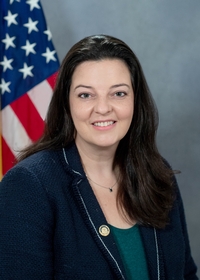
Photo of Liz Hanbidge
D Pennsylvania House · District 61 On the 2026 ballot

Rep. Liz Hanbidge

Compare
Total votes
6,924
all sessions
Attendance
99%
38 missed
Near the chamber average
With party
99%
of cast votes
Higher than 86% of chamber peers
Bipartisan score
0%
crosses aisle rarely
Lower than 90% of chamber peers
Sponsored
1,848
bills & resolutions
Higher than 92% of chamber peers
Committees
5
assignments
1,848 bills and resolutions

Sponsored bills

Total
1,848
Primary
153
Co-sponsor
1,695
This page
1,848
matching current filters
Primary HB 550
In committee · Pennsylvania House · Lead sponsor
An Act providing for bisphenol A-free container products for infants.

Maddy summaryHB 550, the BPA-free Container Products for Infants Act, prohibits the manufacture, sale, or distribution of infant food and beverage containers containing bisphenol A (BPA) above 0.1 parts per billion. It requires manufacturers to use the least toxic alternative when replacing BPA and bans substitutions with EPA-identified carcinogens or reproductive toxicants. The law applies to all containers intended for infants under one year old and will take effect 60 days after enactment. Violations would be enforced under Pennsylvania's Unfair Trade Practices and Consumer Protection Law, subjecting offenders to civil penalties and private lawsuits.

In committee Jun 23, 2026 0 co-sponsors
Primary HB 507
In committee · Pennsylvania House · Lead sponsor
An Act providing for the testing and labeling of baby food and for prohibited levels of toxic heavy metals in baby food; and imposing duties on the Department of Agriculture.

Maddy summaryHB 507, the Baby Food Protection Act, requires Pennsylvania's Department of Health to test all baby food batches for toxic heavy metals like lead, arsenic, cadmium, and mercury. It sets strict limits: baby food cannot exceed 10 parts per billion (ppb) of arsenic, 5 ppb for lead or cadmium, or 2 ppb for mercury. All tested baby food must display labels showing the exact metal levels found in the batch. The bill also directs the Department to adopt lower federal limits if set by the FDA and expires if federal law matches its requirements.

In committee Jun 23, 2026 0 co-sponsors
Co-sponsor HR 363
Passed · Pennsylvania House · Co-sponsor
A Resolution directing the Joint State Government Commission to study Pennsylvania's early childhood education system, including the impact of public and private equity in child care and make recommendations for improvements that are necessary to increase access to affordable, high-quality care for all families across this Commonwealth.

Maddy summaryThis resolution directs Pennsylvania's Joint State Government Commission to study how private equity ownership affects child care services. The study will examine impacts on costs, quality, and access for families, then propose recommendations to limit negative effects. It directly affects child care providers operating under private equity ownership and families using these services. The Commission must complete this work and report findings to the legislature.

Passed Jun 23, 2026 1 co-sponsor
Co-sponsor HB 462
Passed · Pennsylvania House · Co-sponsor
An Act amending Title 42 (Judiciary and Judicial Procedure) of the Pennsylvania Consolidated Statutes, in limitation of time, further providing for infancy, insanity or imprisonment; in matters affecting government units, further providing for exceptions to sovereign immunity and for exceptions to governmental immunity; and making a repeal.

Maddy summaryHB 462 amends Pennsylvania law to extend time limits for filing lawsuits involving minors, individuals with mental incapacity, or those imprisoned. It also clarifies when government units (like cities or counties) can be sued by specifying exceptions to sovereign immunity. The bill directly affects citizens seeking legal action against government entities and the government units themselves, by changing deadlines and liability rules. Key provisions include updating filing deadlines for specific vulnerable groups and defining clearer scenarios where governments lose immunity from lawsuits. This is a substantive policy change to court procedures, not a procedural or commemorative measure.

Passed Jun 23, 2026 1 co-sponsor
Co-sponsor HB 464
Passed · Pennsylvania House · Co-sponsor
A Joint Resolution proposing an amendment to the Constitution of the Commonwealth of Pennsylvania, further providing for courts to be open and suits against the Commonwealth.

Maddy summaryHB 464 is a constitutional amendment proposal that would ensure Pennsylvania courts remain open for lawsuits against the state government (the "Commonwealth"). It directly affects residents, businesses, and local governments who may need to sue the state for issues like contract disputes or government actions. The key provision would amend the state constitution to guarantee access to courts for such cases, removing potential barriers to filing suit. This is a procedural change to constitutional access, not a new law with specific funding or regulations.

Passed Jun 23, 2026 1 co-sponsor
Co-sponsor HB 2643
In committee · Pennsylvania House · Co-sponsor
An Act amending Title 7 (Banks and Banking) of the Pennsylvania Consolidated Statutes, providing for virtual currency kiosks; imposing requirements on the Department of Banking and Securities; establishing the Virtual Currency Kiosk Public Education Campaign Fund; and imposing penalties.

Maddy summaryThis bill would allow Pennsylvania to regulate virtual currency kiosks by requiring most businesses to obtain a license from the Department of Banking and Securities, while exempting existing banks and credit unions. To operate legally, applicants must meet specific financial standards and use a centralized online system for registration, and the kiosks must provide clear information to customers about the exchange process. The legislation also creates a dedicated fund to support public education efforts regarding virtual currency and establishes penalties for operating without a license or violating other rules.

In committee Jun 22, 2026 1 co-sponsor
Co-sponsor HB 2553
In committee · Pennsylvania House · Co-sponsor
An Act amending the act of November 23, 2010 (P.L.1083, No.108), known as the Covered Device Recycling Act, in preliminary provisions, further providing for definitions; in duties of manufacturers and retailers, further providing for sales prohibition, for registration and for manufacturer plan and reporting; and, in administration, further providing for duties of department, for annual report and for enforcement.

Maddy summaryThis bill amends Pennsylvania's Covered Device Recycling Act to update definitions and strengthen recycling requirements for manufacturers and retailers. It clarifies which electronics count as covered devices, such as computers, smartphones, and printers, while explicitly excluding items like landline phones and devices built into other appliances. The legislation also introduces a sales prohibition mechanism, requiring the Department of Environmental Protection to maintain a list of non-compliant brands that cannot be sold in the state. Additionally, the bill mandates stricter registration, reporting, and enforcement duties for companies involved in the sale of covered devices.

In committee Jun 22, 2026 1 co-sponsor
Co-sponsor HB 2243
Passed · Pennsylvania House · Co-sponsor
An Act amending Titles 18 (Crimes and Offenses) and 42 (Judiciary and Judicial Procedure) of the Pennsylvania Consolidated Statutes, in human trafficking, further providing for safe harbor for sexually exploited children; and, in juvenile matters, repealing provisions relating to dependency in lieu of delinquency.

Maddy summaryHB 2243 expands protections for minors exploited through human trafficking in Pennsylvania. It amends Title 18 to provide "safe harbor" immunity from prosecution for non-violent offenses (like minor drug possession or disorderly conduct) committed as a direct result of trafficking victimization, for children under 18. The bill repeals the previous "dependency in lieu of delinquency" process (Section 6328), replacing it with immediate access to specialized services instead of criminal or juvenile justice proceedings. Law enforcement must detain trafficked youth only briefly to connect them with support services, not for punishment. This directly affects minors in trafficking situations by preventing them from being charged for crimes stemming from their exploitation.

Passed Jun 22, 2026 1 co-sponsor
Co-sponsor HB 95
Passed · Pennsylvania House · Co-sponsor
An Act providing for disclosure of synthetic advertising content and for enforcement.

Maddy summaryHB 95 amends Pennsylvania's Unfair Trade Practices and Consumer Protection Law to require clear disclosure when AI-generated content (like text, images, or videos) is created, distributed, or published. It directly affects businesses, creators, and platforms using AI tools to produce content for consumers in Pennsylvania. The bill adds new definitions, including that "artificial intelligence" means technology creating new content via predictive algorithms, and specifies that disclosures must be "clear and conspicuous" - meaning they must be visible upfront, easy to understand, and match the content's medium (e.g., visible text, audible audio). This change updates existing consumer protection rules to address AI-generated content transparency.

Passed Jun 22, 2026 1 co-sponsor
Co-sponsor HB 1616
Passed · Pennsylvania House · Co-sponsor
An Act amending Titles 18 (Crimes and Offenses) and 42 (Judiciary and Judicial Procedure) of the Pennsylvania Consolidated Statutes, in offenses against the family, further providing for the offense of dealing in infant children; and, in depositions and witnesses, providing for sentencing considerations for child victim offenders.

Maddy summaryHB 1616 allows Pennsylvania judges to consider a child offender's prior victimization in sentencing. If a child was sexually abused (as defined by specific offenses like rape or sexual assault under state law) and committed a crime directly because of that abuse or severe emotional distress, courts may reduce or eliminate prison time, skip fines, or transfer the case to juvenile court. The law does not apply to cases involving human trafficking or if the victim did not engage in prohibited conduct. This changes sentencing for children convicted of crimes where their own abuse was a direct cause.

Passed Jun 22, 2026 1 co-sponsor
Showing 71 to 80 of 1,848 bills
Previous 1 … 7 8 9 … 185 Next