

Maddy summaryHB 2009 would amend Pennsylvania law to establish rules for utility reconnection fees charged by municipal authorities. The bill requires that fees for reconnecting electricity, water, or gas services after disconnection be reasonable and prohibits excessive or unfair charges. It directly affects residents and businesses that have had utility services disconnected, as well as municipal authorities managing those services. The key provision creates a clear standard to prevent municipalities from imposing unreasonable fees during reconnection.
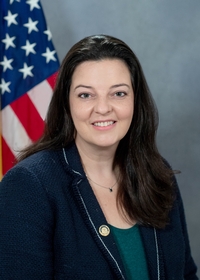
Rep. Liz Hanbidge
Sponsored bills
Maddy summaryHB 2007 mandates a specific $62 million transfer from Pennsylvania's Budget Stabilization Reserve Fund by November 1, 2025, to address the loss of federal SNAP benefits. The funds are allocated as follows: $50 million to the Department of Agriculture for food bank grants under existing state food programs, $10 million to the Department of Human Services for senior meal assistance, and $2 million for administration and outreach. This bill directly affects food banks, senior assistance organizations, and state agencies managing these programs. It requires the transfer to occur regardless of the usual emergency funding process outlined in Section 1703-A(b), which typically requires a two-thirds legislative vote for reserve fund appropriations. The bill takes effect immediately upon enactment.
Maddy summaryHB 1828 requires health insurance plans in Pennsylvania to cover all recommended vaccines without requiring patients to pay out-of-pocket costs like copays or deductibles. It directly affects insurance companies by mandating this coverage and patients who rely on insurance for routine immunizations (e.g., childhood vaccines, flu shots). The bill adds penalties for insurers that fail to comply with the coverage requirement. This policy change ensures broader access to vaccines by removing financial barriers under insurance plans.
Maddy summaryHB 2004 creates a special account to hold emergency funds for SNAP benefits, which provide food assistance to low-income residents. The bill requires the Department of Human Services, the Secretary of the Budget, and the State Treasurer to transfer these funds to pay SNAP recipients. This establishes a dedicated funding mechanism specifically for emergency SNAP benefit payments. The bill directly affects SNAP recipients by ensuring a streamlined process for receiving benefits during emergencies.
Maddy summaryThis bill is a ceremonial resolution designating November 11, 2025, as "Veterans Day" within Pennsylvania. It directly affects the state government by formally recognizing the date for official purposes, such as ceremonies or proclamations. The resolution has no policy or funding changes - it solely expresses the state's official acknowledgment of Veterans Day. It was adopted by the Pennsylvania legislature on October 29, 2025, as a symbolic gesture.
Maddy summaryHB 855 amends Pennsylvania's municipal tax laws to allow local governments to waive certain interest and penalties for late payments of property taxes or assessments. It directly affects property owners who fall behind on municipal tax payments by providing municipalities with clearer authority to reduce financial penalties. The bill's key provision establishes specific procedures for municipalities to approve these waivers without requiring additional state approval. This change aims to simplify debt resolution for taxpayers while giving local governments more flexibility in managing collections. The bill remains pending in the Finance Committee as of October 2025.
Maddy summaryHR 279 is a non-binding resolution recognizing October 2025 as "Domestic Violence Awareness Month" in Pennsylvania. It formally acknowledges domestic violence as a significant issue affecting Pennsylvanians, highlighting existing support resources like those provided by the Pennsylvania Coalition Against Domestic Violence (PCADV). The resolution does not create new laws, funding, or programs but serves as a symbolic commitment to raising public awareness about the issue and available victim support services. It aligns with Pennsylvania's ongoing efforts to address domestic violence through established community resources.
Maddy summaryHB 1406 would amend Pennsylvania's theft laws by changing how theft offenses are classified by severity (grading). It directly affects individuals convicted of theft crimes, as it would alter the legal categories used to determine penalties. The bill's key mechanism involves revising specific sections of the state's criminal code to adjust the grading system for theft offenses. This change would impact sentencing outcomes for theft cases but does not introduce new penalties or expand the scope of theft crimes.
Maddy summaryHB 157 creates state grants to help healthcare entities in rural counties or designated medically underserved areas cover the student loan debt of their employed healthcare practitioners. The grants would be paid directly to the healthcare facilities (like clinics or hospitals), not to individual providers, to offset the cost of practitioners' education debt. This aims to support recruitment and retention of healthcare workers in areas with limited access to medical services. The program would be funded through state appropriations, targeting facilities serving communities with significant healthcare access challenges.
Maddy summaryHB 1417 creates a state grant fund to help community organizations provide diapers, briefs, and incontinence supplies to people in need, primarily affecting seniors and individuals with disabilities who rely on these products. It directs the Department of Aging to establish a program improving access to these supplies and assigns specific duties to the Department of Human Services for program implementation. Key provisions include setting up the grant fund, requiring the Aging Department to develop the access program, and outlining the Human Services Department’s role in managing it. The bill proposes concrete policy changes by creating a new funding mechanism and defining agency responsibilities to address supply access gaps.