

Maddy summaryThis bill authorizes Pennsylvania to join the Respiratory Care Interstate Compact, a legal agreement designed to allow licensed respiratory therapists to practice in other member states without needing separate licenses for each location. The legislation establishes a framework where a therapist's home state retains primary regulatory authority while granting temporary practice privileges in other states to improve patient access and support military families. Key provisions include creating a central data system to track licenses, defining strict rules for handling disciplinary actions across state lines, and setting requirements for criminal background checks and jurisprudence exams. By adopting this compact, the state aims to streamline administrative processes and address workforce shortages while maintaining public safety standards.
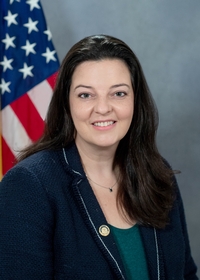
Rep. Liz Hanbidge
Sponsored bills
Maddy summaryThis Pennsylvania House resolution designates the week of April 13 through 17, 2026, as "Local Government Week" and April 22, 2026, as "Local Government Day" within the state. The measure aims to highlight the work of the Commonwealth's thousands of local officials and employees who provide essential services such as road maintenance, public safety, and utilities. By formally recognizing these contributions, the bill seeks to bring attention to the importance of local governance in daily community life.
Maddy summaryThis bill amends Pennsylvania's Price Gouging Act to specifically target price increases for petroleum products like gasoline, diesel, and heating oil during market emergencies. It defines a market emergency as disruptions caused by severe weather, supply shortages, strikes, or other extraordinary events and gives the governor authority to declare such emergencies for up to 30 days, with possible extensions. Under the new rules, businesses selling petroleum products cannot change prices more than once every 24 hours, and during a declared emergency, they are prohibited from charging prices that are grossly higher than those offered seven days prior. These measures apply to producers, wholesalers, distributors, and retailers of fuel and take effect 60 days after the bill is passed.
Maddy summaryThis bill amends Pennsylvania's Unfair Trade Practices and Consumer Protection Law to explicitly define "dynamic pricing" as a potential unfair practice. It specifically targets the use of artificial intelligence to vary prices for essential goods or services within a 24-hour period based on demand. The legislation includes detailed definitions for artificial intelligence, generative AI, and bona fide pricing to clarify what constitutes deceptive behavior versus legitimate pricing strategies. By adding these specific terms to the law, the bill aims to provide clearer guidance for regulators and businesses regarding AI-driven price fluctuations.
Maddy summaryThis bill designates April 2026 as "Donate Life Month" and April 10, 2026, as "Blue and Green Day" in Pennsylvania to raise awareness about organ and tissue donation. The resolution does not change laws or create new programs but serves as a symbolic gesture to encourage public support for donation efforts. It highlights Pennsylvania's existing donation statistics and the work of state health agencies and organ procurement organizations in promoting donor registration. The measure is intended to increase visibility for organ donation awareness campaigns during the designated month and day.
Maddy summaryHouse Resolution 408 designates April 2026 as "Financial Literacy Month" in Pennsylvania. This symbolic resolution does not create new laws or requirements but encourages public awareness and education about financial literacy, aligning with national observances like President Biden's 2021 proclamation. It follows Pennsylvania's history of supporting financial education initiatives without imposing obligations on individuals or organizations.
Maddy summaryThis bill requires maternity care providers in Pennsylvania, including nurses, doctors, and social workers, to complete four hours of trauma-informed care training when renewing their licenses. It mandates that state licensing boards approve specific training curricula within 180 days of the law's effective date. The legislation defines trauma-informed care as a practice that prioritizes safety, trust, and empowerment while addressing the impact of trauma and historical inequities.
Maddy summaryThis bill, known as the Temporary Budget Continuity Act, allows Pennsylvania state agencies to continue operating if the legislature fails to pass a new budget by the start of the fiscal year. It authorizes the State Treasurer to spend up to 85% of the funding levels from the previous year for existing programs and services. Any money spent under this temporary authority will be subtracted from the final budget amounts when the new appropriation act is eventually passed. The law ensures that government functions can continue without interruption while maintaining strict limits on spending to prevent budget overruns.
Maddy summaryThis bill amends Pennsylvania's standby guardianship laws to clarify definitions and streamline the process for seeking court approval of a designated guardian. It directly affects parents who want to name a standby guardian to care for their minor children if the parent becomes incapacitated, disabled, absent, or passes away. The key provision requires specific documentation to prove the triggering event has occurred before a standby guardian can file a petition for court approval, including medical determinations, consent forms, absence documentation, or a death certificate. The changes take effect 60 days after the bill is enacted.
Maddy summaryThis bill designates the week of April 11 through 17, 2026, as "Black Maternal Health Week" in Pennsylvania to raise awareness about maternal health disparities affecting Black women. The resolution highlights statistics showing that Black women in the state face significantly higher pregnancy-related death rates compared to other groups, with many cases deemed preventable. It does not create new funding or policy requirements but serves as a symbolic gesture to focus public and legislative attention on the issue. The measure is sponsored by multiple representatives and referred to the Committee on Children and Youth for consideration.