

Maddy summaryHB 2163 updates Pennsylvania's Dental Law by clarifying definitions and licensing rules. It specifically revises the definition of "restricted faculty license" to allow licensed dental school faculty to teach in non-profit clinical facilities or accredited advanced education programs, while explicitly excluding profit-driven operations. The bill also amends licensing provisions to require a 10-year waiting period for applicants convicted under drug laws (like the Controlled Substance Act), unless they demonstrate rehabilitation and pose no risk to public safety. These changes directly affect dental schools, faculty members, and applicants with prior drug-related convictions seeking licensure. The bill focuses on modernizing scope-of-practice definitions and refining the review process for certain applicants, without altering general licensing requirements.
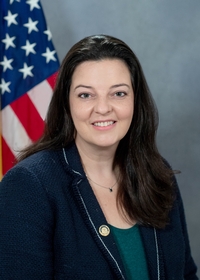
Rep. Liz Hanbidge
Sponsored bills
Maddy summaryThis is a ceremonial resolution, not a law with policy changes. It formally recognizes May 9, 2026, as "National Train Day" in Pennsylvania. The resolution acknowledges the historical significance of rail travel in Pennsylvania and the nation, referencing the 1869 completion of the transcontinental railroad. It encourages Pennsylvanians to learn about rail history and its benefits but creates no new requirements or funding.
Maddy summaryThis resolution symbolically recognizes April 11-17, 2026, as "Week of the Young Child" in Pennsylvania, aligning with a national observance organized by the National Association for the Education of Young Children (NAEYC). It has no legal effect or funding provisions - it is a formal acknowledgment to support awareness of early childhood education. The resolution encourages Pennsylvanians to recognize the importance of early learning opportunities for children birth through age eight. It does not create new policies or directly affect any individuals or programs.
Maddy summaryHR 259 is a Pennsylvania House resolution designating August 24, 2025, as "Ukrainian Independence Day" in the state. It commemorates Ukraine's 1991 declaration of independence from the Soviet Union and acknowledges Pennsylvania's defense contributions, including munitions support for Ukraine. The resolution urges the U.S. President and Congress to maintain support for Ukraine amid Russia's ongoing invasion. As a symbolic gesture, it does not create new laws or directly affect individuals.
Maddy summaryThis resolution designates July 31, 2025, as "Intern Day" in Pennsylvania to recognize the value of internships for students, educational institutions, and employers. It aims to raise awareness about work-based learning opportunities that connect classroom education with workplace skills, aligning with national observances. The bill does not create new laws or funding but symbolically highlights Pennsylvania’s commitment to supporting internships as part of economic development. It directly affects students seeking career experience, career and technical centers, and businesses offering internships.
Maddy summaryHB 668 would allow Pennsylvania to join the Counseling Compact, an existing agreement between states. This would let licensed counselors from other participating states practice in Pennsylvania more easily, and allow Pennsylvania counselors to practice in those states without obtaining separate licenses. The bill's key mechanism is adopting the standard compact form, creating a streamlined process for cross-state counseling licensure without changing existing state licensing requirements.
Maddy summaryHouse Resolution 513 directs the Legislative Budget and Finance Committee to study how outdated hospital regulations, which have not been updated in nearly 40 years, financially affect hospitals across Pennsylvania. The study will examine the number of overlapping rules, the administrative costs hospitals incur to comply, and the resources required to manage complex oversight structures. To assist with this review, the committee will form an advisory group that includes representatives from state agencies and hospitals of various types, including rural, urban, and suburban facilities. The committee is required to submit a report with its findings and recommendations within 12 months to relevant legislative leaders.
Maddy summaryThis resolution directs Pennsylvania's Legislative Budget and Finance Committee to study wild native terrestrial invertebrate management - including bees, butterflies, worms, and beetles - and issue a report. The study will evaluate existing state laws (like the Conservation and Natural Resources Act of 1995), compare other states' conservation approaches, and assess the ecological and economic value of these species (noting their $250+ million annual contribution to agriculture through pollination). It does not create new laws but aims to clarify agency responsibilities and identify gaps in conservation efforts. The report will inform future policy decisions affecting state agencies like DCNR, the Department of Agriculture, and wildlife commissions.
Maddy summaryHB 910 amends Pennsylvania's criminal code to elevate "dealing in infant children" from a misdemeanor to a first-degree felony. It makes it a crime to trade, buy, sell, or deal with infants under one year old, directly targeting individuals involved in illegal infant trafficking. The bill explicitly excludes legal surrogacy and adoption from this offense. This law takes effect 60 days after enactment, focusing on criminalizing the commercial exchange of very young children.
Maddy summaryHB 2218 amends Pennsylvania's Public School Code to require all school entities (including districts, charter schools, cyber charters, and career schools) to develop and implement a written comprehensive school counseling plan. The bill mandates that each plan, created by certified school counselors, must include annual reviews, K-12 systemic alignment, grade-level and building-specific strategies, and integration with existing student services plans. Key provisions define "direct services" (like individual counseling and classroom instruction) and "indirect services" (such as parent consultations), requiring plans to guide students in academic, career, and social-emotional development. The law establishes specific components for the plan - foundation, management, delivery, and accountability - without specifying funding or new programs.