

Maddy summaryThis bill modifies Pennsylvania's tax laws to exclude sales tax from the calculation of interchange fees charged on credit and debit card transactions. It requires payment card networks to either deduct the tax amount from these fees at the time of settlement or refund a proportional portion of the fee if the tax was not initially separated. The legislation defines specific terms like "interchange fee" and "electronic payment transaction" to clarify which fees are affected and outlines penalties for networks that fail to comply, including fines and mandatory refunds to merchants.
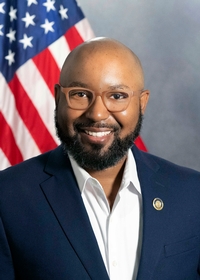
Rep. Greg Scott
Sponsored bills
Maddy summaryThis bill establishes the Microfiber Filtration Protection Act to require all washing machines sold or installed in Pennsylvania to include a built-in or in-line filter capable of capturing microfibers. The Environmental Quality Board must create regulations mandating these filters have a mesh size of 100 micrometers or smaller and display a consumer notice about checking and disposing of captured lint. Starting in 2030, manufacturers cannot sell non-compliant machines, and by 2031, installers cannot fit them unless they meet the new standards. The Department of Environmental Protection will enforce these rules through testing, inspections, and complaints, while charging manufacturers for any testing costs related to non-compliance.
Maddy summaryThis bill establishes the TRICARE Premium Reimbursement Program to provide financial grants to members of the Pennsylvania National Guard who are eligible for TRICARE Reserve Select coverage. The program allows eligible recipients to receive reimbursement for health insurance premiums paid for themselves and their immediate family members, as well as premiums for TRICARE dental coverage for themselves and their families. To qualify, individuals must submit an application with personal contact information, details about family members, a statement confirming their eligibility, and proof of premium payments. The Department of Military Affairs will manage the program, post application forms online, and create necessary rules to administer the grants.
Maddy summaryThis Pennsylvania House resolution asks the U.S. Congress to change federal rules so that military reservists who are also eligible for federal employee health insurance can join the TRICARE Reserve Select program. Currently, federal employees serving in the National Guard or armed forces reserves are barred from enrolling in this specific health coverage, which the bill argues creates a financial disincentive for them to work for the government. The measure does not alter any laws directly but serves as a formal recommendation to lawmakers to address this eligibility gap.
Maddy summaryThis bill amends Pennsylvania's Housing Authorities Law to expand relocation protections for tenants experiencing domestic or sexual violence. It allows tenants to request emergency transfers if they were victimized on or near their premises within the last 180 days or if they reasonably fear imminent harm. The legislation establishes specific documentation requirements, such as police reports or third-party certifications, to verify abuse while also permitting a simple tenant statement if no conflicting information exists. Additionally, the bill mandates that housing authorities assist victims in connecting with local support organizations and may release tenants from their leases upon qualification.
Maddy summaryThis bill amends Pennsylvania insurance regulations to clarify how dental insurers and their vendors must handle fees associated with electronic payments and credit cards. It requires these entities to inform patients that such fees may apply to their payments and to provide clear instructions on how to find the exact fee amounts. The law explicitly excludes fees charged by financial institutions or merchant servicers selected by the dentist from these notification requirements. Additionally, the bill defines specific types of payment processing entities, such as payment settlement entities and merchant acquiring entities, to ensure clarity in regulatory compliance.
Maddy summaryThis bill updates Pennsylvania's driver licensing laws to better support minors and homeless youth. For minors, it requires a signed certification from a parent or guardian confirming that the driver has completed 65 hours of supervised practice, including specific amounts of night and bad weather driving, before taking their license test. The legislation also allows homeless children and youth to use temporary addresses like schools or shelters when applying for licenses and exempts them from paying the associated fees. Additionally, it clarifies that the adults who sign these certifications are not legally liable for the minor's driving behavior.
Maddy summaryThis bill updates Pennsylvania's laws regarding abandoned and unclaimed property to improve how the state finds original owners. It requires the Treasury Department to work with state agencies like the Department of Revenue and the Department of State to share data and verify owner information at least once a year. These changes aim to make the process of locating owners more efficient by formalizing cooperation between different government departments. The legislation also includes provisions for handling income earned after property is paid out and establishes penalties for non-compliance.
Maddy summaryThis bill amends the Administrative Code to update definitions and powers for Pennsylvania's Energy Development Authority. It clarifies what counts as a "project" and "cost" for energy initiatives, specifically including expenses for energy audits, environmental surveys, and infrastructure resilience. The legislation also changes how the Authority's board is structured, reducing the number of governor-appointed members from nine to five and adjusting the voting requirements for board decisions. These changes aim to streamline the Authority's governance while expanding its scope to support various energy-related activities.
Maddy summaryThis resolution directs the Joint State Government Commission to study the financial impact on Pennsylvania taxpayers of state police services provided to municipalities without their own local departments. The bill requires the commission to form an advisory committee including representatives from revenue, transportation, and law enforcement sectors to analyze costs and tax burdens associated with these services. Key findings must include the per capita cost of coverage, the effect on local millage rates, and an estimate of fees needed to fund these services if the state mandated a direct charge to municipalities. The commission is tasked with submitting a report with these recommendations to the House of Representatives within one year of the resolution's adoption.