

Maddy summaryHB 860 amends Pennsylvania's Public School Code to prohibit public schools from removing library books or instructional materials based on specific reasons, such as an author's race, gender identity, political views, or content about sexuality. It directly affects public school entities (including districts, charter schools, and libraries) by banning "soft censorship" - removing materials outside formal review processes - and requires schools to publicly report such removals. The bill mandates that materials can only be removed following a defined procedure, ensuring decisions are based on educational appropriateness, not personal views. It also requires schools to provide online complaint forms for students or parents who experience unauthorized removals, referencing data showing 457 book challenges in Pennsylvania from 2021-2022. The law aims to protect students' access to diverse learning resources while aligning with First Amendment principles.
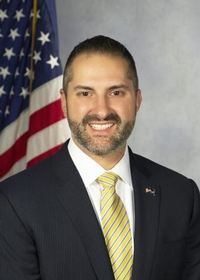
Rep. Steve Malagari
Sponsored bills
Maddy summaryHouse Resolution 103 designates April 2025 as "National Volunteer Month" in Pennsylvania. The resolution encourages all residents to engage in volunteer activities, highlighting community benefits such as building social connections, supporting local resilience, and providing personal fulfillment as outlined in the resolution's preamble. It does not create new laws or require specific actions, serving as a symbolic recognition of volunteerism's value.
Maddy summaryHB 842 amends Pennsylvania's Tax Reform Code to create new deductions for realty transfer tax paid on certain home purchases. It directly affects low-to-moderate income buyers (those collecting SSI or with household income ≤215% of federal poverty level) and buyers purchasing primary residences at ≤80% of their county's median home price. The bill allows these buyers to deduct the transfer tax paid from their taxable income, and in the second scenario, the seller also receives this deduction. Counties must submit annual median home price data to the Department of Revenue to implement the price-based deduction. The changes take effect 60 days after enactment.
Maddy summaryThis resolution directs Pennsylvania's Joint State Government Commission to study supportive housing availability, types, and demand across the state. The study will examine both temporary and permanent supportive housing options, focusing on vulnerable populations including those experiencing homelessness, living with chronic health conditions, or struggling with low incomes. The Commission must provide policy recommendations and a final report within 18 months to legislative leaders, informing future planning for supportive housing needs. This is a procedural study request - not a law creating new housing - and aims to gather data to guide potential future policy decisions.
Maddy summaryHB 844 creates Pennsylvania's Housing Construction Loan Program and a dedicated Housing Construction Loan Fund under the Pennsylvania Housing Finance Agency. The program provides loans to eligible builders (those operating in Pennsylvania for at least three years) for constructing new homes sold to low- and moderate-income households, and to those households for financing such homes. Key provisions limit loans to 80% of a county’s median home price, cap terms at 15 years, and require all sales to remain affordable to target households. Funds for the program come from state appropriations, grants, and loan repayments, managed through the State Treasury.
Maddy summaryHB 829 amends Pennsylvania's Public School Code to require school districts to offer full-day kindergarten for children aged three to five, lowering the age limit from four years. It updates the definition of "compulsory school age" to explicitly allow children as young as three to attend kindergarten without tuition, while maintaining the upper age limit at 18. The bill also adjusts transportation provisions to include free bus service for full-day kindergarten students, similar to existing rules for other grade levels. These changes directly affect public school districts, early learning programs, and families with children aged three to five.
Maddy summaryHB 838 creates a program allowing qualified health care facilities - such as hospitals, medical specialist centers, and physical therapy centers - to issue temporary disability parking placards valid for up to six months. Individuals seeking a temporary placard must apply directly to an enrolled facility and sign a statement confirming they meet the disability criteria. The facility then requires a health care provider to certify the disability and submit the application electronically to the state department to update records. This change streamlines access to temporary parking permits without requiring individuals to go through the state’s standard application process.
Maddy summaryHB 824 amends Pennsylvania's Conservation and Natural Resources Act to require the Department of Conservation and Natural Resources to prioritize grant applications for playgrounds, playground equipment, and recreation areas that address accessibility for people with disabilities. The bill specifies that projects must include features like ramped play areas, accessible swings, wheelchair-friendly tables, and adaptations for blind or visually impaired individuals to receive priority. It mandates that the department favor universally designed recreation areas - where all equipment and the space itself are fully accessible - over projects with only partial accessibility. This change directly affects communities applying for state grants to build or improve local playgrounds, ensuring new facilities meet inclusive design standards from the start.
Maddy summaryHB 809 amends Pennsylvania's Controlled Substance Act to clarify that syringes, needles, and related harm reduction supplies used in authorized syringe service programs or provided by pharmacies/healthcare providers are **not** considered "drug paraphernalia." This change directly affects syringe service programs, pharmacies, and healthcare providers operating under state regulations. The key provision (Section 2(b)(11)) explicitly exempts these items when used to prevent disease transmission and reduce harm among people who use drugs. The bill makes no changes to penalties or drug schedules - only updating definitions to protect public health initiatives.
Maddy summaryHB 816 proposes a constitutional amendment to Pennsylvania's tax code, creating a new standard for homeowners to qualify for relief from real property taxes. It would allow the state legislature to establish income-based thresholds, exempting homeowners from paying the portion of their local property tax on their primary home that exceeds a certain percentage of their household income. This directly affects homeowners who pay local property taxes and meet income criteria set by the legislature. As a constitutional amendment, it requires approval by the General Assembly and then by voters in a statewide election. The bill does not specify income percentages or implementation details, only authorizing future legislation to create such standards.