

Maddy summaryHB 1114 prohibits possessing a firearm in any building, property, or parking area of a polling place during an election, with three specific offense types: simple possession, possession with intent to commit a crime, or causing a firearm to be used in a crime. Simple possession is a third-degree misdemeanor, while intent or causing use is a first-degree misdemeanor. Key exceptions include law enforcement officers performing duties, individuals with concealed carry permits (who own the firearm and have a valid license), and military personnel on duty. Polling places must post notices of the law, and failure to post prevents conviction for simple possession or intent offenses. The bill directly affects voters, poll workers, and anyone entering polling areas during elections.
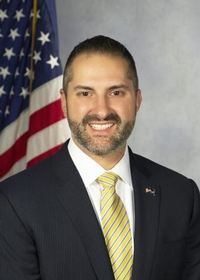
Rep. Steve Malagari
Sponsored bills
Maddy summaryHB 1150 raises Pennsylvania's minimum wage to $15 per hour starting January 1, 2026, with annual increases thereafter. It also establishes a phased timeline for tipped employees: requiring higher base cash wages starting in 2025 (e.g., $5.00/hour after June 2025) and mandating that by July 1, 2029, employers must pay the full minimum wage without relying on tips. The bill ensures all tips received by employees remain their property and cannot be used by employers to meet minimum wage requirements. This directly affects most private-sector employers and tipped workers in Pennsylvania, particularly in hospitality and service industries.
Maddy summaryHB 1087 establishes Pennsylvania's Active Volunteer First Responder Education Tax Credit Program under the Tax Reform Code of 1971. It allows businesses to claim a tax credit for donating to eligible schools, with funds used to provide scholarships for certified volunteer firefighters and emergency medical services workers. To qualify, applicants must be Pennsylvania residents, certified volunteers with at least one year of service, enrolled in approved educational programs at participating institutions, and provide proof of membership from their agency. The Department of Community and Economic Development administers the program, requiring eligible schools to submit accreditation details and ensuring donations directly fund tuition and school-related fees for qualifying students. This program directly affects volunteer first responders seeking higher education and businesses contributing to their scholarships.
Maddy summaryHB 1078 updates Pennsylvania's school health requirements to strengthen vision screening and eye health examinations for students. It mandates annual vision screenings by trained school personnel for all school-aged children, with comprehensive eye exams by licensed professionals required if screenings fail. The bill specifies that students must receive eye health exams upon school admission, in fourth grade, and eighth grade, and adds requirements for exams related to special education evaluations. Schools must notify parents of failed screenings and provide resources, but are not responsible for covering exam costs or treatment. This directly affects all public and nonpublic school students in Pennsylvania.
Maddy summaryHB 1097 creates a new minor criminal offense in Pennsylvania for organizing or operating events where live pigeons are used as targets for shooting contests, either for amusement or skill testing. This applies to anyone who willfully runs such events at a designated location, including using mechanical aids to present pigeons to shooters. The bill explicitly excludes legal hunting under state game laws, dog training activities, or permitted special events. It takes effect 60 days after enactment.
Maddy summaryHB 1064 amends Pennsylvania's Health Care Facilities Act to require all health care facilities - including hospitals, clinics, mental health centers, urgent care centers, and dental offices - to establish and publicly share written policies regarding firearms on their premises. The bill mandates that facilities either permit firearms with safety procedures (e.g., storage guidelines) or outline specific steps for staff if someone enters with a firearm. These policies must address both permitted and prohibited firearm scenarios, applying to all locations providing medical services as defined by Pennsylvania law. The bill takes effect 60 days after enactment.
Maddy summaryThis bill creates a $100 tax credit for Pennsylvania taxpayers who adopt cats or dogs from animal shelters, humane societies, or rescue organizations. The credit applies to state income taxes, with a maximum annual benefit of $300 (covering up to three adopted animals). To claim the credit, taxpayers must submit proof of spaying/neutering and adoption during the tax year. The program directly affects individuals adopting shelter animals, aiming to incentivize pet adoption through tax relief.
Maddy summaryHB 1066 amends Pennsylvania's Medical Practice Act to create a pathway for temporary medical licensees who graduated from international medical schools to obtain full, unrestricted licenses. To qualify, these individuals must have practiced medicine for at least three years outside the U.S., demonstrated competency to the State Board of Medicine, maintained good standing for two years after their temporary license was issued, and secured a job offer from a Pennsylvania healthcare facility. This provision applies only to eligible temporary licensees meeting all specified criteria, without altering general temporary license rules. The bill takes effect 60 days after enactment.
Maddy summaryHB 1094 creates a new tax credit for homeowners who rehabilitate historic properties in economically distressed areas of Pennsylvania. It directly affects homeowners who own and occupy as their primary residence certified historic properties located in designated "qualified census tracts" (areas at or below state median income or qualified opportunity zones). The credit covers qualified rehabilitation costs like structural repairs and exterior work, excluding property acquisition, interior improvements, or building expansions. The Pennsylvania Historical and Museum Commission and Department of Community and Economic Development will administer the program and manage a dedicated fund to support the credit.
Maddy summaryHB 1074 amends Pennsylvania's Dog Law to regulate contracts for the sale and lease of dogs and cats. It makes void any contract where ownership or repossession of the animal depends on future payments after the buyer takes possession (except for unsecured loans for the purchase), and voids leases offering an option to buy the animal at the end of the term. Consumers who enter such contracts are deemed the owners and can reclaim all payments made. The law applies to contracts entered into 60 days after the bill takes effect.