

Maddy summaryHB 1923 establishes new workplace safety requirements for meat packing and food processing facilities by mandating facility health and safety committees. It creates a dedicated workers' rights coordinator position within the Department of Labor and Industry to oversee compliance and address concerns. The bill also adds specific public health emergency protections for workers during outbreaks or crises, requiring employers to follow state health guidelines. These changes directly affect workers and employers in the meat and food processing industry across the state.
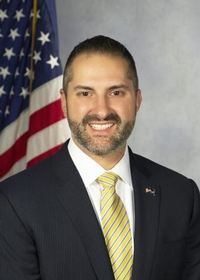
Rep. Steve Malagari
Sponsored bills
Maddy summaryHB 886 requires Pennsylvania correctional institutions to provide prerelease briefings to inmates who are veterans, specifically informing them about available veterans' benefits. This bill directly affects incarcerated veterans transitioning back into civilian life by ensuring they receive information about benefits they may qualify for. The key provision mandates that these briefings be part of the general administration process for correctional facilities under Title 61 of the Pennsylvania Consolidated Statutes. The bill focuses on improving access to benefits information as part of reentry support, without altering eligibility or benefit amounts.
Maddy summaryHB 1909 updates Pennsylvania's criminal code by clarifying and adjusting definitions and penalties for several existing offenses. It specifically addresses simple assault, reckless endangerment, terroristic threats, harassment, stalking, unlawful restraint, false imprisonment, indecent assault, and disorderly conduct. The bill aims to refine how these crimes are defined and prosecuted under current law. It directly affects individuals charged with these specific offenses in Pennsylvania courts. The changes focus on improving legal clarity without creating new criminal categories.
Maddy summaryHB 2212 requires Pennsylvania health insurance companies and other health care payers (including health maintenance organizations and self-insured employers) to reimburse out-of-network medical facilities that meet specific criteria, such as having a four-star patient satisfaction rating, offering faster service than nearby in-network facilities, or being partially owned by physicians who are in-network with the payer. The bill mandates that payers use a "baseball-style arbitration" process for payment disputes, where an independent third party selects either the payer's or facility's proposed payment amount without modification. It defines key terms like "highest in-network rate" to standardize how payers determine fair reimbursement for services. This law directly affects health care benefit plans regulated under Pennsylvania insurance law, aiming to reduce discrimination against qualifying out-of-network providers.
Maddy summaryHB 2213 establishes a regulatory framework for "skill video gaming" in Pennsylvania, directly affecting businesses that operate or distribute gaming systems. The bill requires licenses from the Department of Revenue for operators, distributors, and establishments, imposes fees, and mandates a central reporting system to track transactions like "coin in/out" and jackpots. Key provisions include banning access for people under 18, prohibiting "miniature casinos," requiring security measures for players, and creating criminal penalties for operating unlicensed systems or distributing to minors. It aims to eliminate illegal gambling devices disguised as skill-based games while leveraging the State Lottery's existing experience in retail gaming oversight.
Maddy summaryThis bill prohibits Pennsylvania State Police from stopping, detaining, or questioning individuals based solely on immigration status, except when necessary for unrelated criminal investigations. It bans prolonging detention due to immigration status or conducting immigration checks without a prior criminal arrest. Police must share immigration detainer information with federal authorities only if discovered during lawful detention for unrelated matters. The law directly affects all individuals interacting with Pennsylvania State Police, limiting state involvement in federal immigration enforcement.
Maddy summaryHB 2196 requires electric and natural gas suppliers in Pennsylvania to provide consolidated billing, replacing separate bills from utilities and suppliers with a single bill showing all charges. This directly affects residential and commercial customers who choose alternative energy suppliers (currently only 23% of residential electric and 11.3% of natural gas customers). The key mechanism mandates that suppliers must consolidate all electric and natural gas charges onto one bill, using smart meter data to enable more tailored pricing options like time-of-use rates. The bill also includes penalties for non-compliance with these billing requirements.
Maddy summaryHB 713 amends Pennsylvania law to protect individuals who disclose sexual offenses or abuse by expanding legal safeguards for such communications. It defines "protected public expression" to include non-malicious disclosures about sexual violence under Pennsylvania law (23 Pa.C.S. §§ 6102, 62A03) and explicitly states that reporting these incidents should not be chilled by lawsuits. The bill excludes claims under protection-from-abuse laws (23 Pa.C.S. Chapter 61) and sexual violence statutes (Chapter 62A) from certain legal challenges. This creates a clearer legal shield for people reporting sexual violence without altering existing protections for victims.
Maddy summaryThis is a symbolic resolution, not a law, recognizing February 27, 2026, as "Dominican Republic Independence Day" in Pennsylvania. It has no policy impact or effect on any specific group; it is purely a ceremonial acknowledgment. The resolution cites the Dominican Republic's independence from Haiti in 1844 and the state's Dominican-American community as context. It does not create new requirements, change existing laws, or allocate funding.
Maddy summaryThis bill amends Pennsylvania's Human Relations Act to allow individuals who have been subject to or witnessed civil rights violations by U.S. Immigration and Customs Enforcement (ICE) agents or cooperating federal/state/local law enforcement during immigration enforcement to file complaints with the Pennsylvania Human Relations Commission. The Commission can then refer these complaints to the state Attorney General or the relevant county district attorney. It directly affects Pennsylvanians experiencing or witnessing such violations within the state. The change expands the Commission's authority to address immigration-related enforcement issues under state law.