

Maddy summaryHouse Bill 1462, also known as The Fair Play Broadcasting Act, amends the Public School Code to grant visiting school teams the same rights as home teams to broadcast interscholastic athletic competitions. This allows visiting school entities, including public and nonpublic schools, to provide radio broadcasting, video streaming, or telegraphic play-by-play accounts. These rights apply if the visiting team has an agreement with a media organization or if it has a curricular program for secondary students that typically broadcasts its home games. The provisions of this act will apply to competitions beginning in the 2025-2026 school year.
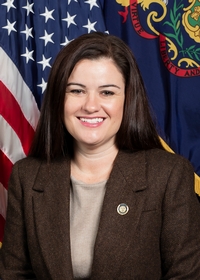
Rep. Charity Krupa
Sponsored bills
Maddy summaryHB 1449 amends Pennsylvania law regarding the expenses paid by the Office of the Court Administrator of Pennsylvania (OCAP). It increases the annual registration fee OCAP pays to the Special Court Judges Association of Pennsylvania from $200 to $400 for each magisterial district judge and Philadelphia Municipal Court Judge position. The bill clarifies that OCAP directly funds a monthly journal for legal updates, while other expenses, such as the registration fee, are covered by the annual appropriation for magisterial district judges.
Maddy summaryThis is a symbolic resolution (not a binding bill), not a law with policy changes. It formally recognizes March 29, 2025, as "National Vietnam War Veterans Day" within Pennsylvania, aligning with the existing federal observance established by the Vietnam War Veterans Recognition Act (2017). The resolution honors veterans who served between 1955-1975, including Pennsylvania residents who died, were wounded, or are unaccounted for, but does not create new programs, funding, or legal obligations. It serves solely as a ceremonial acknowledgment by the Pennsylvania House of Representatives.
Maddy summaryHB 1444 creates new regulations for association health plans (AHPs) under Pennsylvania's insurance code. It defines key terms like "association" (groups of employers in the same industry or profession) and sets requirements for coverage, rates, and insurer filings. The bill directly affects employers forming AHPs, health insurers offering these plans, and individuals enrolled in them. It adds enforcement mechanisms and penalties for non-compliance, while repealing outdated sections of the insurance code.
Maddy summaryHB 1395 amends the Public School Code of 1949 to revise eligibility requirements and clarify incompatible offices for school directors in Pennsylvania. The bill changes the eligibility requirement from "citizen" to "resident" but adds a new restriction, making individuals ineligible to serve as a school director if an immediate family member is employed by that school district. It also clarifies that certain school employees can serve as school directors in a different district, with specific exceptions for joint schools. Additionally, the bill specifies that employees of career and technical schools, intermediate units, or community colleges cannot serve on the board of their employing institution or be assigned to a position under the supervision of a district where they serve as a school director.
Maddy summaryHB 1394 proposes to repeal the inheritance tax in Pennsylvania, directly affecting estates and beneficiaries who would no longer be subject to this tax on inherited assets. The bill also modifies procedures for taxpayers to petition for a reassessment of taxes. Additionally, it updates existing provisions related to how government-issued obligations are treated for tax purposes.
Maddy summaryHB 1329 makes it illegal to share secretly recorded videos or images of people in private settings, specifically targeting the transmission of such material via phone, email, internet, or physical media. It directly affects individuals who secretly record others' intimate areas (like genitals or nipples with minimal covering) in places where privacy is expected - such as bathrooms or changing rooms - and then share those recordings. The bill updates Pennsylvania's invasion of privacy law to explicitly prohibit this sharing, with harsher penalties when the victim is a student or minor. This law aims to protect people from non-consensual sharing of intimate content, particularly in vulnerable situations.
Maddy summaryHB 1352 amends Pennsylvania's criminal code to expand the offense of "unlawful contact with a minor." It directly affects individuals who intentionally contact minors (or law enforcement posing as minors) for specific prohibited activities, including sexual offenses, human trafficking involving minors, incest, or sexual exploitation. The bill adds new categories to the existing law, such as human trafficking with sexual servitude involving minors, endangering a child's welfare through sexual contact, and expanded corruption of minors offenses. These changes clarify that contact for these activities - whether initiated by the adult or the minor - is a criminal offense within Pennsylvania. The bill takes effect 60 days after enactment.
Maddy summaryHB 1316 amends Pennsylvania's sales tax filing rules to adjust deadlines based on a business's previous year's tax liability. It requires businesses with annual tax bills between $25,000 and $100,000 to file monthly returns starting in 2025, including a 50% prepayment of their expected tax for the month. Businesses with bills over $100,000 follow similar monthly filing rules with the same prepayment requirement. This change replaces quarterly filings for these businesses and adds a 5% penalty for late payments on the prepayment amount. The bill affects businesses meeting specific tax liability thresholds under Pennsylvania's Tax Reform Code.
Maddy summaryHB 1248 amends Pennsylvania's ethics and benefits laws for state officials. It prohibits former members of the General Assembly (who were first elected after the bill's effective date) from receiving state pension or health benefits during any calendar year they lobby for compensation before the legislature. The bill also updates financial disclosure requirements for public employees and officials. This restriction applies only to legislators who first took office after the law becomes effective. The bill takes effect in 60 days.