

Maddy summaryHB 1183 amends Pennsylvania's Tax Reform Code to exempt adoption fees charged by qualifying nonprofit animal shelters from sales tax. The bill specifically excludes fees paid to nonprofit "releasing agencies" (as defined by Pennsylvania's Dog Law) that do not charge more than the actual costs of caring for the animal. This change directly affects nonprofit shelters meeting both criteria: (1) being a registered releasing agency under the Dog Law, and (2) charging fees covering only care expenses. The tax exclusion takes effect 60 days after enactment.
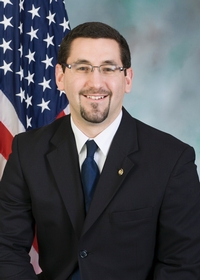
Rep. Jason Ortitay
Sponsored bills
Maddy summaryThis bill amends Pennsylvania's vehicle code to strengthen window tinting regulations. It requires vehicles with tinted windows to pass a safety inspection using a tint meter, failing if they violate existing tint limits (67 Pa. Code Ch. 175). Additionally, it prohibits tinting businesses from failing to inform customers that modifications may violate these limits, classifying such omissions as deceptive under consumer protection law. The bill directly affects vehicle owners seeking tinted windows, tinting businesses, and inspection stations. It implements concrete policy changes by integrating tint compliance into safety inspections and enforcing consumer transparency.
Maddy summaryHB 1152 requires insurance companies to directly reimburse non-network emergency medical services (EMS) agencies for 911 emergency calls within 45 days at 350% of the Medicare ambulance rate for the same service in the same area. EMS agencies must register with the state annually to qualify for direct payments, and insurers cannot demand contracts to facilitate this reimbursement. The insurer's payment covers the full service cost (excluding the patient's copay, coinsurance, or deductible), so EMS agencies cannot bill patients for the remaining amount. This law applies only to non-network EMS providers offering 911 emergency medical services, unless preempted by federal law.
Maddy summaryHB 569 amends Pennsylvania's Emergency and Law Enforcement Personnel Death Benefits Act to expand eligibility for death benefits. It explicitly includes coroners (and medical examiners) as covered personnel and adds a presumption that fatal heart attacks or strokes occurring during duty or within 24 hours of physical training/emergency response are work-related. This change directly affects surviving spouses, children, or parents of coroners, firefighters, ambulance/rescue personnel, law enforcement officers, and National Guard members who die in the line of duty. The bill updates the act's definition of "coroner" and ensures benefits are granted for these new circumstances.
Maddy summaryHB 976 amends Pennsylvania's Public School Code to update how school districts report spending on students with disabilities or exceptionalities. School districts must annually report the number of students in five spending categories (e.g., under $5,000, $5,000-$25,000, $25,000-$50,000, $50,000-$75,000, and over $75,000) for the prior school year. The Department of Education must publish this data publicly in a sortable electronic format by February 1 each year, starting in 2025. This bill directly affects all Pennsylvania public school districts by requiring standardized expenditure reporting and public transparency.
Maddy summaryThis Pennsylvania House Resolution (HR 119) designates February 24 through March 2, 2025, as "Eating Disorders Awareness Week" in the state. It symbolically recognizes the importance of raising public awareness about eating disorders, which affect millions and have high mortality rates. The resolution urges the Governor to issue a proclamation encouraging public officials, healthcare providers, and residents to observe the week with educational activities and promote early intervention resources. It does not create new laws or allocate funding, serving solely as a symbolic acknowledgment of the issue.
Maddy summaryHB 744 amends Pennsylvania's ethics laws to restrict gifts to public officials. It prohibits public officials, employees, nominees, or candidates from accepting cash gifts or non-cash gifts exceeding $50 in value from a single source in a year (Section 1103.1). Key exceptions include gifts from family members (excluding cash for candidates), lobbyists for major life events like weddings, and election contributions made under state law (Section 1103.2). The bill aims to prevent undue influence by clarifying what constitutes a prohibited gift under the state's financial disclosure framework.
Maddy summaryHB 588 amends Pennsylvania's Professional Nursing Law to require registered nurses and licensed practical nurses to complete one hour of mandatory continuing education focused on older adult abuse recognition and reporting during each biennial license renewal period. This requirement applies to all license renewals (except initial licensure) and includes specific documentation rules, such as retaining certificates for five years and submitting them upon request. Failure to complete this hour may delay license renewal, trigger disciplinary action under existing penalties, or require remediation within six months. The bill directly affects nursing license holders in Pennsylvania seeking renewal, reinstatement, or reactivation of their licenses.
Maddy summaryHB 548 strengthens Pennsylvania's state preemption of local firearm regulations by declaring that all aspects of firearm regulation - including purchase, sale, possession, and transportation - must follow state law, invalidating any conflicting local ordinances. It directly affects counties, municipalities, and townships that previously enacted stricter gun rules, as well as residents, gun dealers, or organizations challenging such local laws. Key provisions include creating legal remedies for those harmed by illegal local regulations (allowing lawsuits for damages, attorney fees, and injunctions) and explicitly stating that state law supersedes all local efforts. The bill takes effect in 90 days for its core preemption rules, requiring local governments to align with state firearm laws immediately.
Maddy summaryHB 556 bans Pennsylvania public officials and employees from accepting free transportation, lodging, hospitality, cash, or gifts from people or organizations with business ties to their government role - such as contractors, lobbyists, or regulated entities. It directly affects state legislators, agency staff, and other public officials whose duties could be influenced by such gifts. Key provisions require officials to report certain exceptions (like academic awards or light refreshments at group events) while prohibiting gifts that could create conflicts of interest. The bill aims to strengthen ethics rules by clarifying what constitutes a prohibited gift under Pennsylvania's financial disclosure laws.