

Maddy summaryHB 874 amends Pennsylvania's Safe Drinking Water Act to clarify definitions and update rules for temporary exemptions. It specifically revises the definition of "public water system" to exclude religious facilities (like churches) using private wells for drinking water, while clarifying that systems serving at least 15 connections or 25 daily users qualify as public systems. The bill also modifies how the Department can grant exemptions from water quality standards, requiring proof that exemptions won’t risk health (including no microbial contaminant evidence) and setting federal expiration dates for such exemptions. These changes directly affect public water systems, small communities, and religious organizations relying on private wells, with the law taking effect 60 days after passage.
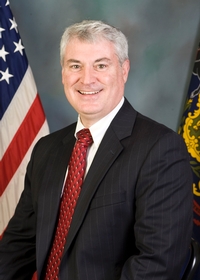
Rep. Keith Greiner
Sponsored bills
Maddy summaryHB 864 repeals Pennsylvania's Clean Vehicles Program regulations (25 Pa. Code Ch. 126 Subch. D), which governed state-level requirements for electric and low-emission vehicles. This directly affects automakers, dealers, and consumers participating in Pennsylvania's clean vehicle initiatives. The bill removes specific regulatory requirements without establishing new rules, effective 60 days after enactment. It is a procedural change eliminating existing code provisions.
Maddy summaryHB 857 amends Pennsylvania's Human Services Code to update reimbursement rates for emergency ambulance services under Medicaid programs. It requires the state to pay ambulance providers the higher of either Medicare's 2023 rates or current Medicaid ambulance fees (as updated in 2023) for services provided to Medicaid enrollees starting January 1, 2024. For services where patients declined transport, new rates based on 2025 Medicare data or updated Medicaid fees will apply beginning July 1, 2025. This directly affects licensed emergency medical services agencies that provide ambulance transport to Medicaid beneficiaries.
Maddy summaryHB 177 creates "Keystone Opportunity Dairy Zones" in Pennsylvania to support the state's dairy industry. It provides tax benefits - including exemptions, deductions, and credits - for businesses processing at least 75% Pennsylvania milk into dairy products within designated zones. To qualify, businesses must be located in a zone, process Pennsylvania milk locally, and meet specific requirements under the act. The bill directly affects dairy farmers, processors, and local governments by offering financial incentives to boost economic development in the sector.
Maddy summaryHB 757 restricts in-person sales of natural gas and electricity by requiring suppliers to operate only between 9 a.m. and 5 p.m. Monday through Saturday, provide customers with a notice to verify sales activity, and prohibit signing contracts during initial meetings. It directly affects natural gas and electricity suppliers conducting door-to-door or public venue sales, as well as customers receiving such sales solicitations. The bill mandates that contracts must be finalized later at a mutually agreed location (e.g., customer’s home or supplier’s office) after the initial contact. These rules apply to both natural gas and electric utility sales and supersede existing commission regulations on this specific topic.
Maddy summaryHB 756 requires Pennsylvania prosecutors to notify U.S. Immigration and Customs Enforcement (ICE) if they learn during a criminal case that a defendant is not a U.S. citizen or is present in the U.S. illegally under federal immigration law (8 U.S.C. Ch. 12). This affects criminal defendants with non-citizen status or potential immigration violations. The bill mandates that Commonwealth attorneys provide this notification "at any point during the course of a criminal proceeding" when they reasonably obtain such information.
Maddy summaryHB 762 amends Pennsylvania's Tax Reform Code to exempt volunteer emergency service organizations from paying state sales and use tax on protective equipment. The bill specifically covers volunteer EMS companies, fire companies, and rescue companies - defined as nonprofit groups providing emergency medical, fire, or rescue services. It excludes purchases like helmets, turnout gear, boots, gloves, and respiratory protection units from taxation when bought for members performing their duties. This tax exemption will apply to sales occurring on or after July 1, 2025.
Maddy summaryHB 748 requires all Pennsylvania public and charter schools (including cyber schools) to include litter prevention education in science classes for students in kindergarten through fifth grade starting in the 2026-2027 school year. The bill mandates that this instruction be integrated into existing science curricula using materials developed by the Pennsylvania Department of Education. It focuses on teaching students about making environmentally sound choices to preserve the state's natural beauty. The law applies to all school entities defined in the Public School Code and takes effect 60 days after enactment.
Maddy summaryHB 791 adds a religious exemption to Pennsylvania's firefighter certification requirements. It allows individuals whose religion prohibits shaving or trimming beards to receive an exemption from beard-related training standards, provided they pass a fit test for self-contained breathing apparatus masks. The exemption applies only to certification standards under existing rules and requires meeting the State Fire Commissioner's mask seal standards. This directly affects individuals seeking firefighter certification who have religious objections to beard removal. The bill takes effect 60 days after enactment.
Maddy summaryHB 700 creates a new, non-lapsing "Home and Community-Based Services for Individuals with Intellectual Disabilities Augmentation Account" within Pennsylvania's General Fund. It directs funds from the sale of former state centers for intellectual disabilities, annual transfers from the General Fund (based on prior-year funding levels), and operational cost savings from closed centers into this account. The money must be used by the Department of Human Services to provide home and community-based supports, housing assistance, and emergency waiting list services for individuals with intellectual disabilities. This bill directly affects people with intellectual disabilities receiving these services and the Department of Human Services managing the funds.