

Maddy summaryHouse Resolution 513 directs the Legislative Budget and Finance Committee to study how outdated hospital regulations, which have not been updated in nearly 40 years, financially affect hospitals across Pennsylvania. The study will examine the number of overlapping rules, the administrative costs hospitals incur to comply, and the resources required to manage complex oversight structures. To assist with this review, the committee will form an advisory group that includes representatives from state agencies and hospitals of various types, including rural, urban, and suburban facilities. The committee is required to submit a report with its findings and recommendations within 12 months to relevant legislative leaders.
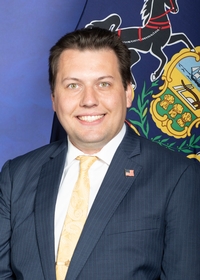
Rep. Andrew Kuzma
Sponsored bills
Maddy summaryHB 910 amends Pennsylvania's criminal code to elevate "dealing in infant children" from a misdemeanor to a first-degree felony. It makes it a crime to trade, buy, sell, or deal with infants under one year old, directly targeting individuals involved in illegal infant trafficking. The bill explicitly excludes legal surrogacy and adoption from this offense. This law takes effect 60 days after enactment, focusing on criminalizing the commercial exchange of very young children.
Maddy summaryHB 1104 sets specific fees that must be paid to healthcare providers before they produce medical records in response to a subpoena. The bill establishes a detailed fee structure: $20.62 for searching and retrieving records, plus page-based charges (e.g., $1.39 per page for the first 20 pages of paper copies, with lower rates for additional pages), and a $200 maximum for electronic copies. These fees are adjusted annually using the consumer price index. The law directly affects healthcare providers and parties requesting medical records, requiring payment before records are released.
Maddy summaryHB 980 changes the composition of Pennsylvania's State Board of Pharmacy by increasing the number of licensed pharmacists on the board from five to six and adding specific appointment requirements. It requires two pharmacist members from independent retail pharmacies, two from large retail pharmacy chains (with five or more locations), and two from hospital/acute care settings, plus one pharmacy technician position that rotates between settings. The bill also establishes term limits: pharmacy technicians serve one six-year term, while other members may serve up to two consecutive terms. This directly affects the board's membership structure and the appointment process for pharmacists and pharmacy technicians in Pennsylvania.
Maddy summaryThis bill updates Pennsylvania's transportation laws to establish specific rules for selecting projects funded by the Multimodal Fund. It requires the Department of Transportation to award grants competitively without reserving a fixed percentage of money for any single applicant before the application process is finished. Additionally, the legislation mandates that the department give priority to projects using recycled materials, such as reclaimed asphalt pavement and recycled asphalt shingles. These changes aim to ensure fair competition while encouraging the use of sustainable building materials in state-funded infrastructure projects.
Maddy summaryThis bill requires individuals applying for or receiving public assistance in Pennsylvania to participate in an identification program that includes placing their photograph on electronic benefit cards and may involve fingerprinting. County officials would be tasked with verifying this photographic identification before issuing any aid to ensure proper recipient verification. The law aims to update administrative procedures within the Human Services Code by mandating these specific identification methods for all assistance recipients.
Maddy summaryThis bill allows minors aged 14 and older to participate in training and emergency service activities for volunteer organizations like fire and rescue companies, provided they follow specific safety rules. It sets age-based restrictions, such as prohibiting minors under 16 from operating heavy machinery or entering burning structures, while permitting those 16 and older to engage in firefighting under direct supervision and proper training. Additionally, the law limits activities for younger minors between 13 and 16 to non-hazardous tasks like first aid, cleanup, and serving food, and includes provisions for minors who are also employed to answer fire calls.
Maddy summaryThis bill, known as the Temporary Budget Continuity Act, allows Pennsylvania state agencies to continue operating if the legislature fails to pass a new budget by the start of the fiscal year. It authorizes the State Treasurer to spend up to 85% of the funding levels from the previous year for existing programs and services. Any money spent under this temporary authority will be subtracted from the final budget amounts when the new appropriation act is eventually passed. The law ensures that government functions can continue without interruption while maintaining strict limits on spending to prevent budget overruns.
Maddy summaryHB 2102 amends Pennsylvania's Amber Alert law to create a new "Pennsylvania Purple Alert System" for missing individuals with specific conditions, including autism, Alzheimer's (under age 60), dementia (under age 60), traumatic brain injury, or similar impairments. The Pennsylvania State Police will establish and maintain this system to provide public alerts and coordinate with law enforcement for faster recovery of these vulnerable individuals. The bill updates the law's title to include the Purple Alert System and expands existing immunity protections for good Samaritans who assist in Amber Alert, MEPAS, or Purple Alert cases. This change adds a targeted alert system without altering the existing Amber Alert procedures.
Maddy summaryThis bill amends Pennsylvania's personal income tax law to establish a temporary lower tax rate of 2.99% for six months starting in 2026, before reverting to the standard rate of 3.07%. It applies this reduced rate to income earned by residents and nonresidents from sources within the state. Additionally, the legislation requires employers to withhold taxes from employee paychecks in a way that accounts for this temporary rate change. The changes are set to take effect on July 1, 2026, or later if the law is not signed into effect sooner.