

Maddy summaryHB 865 amends Pennsylvania's military education benefit programs to clarify definitions, eligibility rules, and procedures for recovering funds. It directly affects Pennsylvania military service members and their families who use the Educational Assistance Program and Military Family Education Program for education expenses. Key changes include updating eligibility criteria and establishing clearer processes for recouping grant payments if recipients no longer meet requirements. The bill, now Act No. 32 of 2025, was signed into law on July 7, 2025.
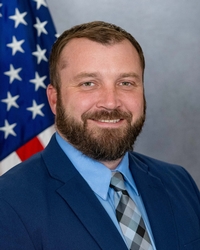
Rep. John Inglis
Sponsored bills
Maddy summaryHB 1650 establishes Pennsylvania's Home Preservation Grant Program, administered by the Department of Community and Economic Development. It provides grants to local governments (counties, cities, townships) to fund repairs and improvements on existing owner-occupied homes, targeting households earning 80-120% of the area median income. Grants can cover up to $50,000 per unit for habitability fixes, energy/water efficiency upgrades, or accessibility modifications, with local governments allowed to use up to 10% of funds for administration. Applications must demonstrate experience in housing rehabilitation and include plans for using funds per the bill's requirements, with priority given to projects leveraging additional funding sources.
Maddy summaryHB 1672 creates a $2,500 annual tax credit against individual income tax for active paid or volunteer firefighters and emergency medical service (EMS) providers in Pennsylvania. It directly affects qualifying professionals working in fire or EMS roles as defined by state law, including career responders and volunteers. The credit reduces tax owed on wages earned, applies for up to three years (the year they become qualified plus the next two), and requires proof of eligibility to the Department of Revenue. The credit expires for new applicants after 2028 and ends entirely by December 31, 2031.
Maddy summaryHB 1610 amends Pennsylvania's corporate tax rules to change how businesses with multiple related entities (unitary businesses) calculate their state tax liability. Starting in 2026, these businesses will determine Pennsylvania tax based on their total sales within the state relative to their nationwide sales, using a new "water's-edge" apportionment method. The bill specifically revises definitions and tax calculation rules for corporations, including adjustments to how income from intercompany transactions is treated and how nonbusiness income is allocated. This primarily affects large corporations operating across state lines as unified business groups. The changes aim to align Pennsylvania's tax calculation with federal reporting requirements for such entities.
Maddy summaryHB 506 amends Pennsylvania's Human Services Code to establish a state-funded Child Care Staff Recruitment and Retention Program. It directly affects licensed child care providers and their staff by creating a new program to address staffing shortages. The key mechanism provides state funding for recruitment incentives and retention support, such as signing bonuses or professional development, for child care workers. The bill passed final passage on June 25, 2025, and was referred to the Health & Human Services committee.
Maddy summaryHB 1654 requires Pennsylvania school districts to set identical starting salaries for teachers holding the same grade span State instructional certification and salary step, beginning with the 2026-2027 school year. This applies uniformly across all districts, ensuring teachers with identical qualifications (certification type and experience level) receive the same initial pay regardless of where they are hired. The bill mandates this consistency in new-hire compensation without altering existing salary structures for current employees. It takes effect 60 days after enactment, with the first application for the 2026-2027 school term.
Maddy summaryHB 1653 creates competitive grants to help nonprofit early childhood organizations and public school districts establish or expand child-care centers in rural Pennsylvania counties with low population density (under 291 people per square mile). The grants fund facility costs like construction or renovation, and provide two years of salary supplements to ensure child-care staff earn comparable pay to public school teachers. Recipients must partner with local businesses to cover some child-care fees for employees, aiming to maintain staffing levels after the grant period ends. This bill directly supports rural communities facing childcare shortages by making it financially feasible to open or grow quality early childhood programs.
Maddy summaryHB 1048 allows Pennsylvania municipalities to replace or fix private sewer and water lines (connecting homes to public systems) if it benefits public health or infrastructure. It directly affects property owners whose private lines require repair, as municipalities may use public funds or employees for these projects after assessing competing needs. The bill requires municipalities to prioritize using U.S.-made supplies for repairs, with exceptions only if such supplies are unavailable, and mandates documentation of any waiver. It also clarifies that municipalities cannot claim ownership of repaired lines and must comply with existing competitive bidding laws.
Maddy summaryHB 811 would create civil liability for political candidates who make false statements about themselves or others during campaigns. It allows affected individuals or entities to sue for damages if a candidate knowingly makes a fraudulent misrepresentation. The bill directly affects candidates running for office and voters who may be misled by false claims. Key provisions establish a legal pathway for civil lawsuits rather than criminal penalties, requiring proof of intentional falsehoods. This bill is currently in the Communications & Technology committee after passing final passage.
Maddy summaryHB 846 amends Pennsylvania's Prevailing Wage Act to clarify job definitions, specify how prevailing wages are calculated for public construction projects, and detail the Labor Secretary's responsibilities. It directly affects construction workers, contractors, and state agencies managing public works by updating administrative processes. The bill makes technical changes to implementation without altering the core requirement that public projects pay local standard wages. These updates aim to improve consistency in applying the existing law across state-funded projects.