

Maddy summaryHR 281 is a procedural resolution that forces the House Committee on Education to stop considering Senate Bill 9. It discharges the committee after 15 legislative days (since May 7, 2025) passed without the committee reporting the bill to the full House. This resolution does not change the content of Senate Bill 9; it only allows the full House to vote on the bill directly. The resolution itself is purely procedural and does not affect any policy or specific group of people.
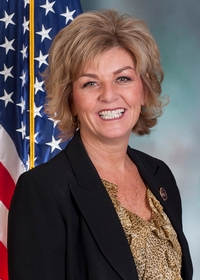
Rep. Mindy Fee
Sponsored bills
Maddy summaryThis resolution designates the week of September 21-28, 2025, as "Frontotemporal Degeneration Awareness Week" in Pennsylvania. It directly affects Pennsylvanians by officially recognizing this week to raise public awareness about frontotemporal degeneration, a neurological condition. The key mechanism is a formal designation by the Pennsylvania legislature, urging state agencies and communities to promote education and support for those impacted. As a procedural resolution, it does not create new laws or funding but aims to highlight this health issue.
Maddy summaryHB 828 would require the state to auction new liquor licenses for alcohol and malt beverage establishments under the Liquor Code, replacing the current discretionary approval process. This change directly affects businesses seeking to open or expand bars, restaurants, or retail stores selling alcohol, as they would now bid competitively for licenses. The bill specifies that licenses would be awarded to the highest bidder in public auctions, creating a transparent, market-based allocation method rather than administrative discretion. This policy shift aims to modernize license distribution while generating potential state revenue through the auction process.
Maddy summaryHB 1584 amends Pennsylvania's Agricultural Area Security Law to expand state funding for purchasing conservation easements. This allows the state to acquire land protections from farmers and landowners, preventing development on farmland. The key mechanism increases the state's capacity to secure these easements through dedicated funding, directly affecting agricultural landowners who may sell such protections to keep their land in farming use. The bill aims to preserve working farmland by making it easier for the state to protect agricultural areas.
Maddy summaryHB 1519 amends Pennsylvania's 1921 Insurance Company Law to require casualty insurance policies to cover mental illness treatments. This directly affects insurance companies writing casualty policies and policyholders seeking mental health services. The key provision mandates that insurers include mental health coverage in standard casualty policies, aligning it with other health coverage requirements. The bill focuses on expanding access to mental health care by ensuring it is covered under these specific insurance policies.
Maddy summaryThis resolution designates May 2025 as "Amyotrophic Lateral Sclerosis (ALS) Awareness Month" in Pennsylvania. It formally recognizes ALS (Lou Gehrig's disease) through a symbolic designation, highlighting the disease's impact - such as its fatal neurodegenerative nature, average 2-5 year survival after diagnosis, and lack of cure - without creating new laws or funding. The resolution aims to increase public awareness of ALS, acknowledge the challenges faced by patients and families, and honor ongoing research efforts. As a procedural resolution, it does not alter any existing policies or provide financial support.
Maddy summaryHB 1273 repeals Pennsylvania's requirement that taxpayers make payments of $15,000 or more electronically for personal income tax, along with related penalties for non-compliance. It replaces these rules by adding a new provision requiring the Department of Revenue to accept all payment methods without penalties for taxpayers. This bill directly affects individuals and businesses paying Pennsylvania personal income tax, removing a specific electronic payment mandate and associated fines. The changes take effect for taxable years beginning after December 31, 2025, making all payment methods equally acceptable without penalty.
Maddy summaryThis bill amends House Rule 45(a) to establish a Pennsylvania House Election Observer Program (PA HEOP) under the Government Oversight Committee. It allows current House members or candidates to request bipartisan election observers for House election districts 30 days before an election, with observers granted full access to all election processes (voting, counting, etc.) at polling locations and election offices. The committee must develop observer guidelines, notify election officials of observer assignments, and submit post-election reports assessing ballot security and vote totals. The program directly affects House members/candidates making requests, county election offices, and election workers, while maintaining strict rules prohibiting observers from handling ballots or interfering with voting procedures.
Maddy summaryHB 1041 allows a single business to hold both a brewery license and a limited distillery license at the same physical location in Pennsylvania. The bill requires that the areas for each operation be clearly separated (though they may overlap), specifies that both licenses must operate within permitted hours, and states that citations for violations can apply to either or both licenses. This directly affects breweries and distilleries seeking to combine operations under one roof, particularly those allowing on-premise consumption. The law modifies existing Liquor Code provisions (Sections 446 and 505.4) to formalize these dual-license arrangements. The bill takes effect 60 days after enactment.
Maddy summaryHB 1033 prohibits healthcare providers from performing gender transition procedures on minors under 18, including surgeries, cross-sex hormones, and puberty blockers. It also requires government health programs (like Medicaid) and health insurance policies to stop covering these procedures for minors. The bill defines "gender transition procedures" to include genital/nongenital surgeries, cross-sex hormones, and puberty blockers. Individuals aged 18 or older are not affected by the ban and may continue receiving such care.