

Maddy summaryThis bill amends Pennsylvania's Insurance Company Law to update definitions and provisions related to health insurance coverage. It clarifies how certain government health programs are defined for insurance policies, specifically regarding prescription drug coverage and continuation of coverage for employees who lose their jobs. The legislation also updates the legal definition of a hospital to include facilities operating alcoholism or drug addiction treatment programs and establishes a Long-Term Care Partnership Program to help individuals manage future long-term care costs.
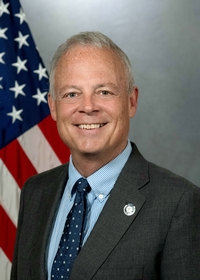
Rep. Perry Warren
Sponsored bills
Maddy summaryThis bill is a concurrent resolution that officially recognizes July 4, 2026, as Independence Day in Pennsylvania to honor the 250th anniversary of the United States. It highlights Pennsylvania's historical significance in the nation's founding, including its role in the Declaration of Independence and the birth of the U.S. Navy and Marine Corps. The resolution serves as a formal acknowledgment of these events rather than creating new laws or funding.
Maddy summaryHB 95 amends Pennsylvania's Unfair Trade Practices and Consumer Protection Law to require clear disclosure when AI-generated content (like text, images, or videos) is created, distributed, or published. It directly affects businesses, creators, and platforms using AI tools to produce content for consumers in Pennsylvania. The bill adds new definitions, including that "artificial intelligence" means technology creating new content via predictive algorithms, and specifies that disclosures must be "clear and conspicuous" - meaning they must be visible upfront, easy to understand, and match the content's medium (e.g., visible text, audible audio). This change updates existing consumer protection rules to address AI-generated content transparency.
Maddy summaryHB 2427 amends Pennsylvania's Insurance Company Law to regulate how insurers cover drugs for stage four, advanced metastatic cancer. The bill prohibits insurance policies from requiring patients to fail a different medication or prove a history of failure before approving coverage for a new drug, provided the drug is FDA-approved and aligns with current clinical best practices. This legislation also repeals the previous Fair Access to Cancer Treatment Law while ensuring that all existing rules, contracts, and decisions made under that law remain in effect.
Maddy summaryHB 2084 establishes the Pennsylvania Promise Program, providing scholarships for tuition, fees, and room and board to eligible Pennsylvania residents attending college. It directly affects two groups: students under 24 (or active military) who must be Pennsylvania residents, have a high school diploma, and complete the FAFSA; and adult learners 24 or older seeking reeducation with similar requirements. The Pennsylvania Higher Education Assistance Agency administers the program and a dedicated fund, covering tuition up to the state's maximum in-state rate and room and board based on agency standards. The program applies to community colleges, state-owned institutions, state-related universities, and Thaddeus Stevens College.
Maddy summaryHB 37 modifies Pennsylvania's Election Code to change how counties process absentee and mail-in ballots. It requires county election boards to pre-canvass all such ballots received before election day at least seven days prior, with 48-hour public notice posted online. The bill also mandates that counties begin reviewing ballots at 7 a.m. on election day without interruption until all ballots received by that time are processed. These changes directly affect county election offices, candidates, and voters who use absentee or mail-in ballots, while aligning with funding requirements for the Election Integrity Grant Program.
Maddy summaryHB 497 would amend Pennsylvania's Election Code to ban foreign-influenced corporations from making political contributions or expenditures. A "foreign-influenced corporation" is defined as one where a foreign investor (such as a foreign government or entity) owns 1% or more of its equity (or 5% in aggregate) or influences its U.S. political activities. The bill prohibits these corporations from contributing to candidates, political parties, committees, or ballot questions, or spending money to support or oppose elections. Violations would trigger penalties under the Election Code, directly affecting corporations meeting the foreign-influence criteria.
Maddy summaryThis bill directs the Legislative Budget and Finance Committee to conduct a study on how electronic monitoring is currently used in Pennsylvania as an alternative to incarceration. The study will examine where and how this technology is applied, identify barriers to its use, and analyze costs and recidivism rates compared to traditional imprisonment. Committee members will consult with various government agencies, legal groups, and service providers to gather information, with the final report due to the House of Representatives within 18 months.
Maddy summaryThis bill requires Pennsylvania's Department of Corrections to recognize medical diagnoses made by healthcare providers before an individual is incarcerated. It prohibits the department from removing or ignoring such diagnoses, except when a healthcare provider (who made the diagnosis or has relevant expertise) submits a written recommendation for removal. The department may then choose to remove the diagnosis based on that recommendation. This change directly affects individuals entering state prisons by ensuring their pre-incarceration medical conditions are acknowledged in their records. The law takes effect 60 days after enactment.
Maddy summaryThis Pennsylvania bill designates June 2026 as Aphasia Awareness Month to promote public understanding of aphasia, a language disorder often caused by strokes or brain injuries. The resolution aims to highlight the condition's impact on individuals and their communities while encouraging better diagnosis and treatment. It does not create new laws or funding but serves as a symbolic gesture to raise awareness within the state.