

Maddy summaryHB 374 amends Pennsylvania's Election Code to strengthen reporting requirements for campaign finance. It requires any individual or organization (including 501(c) groups) making independent expenditures over $100 in a year to report the candidate or ballot question they support, using the same forms as political committees. Additionally, it mandates that candidates, political committees, or organizations making contributions or independent expenditures over $500 after the final pre-election report must file a report within 24 hours via fax, mail, or in-person appearance. This bill directly affects candidates, political committees, and entities making significant campaign expenditures. The changes aim to increase transparency around late contributions and independent spending.
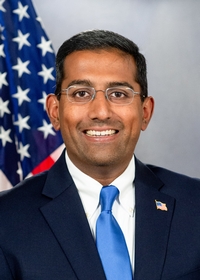
Rep. Arvind Venkat
Sponsored bills
Maddy summaryThis House Resolution (HR 32) designates March 16-22, 2025, as "Sunshine Week" in Pennsylvania. It formally recognizes an existing nonpartisan observance initiated by the American Society of News Editors and Pennsylvania NewsMedia Association, which highlights open government and public access to information. The resolution urges all Pennsylvania residents to participate in this symbolic observance, which aligns with James Madison's birthday and focuses on the importance of transparency in government. It does not create new laws, affect any specific group, or alter legal obligations.
Maddy summaryHB 365 authorizes Pennsylvania to join the Cosmetology Licensure Compact, a multi-state agreement that allows cosmetologists licensed in one participating state to practice in other member states without obtaining separate licenses. The compact establishes uniform licensing standards and requires member states to share information about disciplinary actions against cosmetologists to protect public safety. This would primarily benefit cosmetologists moving across state lines, including military members and their spouses, by reducing the administrative burden of multiple licenses while maintaining consistent safety oversight.
Maddy summaryHB 361 amends Pennsylvania's Fiscal Code to create a grant program supporting integrated behavioral health care in primary care settings. It provides funding for primary care physicians and practices to cover initial costs of implementing two evidence-based models: the Collaborative Care Model (with psychiatric consultants and care managers) and the Primary Care Behavioral Health Model (with behavioral health professionals on-site). Grants can be used for hiring staff, contracting specialists, purchasing software, and building patient registries, with priority given to rural providers and practices in counties with high suicide or overdose rates. The bill also establishes six regional technical assistance centers to support implementation across Pennsylvania.
Maddy summaryHouse Resolution 24 designates January 23, 2025, as "Maternal Health Awareness Day" in Pennsylvania to honor women who have died from pregnancy or childbirth complications. The resolution aims to raise public and healthcare awareness about maternal mortality, particularly highlighting racial disparities where Black women in Pennsylvania face a maternal mortality rate of 163 deaths per 100,000 live births - over twice the rate of other groups. It does not create new laws or funding but encourages community and healthcare engagement through designated awareness activities. This symbolic gesture aligns with Pennsylvania’s existing Maternal Mortality Review Committee efforts established under Act 24 of 2018.
Maddy summaryThis Pennsylvania House Resolution (HR 19) commemorates Jim Thorpe, a Sac and Fox Nation member and Olympic champion, by designating May 28, 2025, as "Jim Thorpe Day" within the state. The resolution details Thorpe's legacy as a 1912 Olympic pentathlon and decathlon gold medalist (later reinstated), his foundational role in professional football, and his induction into the Football Hall of Fame. It has no policy impact or direct effect on individuals or groups, as it is a symbolic designation. The resolution serves solely to honor Thorpe's historical contributions and cultural significance.
Maddy summaryHB 285 increases fees for constables in Pennsylvania for specific court-related services in both civil and criminal cases. It raises civil service fees (e.g., from $13 to $20 for serving a complaint) and criminal fees (e.g., from $25 to $50 per warrant execution), with updated amounts for levies, sales, returns, and transportation. The bill clarifies that counties do not pay surcharges for indigent defendants in criminal cases. These changes directly affect constables who perform court services and the defendants or counties paying these fees. The bill amends existing statutes to update fee schedules without altering eligibility or procedural requirements.
Maddy summaryHB 224 requires Pennsylvania's Department of Education to create an online comparison tool for higher education institutions. The tool must allow users to search colleges by major and compare high-priority occupations in Pennsylvania, including county-level data on required education, wages, and job demand. Pennsylvania colleges must annually submit relevant data (via existing federal reports) to the Department by January 1st to update the tool. This bill directly affects public and private colleges in Pennsylvania and students seeking education-to-career pathways.
Maddy summaryHB 272 establishes a grant program to help Pennsylvania municipalities and emergency service facilities (like fire stations, police departments, and ambulance services) install solar energy systems. The Department of Environmental Protection will administer the program, awarding competitive grants to cover eligible costs such as solar equipment, installation, permits, and site assessments. Applicants must submit a site assessment and verify contractors meet licensing, safety, and legal requirements through an affidavit. The program also requires the department to provide technical assistance and educational resources about solar energy projects.
Maddy summaryThis bill strengthens mental health support for emergency responders in Pennsylvania. It creates new confidentiality protections, prohibiting peer support staff, healthcare providers, or helplines from sharing an emergency responder's mental health information without consent (except in clear danger situations). Specifically for 911 dispatchers, it requires employers to provide free mental health evaluations for PTSD symptoms upon the dispatcher's request or a supervisor's recommendation. If symptoms are identified, the employer must cover treatment until a provider determines the dispatcher can return to full duties, with administrative duty assigned during this period.