

Maddy summaryHB 1114 prohibits possessing a firearm in any building, property, or parking area of a polling place during an election, with three specific offense types: simple possession, possession with intent to commit a crime, or causing a firearm to be used in a crime. Simple possession is a third-degree misdemeanor, while intent or causing use is a first-degree misdemeanor. Key exceptions include law enforcement officers performing duties, individuals with concealed carry permits (who own the firearm and have a valid license), and military personnel on duty. Polling places must post notices of the law, and failure to post prevents conviction for simple possession or intent offenses. The bill directly affects voters, poll workers, and anyone entering polling areas during elections.
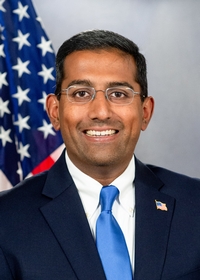
Rep. Arvind Venkat
Sponsored bills
Maddy summaryHB 1080 requires solar energy facility operators (grantees) in Pennsylvania to plan and fund the removal and land restoration of solar farms after operations end. It mandates that facility owners submit detailed decommissioning plans and proof of financial assurance to county recorders at specific intervals: 10% of estimated costs 30 days before construction begins, then 40% at 10 years, and 60% at 15 years (adjusted for salvage value). The bill ensures funds are available to cover removal costs, with third-party engineers verifying estimates every five years. These requirements apply to all new solar energy facility agreements executed after the law's effective date, directly affecting solar developers and landowners leasing property for solar installations.
Maddy summaryHB 1097 creates a new minor criminal offense in Pennsylvania for organizing or operating events where live pigeons are used as targets for shooting contests, either for amusement or skill testing. This applies to anyone who willfully runs such events at a designated location, including using mechanical aids to present pigeons to shooters. The bill explicitly excludes legal hunting under state game laws, dog training activities, or permitted special events. It takes effect 60 days after enactment.
Maddy summaryHB 1064 amends Pennsylvania's Health Care Facilities Act to require all health care facilities - including hospitals, clinics, mental health centers, urgent care centers, and dental offices - to establish and publicly share written policies regarding firearms on their premises. The bill mandates that facilities either permit firearms with safety procedures (e.g., storage guidelines) or outline specific steps for staff if someone enters with a firearm. These policies must address both permitted and prohibited firearm scenarios, applying to all locations providing medical services as defined by Pennsylvania law. The bill takes effect 60 days after enactment.
Maddy summaryHR 150 is a Pennsylvania House resolution designating April 11-17, 2025, as "Black Maternal Health Week" to highlight the disproportionate maternal health disparities affecting Black women and birthing persons in the state. It references Pennsylvania data showing Black women face maternal mortality rates twice as high as White women (148 vs. 74 deaths per 100,000 live births in 2020) and higher morbidity rates. The resolution does not create new laws or funding but aims to raise public awareness about preventable maternal health outcomes. It specifically targets state-level attention to this crisis, citing local statistics from Philadelphia and Allegheny Counties. As a symbolic resolution, it has no binding effect but seeks to spur broader discussion and action.
Maddy summaryThis bill establishes a grant program to provide free menstrual products (such as pads and tampons) in Pennsylvania public schools. Schools with 25% or more students eligible for free or reduced-price lunch programs can apply for grants to purchase these products and install dispensers or disposal units. Recipients must report annual spending on products and dispenser maintenance to the state. The program is funded by a state appropriation for the 2025-2026 fiscal year.
Maddy summaryHB 1068 creates a licensing program allowing family members (such as parents, grandparents, or adult siblings) to provide Medicaid-covered skilled care to children with medical needs. To qualify, applicants must complete training, pass background checks, and meet state nursing standards. The bill requires Medicaid agencies to cover the cost of training and licensure renewal, and it mandates that licensed family caregivers receive compensation for services like skilled monitoring. This directly affects Medicaid recipients (children under 21 with diagnosed conditions) and their eligible family caregivers, with oversight by the State Board of Nursing.
Maddy summaryHB 1065 creates a new felony offense for selling unmarked firearm components in Pennsylvania. It specifically targets the sale of firearm frames/receivers, silencer frames, split/modular frames, or partially complete frames without serial numbers registered to a federal firearms licensee. The bill defines "privately made firearm" as one assembled by non-licensed individuals without federal serial markings. This law directly affects sellers of homemade or unlicensed firearm parts, making such sales a third-degree felony. It does not change laws regarding firearm ownership or purchase, only penalizing the sale of unmarked components.
Maddy summaryThis Pennsylvania House Resolution (HR 2) designates March 25, 2025, as "National Medal of Honor Day" within the state. It symbolically recognizes the Medal of Honor - the military's highest award for valor - as first presented on March 25, 1863, and highlights Pennsylvania's 379 Medal of Honor recipients (second-highest in the U.S.). The resolution has no binding effect or new policy requirements; it solely serves to honor recipients and their service through a ceremonial designation. It does not directly affect any individuals or alter existing laws.
Maddy summaryHR 147 designates May 21, 2025, as "Emergency Medical Services for Children Day" in Pennsylvania. The resolution recognizes the Emergency Medical Services for Children (EMSC) Program - a federal initiative focused on improving emergency care for infants, children, and teens - and honors the healthcare professionals, EMS providers, and families involved in pediatric emergency services. It does not create new laws or alter funding but serves as a symbolic acknowledgment of efforts to enhance pediatric emergency care systems across the state.