

Maddy summaryThis Pennsylvania House Resolution (HR 213) designates June 19, 2025, as "Juneteenth Independence Day" to commemorate June 19, 1865 - the date Union troops in Galveston, Texas, announced the end of slavery nationwide. It encourages Pennsylvania residents to observe the day through educational events and activities. As a commemorative resolution, it does not create new laws or establish a paid holiday, but formally recognizes the historical significance of the date when slavery was finally abolished in all U.S. regions.
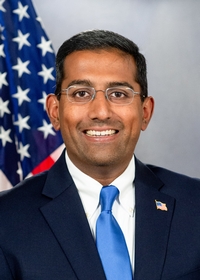
Rep. Arvind Venkat
Sponsored bills
Maddy summaryHB 308 establishes new workplace health and safety standards specifically for public employees in Pennsylvania, including those working for the Commonwealth, counties, cities, schools, and public institutions. It creates the Pennsylvania Occupational Safety and Health Review Board, grants the Secretary of Labor new enforcement powers for workplace inspections, and requires public employers to meet safety standards comparable to those in the private sector under federal OSHA. The bill imposes penalties for violations, prohibits employer retaliation against employees reporting safety concerns, and mandates recordkeeping and reporting procedures. This legislation directly affects all public employees across Pennsylvania who previously lacked consistent state-level safety protections.
Maddy summaryHB 1327 amends Pennsylvania's Election Code to strengthen penalties for election bribery and create a new offense for paying to induce voter registration. It makes offering money, goods, or lottery chances to influence voting a felony (with penalties up to $15,000 or seven years), while paying someone to register to vote becomes a misdemeanor (up to $10,000 or five years). This bill directly affects individuals who attempt to bribe voters or pay for registration to influence election participation. The provisions aim to deter improper election practices by criminalizing financial incentives tied to voting behavior or voter registration.
Maddy summaryHB 1325 requires health insurers in Pennsylvania offering dental coverage to report annual "medical loss ratios" (MLRs) for dental policies. This means insurers must calculate the percentage of premium dollars spent directly on dental care (not administrative costs) and submit detailed reports by April 30 each year. The bill applies to all health insurers licensed in Pennsylvania that provide dental policies, whether standalone or bundled with medical coverage. Penalties may be imposed if insurers fail to comply with the reporting requirements or meet the MLR standards.
Maddy summaryHB 269 amends Pennsylvania's Controlled Substance Act to improve access to overdose response information. It requires the Department of Health to develop free online training materials, posters, and pamphlets about recognizing opioid overdoses and using reversal medications (like naloxone), with the materials available in multiple languages upon request. Specific public entities - including Commonwealth agencies, transit authorities, municipalities, and local transportation organizations - must display the poster in conspicuous public locations, such as bathrooms or lobbies. The Department covers all printing and distribution costs, and entities already displaying equivalent materials may substitute them with prior notice. This bill focuses on education and resource accessibility, not changing drug laws or medication access.
Maddy summaryThis is a symbolic resolution (not a law) designating April 21-25, 2025, as "National Work Zone Awareness Week" in Pennsylvania. It recognizes an existing national campaign focused on promoting driver caution in work zones to reduce crashes, citing data showing 891 fatalities in work zone crashes nationally in 2022. The resolution encourages Pennsylvania motorists to "slow down, pay attention, and use extra caution" in work zones but does not create new laws, funding, or enforceable requirements. It serves purely as a ceremonial acknowledgment of a safety initiative led by transportation organizations.
Maddy summaryThis resolution designates September 2025 as "Alopecia Areata Awareness Month" in Pennsylvania. It does not create new laws or funding but officially recognizes the condition to promote public education about alopecia areata, a non-life-threatening autoimmune condition causing hair loss. The resolution encourages Pennsylvanians to learn more about the disease, which affects millions in the U.S. and can cause emotional challenges due to stigma. As a symbolic gesture, it aligns with national awareness efforts held in September.
Maddy summaryThis resolution (HR 110) formally recognizes April 2025 as "National Poetry Month" in Pennsylvania. It is a non-binding ceremonial resolution, not a law, and does not create new policies or affect any specific group. The resolution acknowledges the Academy of American Poets' established observance of National Poetry Month and highlights poetry's role in education and community culture, as noted in the resolution's preamble. It has no funding, regulatory, or enforcement mechanisms.
Maddy summaryThis resolution designates April 2025 as "Community College Month" in Pennsylvania to recognize community colleges' role in the state's education and economy. It highlights that community colleges serve over 240,000 students - many from low-income or minority backgrounds - provide affordable pathways to degrees, and partner with over 2,000 employers to train workers for high-demand jobs like nursing and truck driving. The designation is ceremonial and does not create new laws or funding.
Maddy summaryHR 34 is a symbolic resolution designating April 2025 as "Pennsylvania 8-1-1 Safe Digging Month." It encourages excavators and homeowners to call 8-1-1 (or 1-800-242-1776) before digging to locate underground utility lines, as required by Pennsylvania's One Call Act. The resolution highlights the Pennsylvania One Call System's role in preventing injuries, environmental damage, and utility disruptions, noting it handles over 1 million annual requests. It does not create new laws or funding but promotes existing safety practices through public awareness.