

Maddy summaryThis bill proposes to exempt certain early withdrawals from specific accounts from Pennsylvania personal income tax, mirroring existing federal tax rules. It directly affects parents and first-time homebuyers by allowing them to withdraw up to $5,000 individually or $10,000 jointly for a child's birth or adoption, and up to $10,000 for a home purchase. The legislation applies to tax years beginning on or after January 1, 2027, and becomes effective 60 days after passage.
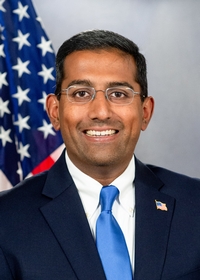
Rep. Arvind Venkat
Sponsored bills
Maddy summaryThis Pennsylvania House Resolution designates September 29, 2026, as "VFW Day" to honor the Veterans of Foreign Wars organization. The measure recognizes the VFW's history, its mission to support veterans, and its significant contributions to veterans' benefits and community service. By officially naming this date, the resolution encourages Pennsylvanians to acknowledge and support the VFW and its members.
Maddy summaryHB 2506 prevents Pennsylvania counties, municipalities, and townships from passing local laws that restrict the ownership, possession, transfer, or transportation of firearms and ammunition, as long as those items are not already banned by state or federal law. The bill also stops local governments from suing gun manufacturers or dealers for damages related to how firearms are designed, manufactured, or sold to the public. Additionally, it removes the specific authority for municipalities to regulate firearms entirely, ensuring that gun policy remains a state-level responsibility rather than a local one.
Maddy summaryThis bill amends Pennsylvania's Second Class County Code to prohibit these counties from passing laws or taking actions that regulate firearms. Specifically, it removes the existing provision that allowed second-class counties to create ordinances regarding the transfer, ownership, transportation, or possession of guns. The change directly affects local governments in second-class counties by restricting their ability to implement their own gun control measures. The legislation becomes effective 60 days after it is passed.
Maddy summaryThis bill establishes a legal framework in Pennsylvania for event outcome prediction wagering, allowing individuals to place bets on the results of various future events such as elections, sports competitions, and weather patterns through licensed digital platforms. To operate, companies must obtain a state license from the Gaming Control Board and adhere to specific rules regarding how they set odds and manage payouts, while the existing lottery, horse racing, and fantasy sports remain excluded from these new regulations. The legislation also creates a new tax on the revenue generated from these wagers, directing a portion of the funds into state accounts for gaming oversight and financing, and imposes penalties for violations of the new rules.
Maddy summaryThis bill amends Pennsylvania's existing Crane Operator Licensure Act to expand its scope and create a unified regulatory framework for both crane operators and well drillers under the State Board of Crane Operators and Well Drillers. The legislation establishes new definitions for various types of wells, including environmental, geotechnical, and geothermal wells, and introduces requirements for well driller licensure, examinations, bonding, insurance, and continuing education. It also mandates registration for drilling companies and rigs, adds reporting and sampling requirements, and includes provisions for license identification and exemptions for agricultural operations. The bill further outlines enforcement mechanisms, including procedures for license suspension or revocation for violations of the act.
Maddy summaryHB 2076 establishes a regulatory framework for geothermal energy development in Pennsylvania, requiring the Department of Environmental Protection (DEP) to create rules for project approvals, environmental safeguards, and well operations. The bill creates a Geothermal Energy Development Fund to support industry growth and imposes civil penalties for violations of the new regulations. It directly affects geothermal developers (who must comply with DEP rules) and the DEP (which must implement the regulations). Key provisions include defining geothermal resources, setting standards for well operations, and ensuring environmental protections for projects.
Maddy summaryThis bill asks the Pennsylvania House of Representatives to officially recognize the week of May 3 through 9, 2026, as 'National Travel and Tourism Week' within the state. It does not change any laws or allocate money, but instead serves to honor the importance of the travel industry, which supports over 514,000 jobs and generates billions in economic activity for Pennsylvania. The resolution highlights the state's tourism contributions to the economy and its role in celebrating the nation's 250th anniversary.
Maddy summaryThis bill designates May 13, 2026, as "Gold Shield Family Day" throughout Pennsylvania to honor the families of first responders who have died in the line of duty. The resolution directly affects the relatives of fallen police officers, firefighters, emergency medical technicians, corrections officers, and other public safety personnel. It serves as a symbolic gesture to acknowledge the sacrifices made by these families, aligning with a similar federal designation from the previous year. The measure does not create new laws or funding but instead establishes an official date for recognition and remembrance within the state.
Maddy summaryThis bill designates May 28, 2026, as "World Hunger Day" in Pennsylvania to raise awareness about food insecurity. It directly affects the state's residents, particularly the 1.7 million Pennsylvanians currently facing hunger, including over 475,000 children. The resolution encourages individuals and organizations to support efforts that expand access to nutritious food and promote understanding of the issue. The text highlights statistics on hunger in the state and nation while noting the impact of food deserts and recent changes to federal nutrition programs. Ultimately, the bill serves as a symbolic gesture to draw attention to the challenge rather than implementing new policy changes.