

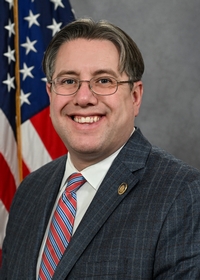
Photo of Tim Brennan
D Pennsylvania House · District 29 On the 2026 ballot

Rep. Tim Brennan

Compare
Total votes
4,591
all sessions
Attendance
100%
of floor votes
Near the chamber average
With party
99%
of cast votes
Near the chamber average
Bipartisan score
0%
crosses aisle rarely
Near the chamber average
Sponsored
836
bills & resolutions
Higher than 82% of chamber peers
Committees
7
assignments
836 bills and resolutions

Sponsored bills

Total
836
Primary
55
Co-sponsor
781
This page
836
matching current filters
Co-sponsor HB 933
In committee · Pennsylvania House · Co-sponsor
An Act amending the act of October 13, 2010 (P.L.506, No.72), known as the Construction Workplace Misclassification Act, further providing for improper classification of employees, for administrative penalties, for stop-work orders, for certain agreement prohibited and for use of penalty funds.

Maddy summaryHB 933 increases penalties for construction employers who misclassify workers as independent contractors, raising fines to $2,500 for a first violation and $5,000 for subsequent violations. It expands accountability to include general contractors and other parties who knowingly contract with employers that misclassify workers, subjecting them to the same penalties. The bill also adds a three-year ban on public contracts for intentional violators and clarifies that stop-work orders can require construction to halt within 24 hours for intentional misclassification, applying to successor businesses.

In committee Mar 17, 2025 1 co-sponsor
Co-sponsor HB 907
In committee · Pennsylvania House · Co-sponsor
An Act amending Title 75 (Vehicles) of the Pennsylvania Consolidated Statutes, in licensing of drivers, further providing for issuance and content of driver's license.

Maddy summaryThis bill updates Pennsylvania's driver's license requirements by allowing the inclusion of personal medical data and other emergency-use information on licenses. It also permits the use of substitute addresses for participants in the state's Address Confidentiality Program, which protects victims of domestic and sexual violence. The legislation maintains that Social Security numbers will be required on applications but will not appear on the actual license, while keeping other standard identification details like name, date of birth, and photograph. The changes would take effect 60 days after the bill is enacted.

In committee Mar 13, 2025 1 co-sponsor
Co-sponsor HB 894
In committee · Pennsylvania House · Co-sponsor
An Act establishing the Veterans Entering the Sustainability Sector Program and the Veterans Entering the Sustainability Sector Fund; and imposing duties on the Department of Agriculture, the Department of Community and Economic Development, the Department of Conservation and Natural Resources, the Department of Environmental Protection and the Department of Military and Veterans Affairs.

Maddy summaryHB 894 establishes the Veterans Entering the Sustainability Sector Program (VETSS) to help veterans enter jobs in renewable energy and environmental sectors. The bill creates a Veterans Entering the Sustainability Sector Fund to provide grants to eligible employers - businesses focused on renewable energy (like solar, wind, or bioenergy) that hire veterans who completed approved apprenticeship training in fields such as electrician work, solar installation, or environmental maintenance. The Department of Community and Economic Development will administer the program, overseeing training development and grant applications. This directly affects veterans seeking sustainability-sector careers and employers in renewable energy who hire them, with the goal of addressing environmental concerns like climate change through workforce development.

In committee Mar 13, 2025 1 co-sponsor
Co-sponsor HR 108
In committee · Pennsylvania House · Co-sponsor
A Resolution recognizing March 18, 2025, as "National Transit Worker Appreciation Day" in Pennsylvania.

Maddy summaryThis resolution designates March 18, 2025, as "National Transit Worker Appreciation Day" in Pennsylvania. It recognizes the work of approximately 16,800 public transit employees (including bus/train operators, drivers, and maintenance staff) who support over 237 million annual trips for Pennsylvania residents. The resolution does not create new laws or funding but encourages the public to thank transit workers for their role in connecting communities to jobs, healthcare, and education. It specifically highlights concerns about safety risks transit workers face, including recent incidents of violence. The resolution is symbolic and non-binding, limited to Pennsylvania's House of Representatives.

In committee Mar 11, 2025 1 co-sponsor
Co-sponsor HB 843
In committee · Pennsylvania House · Co-sponsor
An Act amending the act of November 24, 1976 (P.L.1176, No.261), known as the Manufactured Home Community Rights Act, further providing for closure of manufactured home communities.

Maddy summaryHB 843 amends Pennsylvania's Manufactured Home Community Rights Act to strengthen residents' ability to purchase their community when it faces closure. It requires community owners to provide 120 days' written notice to residents, local authorities, and the Pennsylvania Housing Finance Agency before closing, with residents given at least 180 days to vacate. The bill mandates that owners negotiate in good faith with resident associations representing 25% of spaces or nonprofits acting on residents' behalf, and establishes a process for residents to match competing offers or use a mutually agreed appraiser to set purchase prices if negotiations fail. This ensures residents can prevent displacement by buying the community, with the option to assign purchase rights to local housing authorities to maintain affordable housing.

In committee Mar 10, 2025 1 co-sponsor
Co-sponsor HB 848
In committee · Pennsylvania House · Co-sponsor
An Act amending the act of July 7, 1980 (P.L.380, No.97), known as the Solid Waste Management Act, in enforcement and remedies, providing for criminal proceedings.

Maddy summaryHB 848 amends Pennsylvania's Solid Waste Management Act to allow criminal charges for violations of the law. The bill adds a provision enabling the state Attorney General or local district attorneys to file criminal cases when the act or its regulations are broken. This directly affects businesses, individuals, and facilities handling solid waste that fail to comply with waste management rules. The key change expands enforcement beyond civil penalties by introducing criminal prosecution as a tool for violations, such as improper disposal or non-compliance with waste regulations.

In committee Mar 10, 2025 1 co-sponsor
Co-sponsor HB 847
In committee · Pennsylvania House · Co-sponsor
An Act amending the act of May 1, 1984 (P.L.206, No.43), known as the Pennsylvania Safe Drinking Water Act, further providing for penalties and remedies.

Maddy summaryHB 847 amends Pennsylvania's Safe Drinking Water Act to require the Department of Environmental Resources to offer a written preenforcement conference with violators before criminal charges can be filed under the Act's penalty provisions. This change directly affects individuals or entities potentially facing criminal prosecution for violations covered under sections (c), (d), or (e) of the Act. The key mechanism adds a mandatory step: the department must provide written notice of an opportunity to discuss the alleged violation before any criminal proceedings begin. The bill does not change the penalties or violations themselves but alters the enforcement process for criminal cases. (House Bill 847, 2025 Session)

In committee Mar 10, 2025 1 co-sponsor
Co-sponsor HB 826
In committee · Pennsylvania House · Co-sponsor
An Act amending the act of October 27, 1955 (P.L.744, No.222), known as the Pennsylvania Human Relations Act, further providing for definitions and for unlawful discriminatory practices.

Maddy summaryHB 826 amends Pennsylvania's Human Relations Act to require public venues (like theaters, sports arenas, and events charging admission) to provide free admission for personal care attendants accompanying eligible individuals with disabilities. It defines "attendant care services" to include daily living support such as bathing, mobility assistance, and managing transportation, and specifies that "eligible individuals" are those needing such services due to a disability. The bill prohibits venues from charging personal care attendants for entry when their presence is necessary for the eligible individual to access the event. This directly affects people with disabilities who rely on attendants to participate in public activities and the venues hosting those events.

In committee Mar 6, 2025 1 co-sponsor
Co-sponsor HB 824
In committee · Pennsylvania House · Co-sponsor
An Act amending the act of June 28, 1995 (P.L.89, No.18), known as the Conservation and Natural Resources Act, in Department of Conservation and Natural Resources, further providing for community recreation and heritage conservation.

Maddy summaryHB 824 amends Pennsylvania's Conservation and Natural Resources Act to require the Department of Conservation and Natural Resources to prioritize grant applications for playgrounds, playground equipment, and recreation areas that address accessibility for people with disabilities. The bill specifies that projects must include features like ramped play areas, accessible swings, wheelchair-friendly tables, and adaptations for blind or visually impaired individuals to receive priority. It mandates that the department favor universally designed recreation areas - where all equipment and the space itself are fully accessible - over projects with only partial accessibility. This change directly affects communities applying for state grants to build or improve local playgrounds, ensuring new facilities meet inclusive design standards from the start.

In committee Mar 6, 2025 1 co-sponsor
Co-sponsor HB 803
In committee · Pennsylvania House · Co-sponsor
An Act amending the act of March 10, 1949 (P.L.30, No.14), known as the Public School Code of 1949, in school health services, providing for maintenance and use of opioid antagonists.

Maddy summaryHB 803 requires Pennsylvania high schools (grades 9-12) to maintain opioid antagonists like naloxone (Narcan) on-site and train staff to use them during suspected overdose emergencies. Schools must develop a policy within 60 days with the Department of Education, detailing safe storage, administration procedures, and mandatory hospital transport after use. Trained staff, including nurses or teachers, can administer the medication in good faith without facing legal liability, criminal charges, or professional penalties. This law directly affects all public, charter, private, and nonpublic high schools in Pennsylvania, aiming to improve emergency response to opioid overdoses among students and staff.

In committee Mar 4, 2025 1 co-sponsor
Showing 411 to 420 of 836 bills
Previous 1 … 41 42 43 … 84 Next