

Maddy summaryHB 1087 establishes Pennsylvania's Active Volunteer First Responder Education Tax Credit Program under the Tax Reform Code of 1971. It allows businesses to claim a tax credit for donating to eligible schools, with funds used to provide scholarships for certified volunteer firefighters and emergency medical services workers. To qualify, applicants must be Pennsylvania residents, certified volunteers with at least one year of service, enrolled in approved educational programs at participating institutions, and provide proof of membership from their agency. The Department of Community and Economic Development administers the program, requiring eligible schools to submit accreditation details and ensuring donations directly fund tuition and school-related fees for qualifying students. This program directly affects volunteer first responders seeking higher education and businesses contributing to their scholarships.
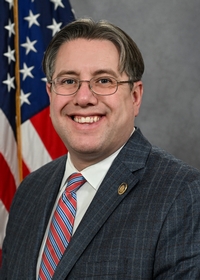
Rep. Tim Brennan
Sponsored bills
Maddy summaryHB 1078 updates Pennsylvania's school health requirements to strengthen vision screening and eye health examinations for students. It mandates annual vision screenings by trained school personnel for all school-aged children, with comprehensive eye exams by licensed professionals required if screenings fail. The bill specifies that students must receive eye health exams upon school admission, in fourth grade, and eighth grade, and adds requirements for exams related to special education evaluations. Schools must notify parents of failed screenings and provide resources, but are not responsible for covering exam costs or treatment. This directly affects all public and nonpublic school students in Pennsylvania.
Maddy summaryHB 1094 creates a new tax credit for homeowners who rehabilitate historic properties in economically distressed areas of Pennsylvania. It directly affects homeowners who own and occupy as their primary residence certified historic properties located in designated "qualified census tracts" (areas at or below state median income or qualified opportunity zones). The credit covers qualified rehabilitation costs like structural repairs and exterior work, excluding property acquisition, interior improvements, or building expansions. The Pennsylvania Historical and Museum Commission and Department of Community and Economic Development will administer the program and manage a dedicated fund to support the credit.
Maddy summaryHB 1065 creates a new felony offense for selling unmarked firearm components in Pennsylvania. It specifically targets the sale of firearm frames/receivers, silencer frames, split/modular frames, or partially complete frames without serial numbers registered to a federal firearms licensee. The bill defines "privately made firearm" as one assembled by non-licensed individuals without federal serial markings. This law directly affects sellers of homemade or unlicensed firearm parts, making such sales a third-degree felony. It does not change laws regarding firearm ownership or purchase, only penalizing the sale of unmarked components.
Maddy summaryHB 1059 creates a reimbursement program for land trusts that purchase agricultural conservation easements (permanent restrictions on land use to protect farmland). It allows the state to reimburse land trusts up to $2,500 per acre or 50% of the appraised value for easement purchases (capped at $5,000 per easement) and up to $10,000 for transaction costs like appraisals and legal fees. To qualify, land trusts must register with the state, provide matching funds equal to the reimbursement amount, and meet requirements like securing easements on at least 10 acres with 50% cropland/pasture. The program is funded through an existing Agricultural Conservation Easement Purchase Fund, with $200,000 annually reserved for reimbursements, and unused funds revert to the fund by year-end.
Maddy summaryHB 1060 increases annual maintenance payments for municipalities that received highway transfers under Pennsylvania's State Highway Law. It raises the base payment from $4,000 to $12,500 per mile for these transferred highways. Starting February 1, 2028, payments will automatically adjust every two years based on the Consumer Price Index (inflation rate), with the department calculating and publishing these adjustments. The bill directly affects municipalities managing highways transferred under Chapter 92 of the State Highway Law.
Maddy summaryHR 44 is a ceremonial resolution recognizing March 2025 as "National Social Work Month" in Pennsylvania. It does not create new laws or allocate funding but formally acknowledges the social work profession's contributions to public well-being. The resolution highlights social workers' roles in supporting vulnerable populations, crisis response, mental health care, and community development, citing their growing numbers and impact. It urges Pennsylvanians to join the National Association of Social Workers in celebrating the profession during this month. This is a symbolic gesture with no direct policy or financial effect on residents or social workers.
Maddy summaryThis bill requires all Pennsylvania public and private (nonpublic) schools to integrate Holocaust, genocide, and human rights violations instruction into social studies and language arts courses starting with the 2027-2028 school year. The state education department must create curriculum guidelines within 12 months of the bill's effective date, covering specific topics like the Holocaust's history, global genocides (including Rwanda), and human rights violations such as systemic discrimination and torture. Schools must provide teacher training on these topics, and the state board will track compliance through a study, potentially requiring mandatory instruction if less than 90% of schools currently offer it. This applies to all public school districts, charter schools, cyber charters, intermediate units, and nonpublic schools upon request.
Maddy summaryHB 1038 creates a new 25% tax credit for Pennsylvania property owners who install green roofs - roofs with vegetation, waterproof membranes, and drainage systems. It directly affects businesses and individuals who construct qualifying green roofs covering at least 50% of a building’s rooftop or 75% of certified eligible space, requiring structural engineering certification and local permits. Applicants must file detailed plans with the Department of Revenue, maintain the roof for five years, and claim credits against annual taxes (capped at $100,000 per applicant yearly), with $10 million in credits available statewide each fiscal year. The credit is non-refundable, non-transferable, and requires repayment if maintenance requirements are not met.
Maddy summaryThis resolution designates March 2025 as "Women's History Month" in Pennsylvania. It is a ceremonial measure with no binding policy changes, funding, or new programs. The resolution invites all Pennsylvanians to reflect on women's contributions to the state's and nation's economic, cultural, and social development. It does not affect specific groups or create legal obligations, as it is purely symbolic recognition.