

Maddy summaryHB 914 amends Pennsylvania's Landlord and Tenant Act to limit annual rent increases for regulated rental units, directly affecting tenants and landlords in these properties. It establishes an annual rent increase allowance calculated as the lesser of CPI-U plus 3% or 6% of base rent (excluding discounts), effective July 1-June 30 each year. Landlords may not exceed this allowance plus any unused "banked amount" when raising rent on lease renewals or new leases, with a 10% cap on increases. For capital improvements costing 40%+ of a unit's value, landlords can petition courts for additional rent increases to cover actual costs, but only if proven necessary for a "fair return" on investment. The Pennsylvania Housing Finance Agency administers the annual allowance calculation and public publication.
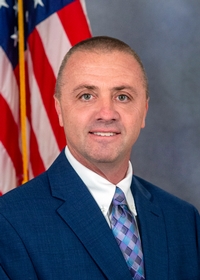
Rep. Dan Deasy
Sponsored bills
Maddy summaryThis resolution designates September 2025 as "Prostate Cancer Awareness Month" in Pennsylvania. It symbolically raises public attention to prostate cancer, highlighting statistics like an estimated 13,000 new cases and 1,500 deaths in Pennsylvania during 2025. The resolution also urges Congress to support federal legislation (H.R. 1300) that would require health insurance coverage for prostate cancer screenings without cost-sharing for at-risk men. It does not create new laws or funding but aims to promote awareness and encourage preventive care.
Maddy summaryHB 933 increases penalties for construction employers who misclassify workers as independent contractors, raising fines to $2,500 for a first violation and $5,000 for subsequent violations. It expands accountability to include general contractors and other parties who knowingly contract with employers that misclassify workers, subjecting them to the same penalties. The bill also adds a three-year ban on public contracts for intentional violators and clarifies that stop-work orders can require construction to halt within 24 hours for intentional misclassification, applying to successor businesses.
Maddy summaryThis bill amends Pennsylvania's Tax Reform Code to exclude sales and use taxes on firefighting equipment purchased by paid or volunteer firefighters using their own money. To qualify for this tax exemption, firefighters must present a department-issued identification card at the time of purchase, which the Department of Revenue will issue to individuals holding approved certifications. The legislation defines firefighting equipment as items designed to extinguish, control, or stop fires or protect users and property from fire hazards. This change directly affects individual firefighters and retailers selling firefighting gear, while establishing new administrative procedures for identification card issuance.
Maddy summaryHB 890 amends Pennsylvania's Veterans' Trust Fund rules to restrict how funds can be spent. It prohibits using the fund for administrative staff salaries (defined as non-clinical personnel at veterans' organizations) and limits single-entity grants to $250,000 over three consecutive years. These changes directly affect the State Veterans' Commission and the Department managing the Trust Fund, ensuring funds are used for direct veteran services rather than administrative costs or large single grants. The bill takes effect immediately upon passage.
Maddy summaryHB 899 requires Pennsylvania employers to provide workers with paid sick leave for their own health needs or to care for family members. Employees earn one hour of paid sick time for every 30 hours worked, with a minimum annual accrual of 40 hours. The law prohibits employers from retaliating against workers who use this leave and mandates clear posting of rights. It covers most private-sector employees (excluding federal workers) and applies to all employers with 15+ employees in Pennsylvania, effective upon enactment.
Maddy summaryHB 894 establishes the Veterans Entering the Sustainability Sector Program (VETSS) to help veterans enter jobs in renewable energy and environmental sectors. The bill creates a Veterans Entering the Sustainability Sector Fund to provide grants to eligible employers - businesses focused on renewable energy (like solar, wind, or bioenergy) that hire veterans who completed approved apprenticeship training in fields such as electrician work, solar installation, or environmental maintenance. The Department of Community and Economic Development will administer the program, overseeing training development and grant applications. This directly affects veterans seeking sustainability-sector careers and employers in renewable energy who hire them, with the goal of addressing environmental concerns like climate change through workforce development.
Maddy summaryThis resolution designates March 18, 2025, as "National Transit Worker Appreciation Day" in Pennsylvania. It recognizes the work of approximately 16,800 public transit employees (including bus/train operators, drivers, and maintenance staff) who support over 237 million annual trips for Pennsylvania residents. The resolution does not create new laws or funding but encourages the public to thank transit workers for their role in connecting communities to jobs, healthcare, and education. It specifically highlights concerns about safety risks transit workers face, including recent incidents of violence. The resolution is symbolic and non-binding, limited to Pennsylvania's House of Representatives.
Maddy summaryThis bill (HB 866) expands free hunting and furtaking license access in Pennsylvania for eligible disabled veterans. It allows resident disabled veterans certified by the U.S. Department of Veterans Affairs as having a service-connected disability (such as loss of one or more limbs or 100% disability) to receive free licenses for 10 specific activities, including regular hunting, bear hunting, archery, and migratory bird hunting. The change modifies existing exemptions under Section 2706(b)(1) to include these additional license types without fee. This directly affects Pennsylvania residents who are disabled veterans meeting the VA certification criteria.
Maddy summaryThis resolution directs Pennsylvania's Joint State Government Commission to study Housing First programs across the U.S. and their potential application in Pennsylvania. The study must examine program costs, effectiveness in reducing homelessness (especially among chronically unhoused individuals and veterans), comparisons with traditional shelter models, and impacts of recent events like the pandemic. The commission will compile a report within 18 months covering specific aspects, including Pennsylvania's homeless population demographics and academic effects on unhoused children. This study aims to inform future housing policy decisions without mandating program implementation.