

Maddy summaryThis bill prohibits law enforcement officers from detaining or arresting individuals for civil immigration violations on the property of houses of worship. The only exception allows for arrests if the officer is acting in an official capacity and holds a valid judicial warrant. Additionally, the legislation bars state and local agencies from using taxpayer funds to conduct immigration enforcement and imposes a $10,000 civil penalty for any violations of these rules.
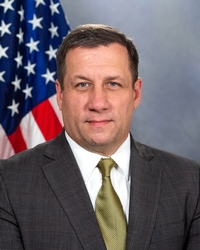
Rep. Paul Friel
Sponsored bills
Maddy summaryHB 1800 would repeal the current legal provisions in Pennsylvania that recognize marriage between people of the same sex by removing specific sections from the domestic relations code. The bill directly affects same-sex couples currently married in Pennsylvania, as it would eliminate the statutory basis for their marriages. Key provisions include amending definitions in the preliminary sections of the code and striking down existing language that addresses same-sex marriage. The bill is currently referred to the Judiciary committee and has not been enacted.
Maddy summaryThis bill would create a state-funded paid family and medical leave program for eligible workers needing time off for health issues, childbirth, or family care. It establishes a dedicated state fund to cover leave costs, creates an advisory board to guide implementation, and assigns oversight to the Department of Labor. The program would directly affect employees in the state who qualify for these leave types, requiring employers to provide the benefits. The bill also specifies penalties for businesses failing to comply with the new requirements.
Maddy summaryHB 1834 requires commercial data centers in Pennsylvania to pay fees to the state. These fees fund a new Data Center LIHEAP Enhancement Fund, which boosts assistance for low-income households struggling with energy costs. The bill also mandates that data centers meet specific renewable energy targets and allows them to recover certain operational costs through regulated rates. The Pennsylvania Public Utility Commission (PUC) and Department of Human Services are tasked with implementing these requirements and managing the fund.
Maddy summaryThis bill amends Pennsylvania's Health Maintenance Organization Act to require health plans to cover basic services when referrals come from direct primary care providers who are not part of the plan's network. It defines direct primary care providers as licensed doctors or advanced practitioners who offer direct care through personal agreements with patients. The rule must be established within one year of the bill's effective date and applies to all health maintenance organizations operating in the state.
Maddy summaryHB 300 amends Pennsylvania's Human Relations Act to add explicit protections for religious exercise alongside existing anti-discrimination rules. It directly affects employers, housing providers, and businesses offering public accommodations by prohibiting discrimination based on religion in employment, housing, and public services. The bill updates the law to include religious freedom as a protected category under anti-discrimination provisions. It also clarifies the Pennsylvania Human Relations Commission's authority to enforce these protections. The amendment does not create new enforcement mechanisms but integrates religious exercise protections into the existing framework of the 1955 Act.
Maddy summaryHB 501 amends Pennsylvania's Alternative Energy Portfolio Standards Act to update definitions and clarify requirements for renewable energy compliance. It specifically adds "advanced reactor" (including small modular reactors) to eligible energy sources, refines criteria for low-impact hydropower, and updates definitions for biomass, biogas, and alternative energy credits. The bill affects electric utilities required to meet portfolio standards by specifying which energy sources count toward compliance and how credits are calculated. These changes aim to modernize the framework for renewable energy reporting and incentives without altering current percentage targets. The bill is currently in committee review (Environmental & Natural Resource Protection).
Maddy summaryThis bill requires law enforcement officers to have a valid judicial warrant before making civil immigration arrests on Pennsylvania state property, which includes state buildings and grounds in Dauphin, Philadelphia, Pittsburgh, and Scranton counties. The legislation mandates that officers must show the warrant to any state employee who asks to see it during such arrests. Violations of these requirements could result in a $10,000 civil penalty for each offense, which would be paid to the Commonwealth and enforced by the Attorney General. The bill does not prevent the investigation or enforcement of criminal immigration laws, and it clarifies that sovereign immunity protections do not apply to lawsuits brought under this new provision.
Maddy summaryThis bill establishes rules for law enforcement actions on courthouse grounds in Pennsylvania, primarily restricting civil arrests related to immigration enforcement without a judicial warrant. It directly affects law enforcement officers, courthouse staff, and individuals seeking access to court proceedings. The key provisions prohibit detaining or arresting people on courthouse property for immigration violations unless the officer holds a valid judicial warrant and must show documentation to any court employee who asks. The law also defines who qualifies as a "court companion" to protect individuals accompanying parties to court and includes penalties of up to $10,000 for violations while providing immunity to courthouse employees acting in good faith.
Maddy summaryHB 2247 amends Pennsylvania's Public School Code to require school districts spanning multiple counties or municipalities to set uniform tax rates across their entire district. The bill provides four methods for achieving this, including calculating rates based on market values (not exceeding 75% of property value) or using a single tax rate if jurisdictions share consistent assessment standards. This change directly affects multi-jurisdictional school districts, reducing disparities in how property taxes are applied across county or municipal lines. The bill standardizes tax collection without altering overall tax burdens on property owners.