

Maddy summaryHB 1848 requires casualty insurance policies to cover physical therapy, occupational therapy, and speech therapy for injury-related care. This directly affects insured individuals, particularly families with children needing these therapies for accidents or injuries. The bill also establishes a state-administered Children's Therapies Medical Assistance Savings Account to help families pay for therapy costs not covered by insurance.
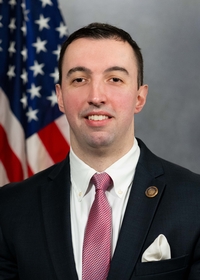
Rep. Brandon Markosek
Sponsored bills
Maddy summaryHB 1816 regulates pet shops and kennels that handle dogs, cats, and rabbits. It prohibits specific practices like selling animals without health records and requires shops to maintain clean facilities, provide adequate food/water, and display clear pricing. The Department of Agriculture must enforce these rules, conduct inspections, and impose fines for violations. This bill directly affects businesses operating pet shops and kennels in the state, mandating new operational standards and penalties for noncompliance.
Maddy summaryThis bill is a commemorative resolution designating July 26, 2025, as "Americans with Disabilities Act Day" within Pennsylvania. It does not create new laws or policies but formally recognizes the anniversary of the federal Americans with Disabilities Act (ADA) through a symbolic observance. The resolution directly affects Pennsylvania residents by designating a specific day for community recognition of the ADA's impact. As a procedural resolution, it has no binding legal effect and is referred to the Human Services committee for consideration.
Maddy summaryHB 1650 establishes Pennsylvania's Home Preservation Grant Program, administered by the Department of Community and Economic Development. It provides grants to local governments (counties, cities, townships) to fund repairs and improvements on existing owner-occupied homes, targeting households earning 80-120% of the area median income. Grants can cover up to $50,000 per unit for habitability fixes, energy/water efficiency upgrades, or accessibility modifications, with local governments allowed to use up to 10% of funds for administration. Applications must demonstrate experience in housing rehabilitation and include plans for using funds per the bill's requirements, with priority given to projects leveraging additional funding sources.
Maddy summaryHB 506 amends Pennsylvania's Human Services Code to establish a state-funded Child Care Staff Recruitment and Retention Program. It directly affects licensed child care providers and their staff by creating a new program to address staffing shortages. The key mechanism provides state funding for recruitment incentives and retention support, such as signing bonuses or professional development, for child care workers. The bill passed final passage on June 25, 2025, and was referred to the Health & Human Services committee.
Maddy summaryHB 704 creates a new Neurodegenerative Disease Research Program and a dedicated funding mechanism within the Department of Health to support research on conditions like Alzheimer's and Parkinson's. The bill directs the Department of Health to manage the program and administer the Neurodegenerative Disease Research Program Fund, which will provide grants for scientific studies. This legislation directly affects researchers, medical institutions, and patients seeking treatments for neurodegenerative diseases by establishing a formal structure for funding and coordinating research efforts. The bill passed the legislature in June 2025 and is now pending final action by the Governor.
Maddy summaryHB 1062 creates a statewide system for tracking neighborhood blight by requiring municipalities to collect data on property maintenance violations. It establishes a Property Maintenance Code Serious Violations Registry to list properties with repeated severe maintenance issues and a dedicated funding account to support blight remediation efforts. The bill directly affects Pennsylvania municipalities, property owners, and landlords in areas designated as blighted, providing local governments with standardized data to target enforcement. Key provisions include mandatory data collection by cities/towns, a centralized registry for serious violations, and dedicated funding through the new account to aid property rehabilitation. If enacted, this would standardize blight reporting and funding across Pennsylvania communities.
Maddy summaryHB 265 amends Pennsylvania's unemployment compensation law to change eligibility rules for workers at educational institutions, such as teachers or staff employed on a term-by-term basis. It removes a prior requirement that these workers must prove they would not return to the same institution for the next academic term to receive benefits during breaks between terms. This change applies to service performed after the bill's effective date and aligns with federal guidelines (26 U.S.C. § 3304(a)(6)). The bill directly affects temporary and part-time employees in schools and colleges who experience academic breaks.
Maddy summaryHB 1289 establishes a 2026 adjustment for retired municipal police officers and firefighters who retired before January 1, 2016, and have been retired for at least 10, 15, or 20 years as of January 1, 2026. Eligible retirees will receive monthly payments of $250, $375, or $500 based on their retirement duration, with reductions for prior benefits received and caps if multiple retirement systems apply. Municipalities must certify these payments and will receive full reimbursement from the Commonwealth for the 2026 costs. This extends a similar state reimbursement program previously used for 2002 adjustments.
Maddy summaryThis resolution recognizes the week of May 9-15, 2025, as "National Stuttering Awareness Week" in Pennsylvania. It symbolically raises awareness about stuttering - a speech disorder affecting approximately 130,000 Pennsylvanians - without creating new laws, funding, or obligations. The resolution aims to highlight misconceptions about stuttering and support efforts to reduce stigma, particularly for children and adults who stutter.