

Maddy summaryThis bill requires taxpayers with significant sales tax delinquencies or repeated failure to file returns to use an authorized third-party service provider for reporting and remitting taxes. It directly affects Pennsylvania businesses and individuals who owe more than $5,000 in delinquent sales tax or have three consecutive non-filed returns. The Department of Revenue would cover the service provider costs for the first year, after which the taxpayer pays, and could impose a $10,000 penalty for failing to enroll with an approved provider. The law takes effect 60 days after passage and allows taxpayers to continue using the service provider voluntarily after the mandatory period ends.
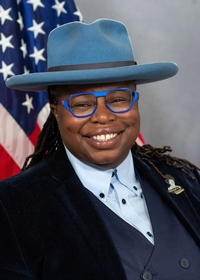
Rep. La'Tasha Mayes
Sponsored bills
Maddy summaryHB 2145 prohibits the use of perfluoroalkyl and polyfluoroalkyl substances (PFAS) in specific consumer products sold in Pennsylvania, directly affecting manufacturers of these items. The bill bans intentionally added PFAS in cosmetics, dental floss, juvenile products (like baby mattresses and strollers), and menstrual products, while defining these terms precisely in Chapter 71 of Pennsylvania’s Commerce and Trade code. The Department of Environmental Protection will enforce the ban and impose penalties for violations. This law aims to protect consumers from potential health risks associated with PFAS chemicals, which are linked to environmental contamination and health concerns.
Maddy summaryHB 2109 prohibits Pennsylvania local governments (like cities, towns, and counties) from setting household size limits based on familial relationships (such as parents with children or roommates). It allows occupancy limits only for verified health/safety standards (like building codes) or to comply with federal/state affordable housing program rules. The bill directly affects renters, homeowners, and local officials who previously enforced such restrictions. Key definitions clarify that "familial relationship" includes blood, marriage, adoption, or foster care ties, and "local government unit" covers all Pennsylvania municipalities. This bill takes effect 60 days after enactment.
Maddy summaryThis bill (HR 345) is a symbolic resolution designating July 2026 as "Culinary Arts Month" in Pennsylvania. It does not create new laws or policies, but formally recognizes the culinary arts industry through a commemorative designation. The resolution directly affects no individuals or entities, as it serves only as a ceremonial observance. It was referred to the Labor & Industry committee for consideration.
Maddy summaryHB 453 clarifies definitions in Pennsylvania law related to emergency services. It adds a specific definition for "telecommunicator" (including 911 dispatchers and call takers) and expands the definition of "emergency responder" to explicitly include telecommunicators, medical personnel, and other emergency workers in multiple sections of law. This bill directly affects emergency service workers like dispatchers, firefighters, and medical personnel by formally including them under defined terms for mental wellness programs and mutual aid protocols. The bill takes effect 60 days after enactment and does not create new policies or funding.
Maddy summaryHB 1261 bans PFAS chemicals (harmful substances linked to health risks) in firefighting protective gear, requiring safer alternatives for all new equipment. It creates grant programs to help fire companies replace PFAS-containing gear and mandates that state-funded equipment purchases must be PFAS-free. The bill also imposes penalties on entities failing to comply with the PFAS restrictions. These changes directly protect firefighters and guide fire companies' equipment procurement under Pennsylvania law.
Maddy summaryThis bill requires health insurance policies and government programs in Pennsylvania to cover semiannual maintenance and safety checks for complex wheelchairs. It defines complex wheelchairs as custom-designed medical devices that need regular adjustments to meet a user's specific physical needs. The law mandates that these coverage plans pay for the labor and travel costs associated with these evaluations, which can be conducted either in person or via telehealth. By imposing these duties on the Department of Human Services and the Insurance Department, the act ensures that individuals relying on specialized mobility equipment receive consistent care to maintain the device's functionality.
Maddy summaryThis House Resolution designates the week of March 9 through 13, 2026, as "Civic Learning Week" throughout Pennsylvania to highlight the importance of civic education. The measure is a symbolic recognition that does not create new laws, funding, or mandatory requirements for schools or government agencies. It acknowledges the role of civic education in preparing students for democratic participation and notes that Philadelphia will host a national forum on civic learning during that week. The resolution is introduced by multiple legislators and referred to the Committee on Education for consideration.
Maddy summaryHB 1780 amends Pennsylvania's Commerce and Trade laws to require businesses accepting electronic payments to clearly disclose all associated fees to consumers. It directly affects merchants and service providers who process credit/debit card transactions, mandating transparent fee structures. The key provision requires payment processors to list all fees (like interchange, assessment, or processing fees) upfront during checkout or in billing statements. This aims to prevent hidden costs for consumers by making fee information readily available and understandable.
Maddy summaryThis bill creates a new crime called aggravated assault of an insured, which applies specifically to the chief executive officers of health insurers. Under the law, a CEO would be guilty of this offense if they deny a medically necessary benefit to a patient, and that denial directly causes serious bodily injury or death to the patient. The legislation defines "health insurer" to include various types of medical coverage providers while excluding policies like dental, vision, and workers' compensation plans. If passed, the bill would take effect 60 days after its enactment.