

Maddy summaryThis Pennsylvania House Resolution designates May 4, 2026, as "Youth Advocacy Day" to recognize the role young people play in advocating for issues affecting their lives. The resolution acknowledges youth involvement in various social movements, including environmental, civil rights, and public safety initiatives, and affirms their right to participate in civic engagement. It does not create new laws or funding but serves as a symbolic designation to highlight youth advocacy efforts within the state.
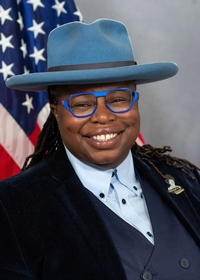
Rep. La'Tasha Mayes
Sponsored bills
Maddy summaryThis bill establishes a fee program for certain nonemergency medical services provided to inmates in Pennsylvania prisons, with fees capped at $1 per service when requested by the inmate. It requires the Department of Corrections to create regulations specifying which medical services incur fees, their amounts, and payment procedures while exempting medical emergencies, chronic care, and preexisting conditions from fees. The legislation also mandates that inmates pay for medical services related to injuries they caused to themselves or other inmates. The Department of Corrections must update existing rules to align with these changes within 180 days of the bill's effective date, which is set to occur 60 days after enactment.
Maddy summaryThis bill amends Pennsylvania's obstruction of governmental operations laws to create a specific exception for healthcare facilities. It allows nonviolent obstruction of law enforcement entry at hospitals and emergency departments unless officers have probable cause and a judicial warrant for a specific individual. The law defines key terms like "health care facility," "emergency department," and "judicial warrant" to clarify when this protection applies. The changes would take effect 60 days after enactment and apply to all law enforcement officers within the state.
Maddy summaryThis bill amends Pennsylvania law to allow individuals and married couples filing for bankruptcy to choose between federal exemptions or a new state-specific set of protections for their assets. The state options include up to $650,000 in home equity, $50,000 to $100,000 in personal property, $20,000 to $40,000 in vehicle equity, and various protected items like wages, Social Security benefits, and government assistance programs. Dollar amounts in the state exemptions will automatically adjust every three years based on inflation data published by the federal government. The changes take effect 60 days after the bill is enacted, applying to bankruptcy proceedings filed in Pennsylvania courts.
Maddy summaryThis resolution designates March 31, 2026, as Transgender Day of Visibility in Pennsylvania to honor the contributions and lives of transgender individuals. The measure does not change laws or policies but serves as a symbolic recognition of the date, which is already observed nationally to celebrate transgender accomplishments and raise awareness about challenges the community faces. It is sponsored by multiple representatives and referred to the Committee on State Government for consideration. The resolution highlights the importance of transgender visibility and acknowledges the ongoing discrimination and violence the community experiences.
Maddy summaryThis bill establishes new Boards of Prison Inspectors at each Pennsylvania State correctional institution to oversee facility conditions and operations. The boards will consist of 18 members including medical professionals, educators, law enforcement officers, county officials, and community representatives, with at least one member being a former inmate or family member of an inmate. Each board will conduct unannounced inspections at least twice annually, review inmate complaints and officer misconduct records, and submit public reports on their findings. Board members serve three-year terms without pay but receive expense reimbursement, and they are prohibited from being current employees of the correctional system.
Maddy summaryThis bill amends Pennsylvania's Health Care Facilities Act to establish a new requirement for health care site neutrality, which aims to prevent insurance companies from charging different rates based on where a patient receives care. The law defines "campus" as the main buildings of a health care facility plus areas within 250 yards, and prohibits health benefit plans from applying different reimbursement rates for services provided on campus versus off-campus locations. Key provisions include defining applicable services such as outpatient evaluations, diagnostic services, and imaging, while excluding private practitioner offices and religious facilities from these requirements. The bill also establishes specific definitions for facility fees and health care contracts to ensure consistent application of the neutrality rules across various types of health care providers and facilities.
Maddy summaryThis House Resolution formally recognizes June 2026 as LGBTQ+ Pride Month in Pennsylvania to honor the state's LGBTQ+ history and community contributions. The bill does not create new laws or change government operations, but instead serves as a symbolic acknowledgment of Pride Month within the Commonwealth. Sponsored by multiple representatives, the resolution highlights Pennsylvania's historical role in LGBTQ+ civil rights, including early Pride demonstrations and legislative actions. This measure is a commemorative gesture that affirms support for LGBTQ+ inclusion without altering any existing policies or programs.
Maddy summaryThis bill establishes a three-year pilot program to train Pennsylvania residents in election administration. It would allow the Department of State to randomly select two counties from each of the eight county classes to participate, where eligible individuals aged 18 or older could work in county election offices from August through December. The program would be funded through state appropriations, with counties able to provide additional compensation to participants. At the end of the pilot, the Department of State must submit a report to state officials evaluating whether to expand the program statewide.
Maddy summaryThis bill requires law enforcement officers to have a valid judicial warrant before making civil immigration arrests on Pennsylvania state property, which includes state buildings and grounds in Dauphin, Philadelphia, Pittsburgh, and Scranton counties. The legislation mandates that officers must show the warrant to any state employee who asks to see it during such arrests. Violations of these requirements could result in a $10,000 civil penalty for each offense, which would be paid to the Commonwealth and enforced by the Attorney General. The bill does not prevent the investigation or enforcement of criminal immigration laws, and it clarifies that sovereign immunity protections do not apply to lawsuits brought under this new provision.